
If you’ve ever stood in your living room staring at a half-hung curtain rod, wondering whether the fabric should skim the floorboards or float a tidy inch above them, you’re not alone. It’s one of those small decorating decisions that quietly makes or breaks a room. Get the length right and the whole space feels pulled together. Get it wrong and even an expensive fabric can look like an afterthought.
The short answer: in most rooms, yes, curtains look best when they touch the floor. But “touching the floor” isn’t a single length, it’s a spectrum, and the right choice depends on the room, the fabric, and how you actually live in your home. Let’s break it down properly.
Why Curtain Length Matters More Than You Think
Curtains in Dubai are one of the few design elements that touch both the ceiling and the floor. That vertical stretch is exactly why their length has such a big visual impact. A curtain that stops short draws the eye to the gap underneath, which can make a window, and by extension the whole wall, look smaller and less finished. A curtain that reaches the floor, on the other hand, creates one continuous line from top to bottom, which tricks the eye into reading the ceiling as higher than it is.
There’s a practical side too. Longer curtains block drafts more effectively, cut down on light leaking in around the edges, and add a layer of insulation against cold windows in winter. Shorter curtains, meanwhile, are easier to keep clean and don’t drag through dust, pet hair, or foot traffic.
Neither option is universally “correct.” The right length is really a trade-off between aesthetics and everyday practicality, and that trade-off shifts depending on the room.
The Main Curtain Lengths, Explained
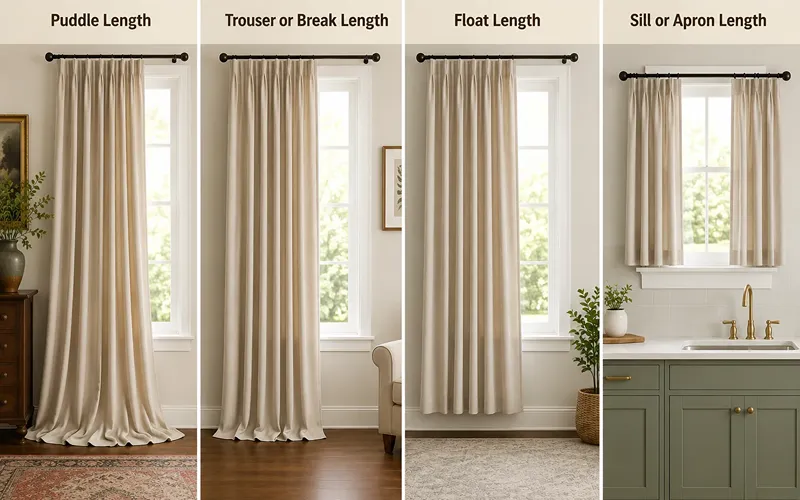
Before deciding whether your curtains should reach the floor, it helps to know the vocabulary designers use to describe exactly how they meet it.
Puddle Length
This is the most dramatic option, where extra fabric pools on the floor in soft folds, typically anywhere from a couple of inches to a full six inches or more of extra material. It has a romantic, old-world feel and works well in formal living rooms, dining rooms, or bedrooms where the blackout curtains are more decorative than functional. The trade-off is upkeep: puddled fabric needs to be lifted and rearranged every time you open or close the curtains, and it collects dust quickly.
Trouser or Break Length
Named after how dress trousers break gently over a shoe, this style has a small amount of extra fabric, usually one to two inches, that creates a soft fold at the base without a full puddle. It’s a good middle ground for people who want a relaxed, layered look without the maintenance of true puddling.
Float Length
Here the curtain hem sits just barely off the floor, often no more than half an inch to an inch above it. This keeps the tailored, floor-length illusion while avoiding any fabric dragging on the ground. It’s a popular choice for kitchens, kids’ rooms, and any space that gets a lot of foot traffic.
Sill or Apron Length
These shorter styles stop at the windowsill or just below it, around the apron of the window frame. They’re common in bathrooms, over radiators, or above kitchen sinks, places where fabric touching the floor would be impractical or unsafe.
Pros of Curtains That Touch the Floor
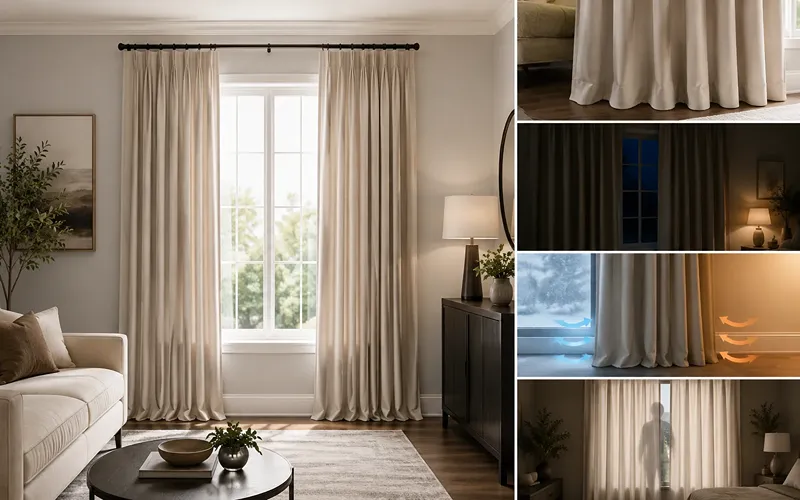
They make ceilings look taller. An unbroken line of fabric from ceiling to floor elongates the wall visually, which is especially useful in rooms with standard eight-foot ceilings.
They look more finished and intentional. Short curtains that stop well above the floor often read as a sizing mistake rather than a style choice, even when they’re not.
Better insulation and light-blocking. Floor-length panels close off the gap at the bottom, which helps keep out drafts in winter and stray light in the early morning, a real plus in bedrooms.
More privacy. Without a visible gap underneath, floor-length curtains do a better job blocking sightlines from outside.
Cons of Curtains That Touch the Floor
They need more maintenance. Fabric near the floor picks up dust, pet hair, and general grime faster than curtains that hang clear of the ground.
How to Measure for the Length You Want
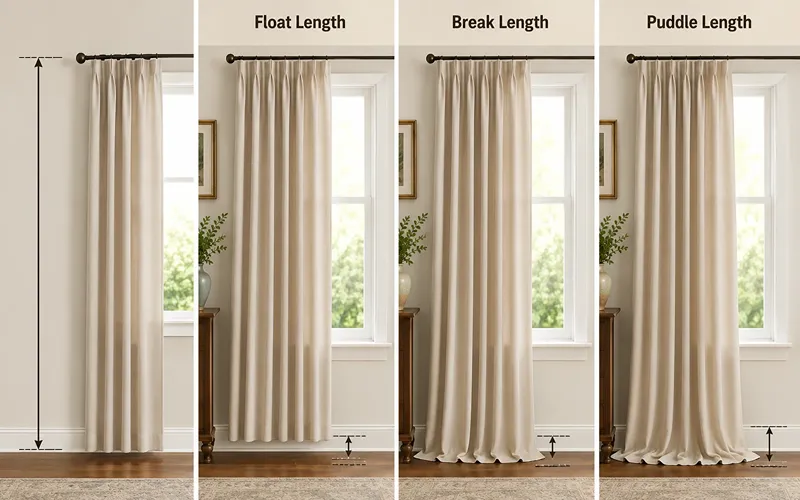
Getting the length right starts with measuring from the curtain rod down to the floor, not from the window frame. Once you have that number, adjust it based on the finished look you’re going for.
Float Length: Subtract Half an Inch
For a float finish, take your rod-to-floor measurement and subtract about half an inch. This tiny gap keeps the curtain from ever dragging on the ground while still preserving the long, tailored line people associate with floor-length panels. It’s the safest option for busy rooms, since there’s no fabric to lift, tuck, or clean each time the curtains are opened or closed.
Break Length: Add One Inch
For a break, add roughly one inch to the rod-to-floor number. That extra inch lets the fabric fold gently at the base, similar to how trousers rest over a shoe, giving the curtain a relaxed, lived-in softness. It’s a good middle ground between a crisp float and a full puddle, and it hides minor unevenness in the floor better than a tight float length does.
Puddle Length: Add Two to Six Inches
For a puddle, add anywhere from two to six inches, depending on how dramatic you want the pool of fabric to look. A smaller addition gives a subtle, elegant break, while a full six inches creates a rich, formal pool best suited to rooms where the curtains stay drawn most of the time and don’t need frequent adjusting.
It’s also worth thinking about rod placement before you measure. Hanging the rod four to six inches above the window frame, or closer to the ceiling in rooms with extra height, extends the visible curtain and reinforces that taller, more spacious feel, regardless of which floor length you eventually choose.
How Curtain Length Should Change Room by Room
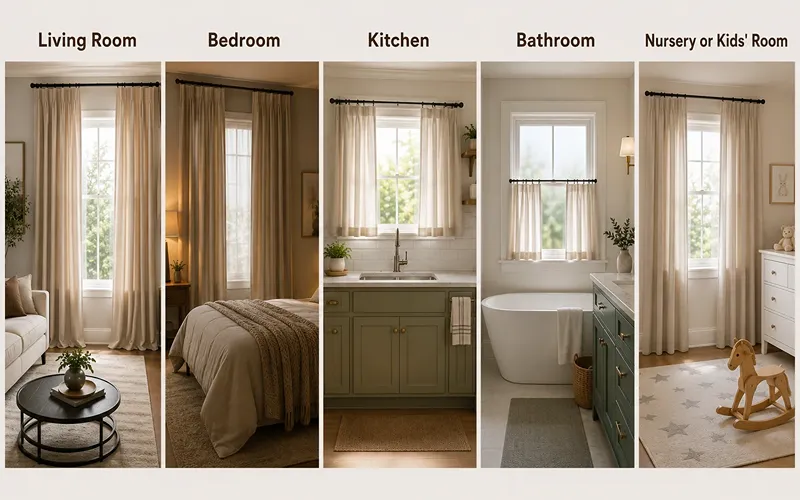
Living Room
This is usually the easiest yes for floor-length living room curtains, ideally with a light float or break so they still look tailored without needing constant straightening. Since living rooms tend to be more of a showcase space, the elegance of longer curtains outweighs the extra dusting.
Bedroom
Bedrooms are arguably where floor-length curtains matter most. The added coverage blocks light more completely, keeps the room warmer, and adds to that cocoon-like, private feeling most people want from a bedroom. A soft puddle of two to three inches paired with a blackout lining is a popular combination here.
Kitchen
Kitchens see spills, grease, steam, and constant movement, so float or sill length makes far more sense than anything that touches the ground. Easy-to-clean fabrics like cotton blends or polyester work better here than heavier drapery.
Bathroom
This is one room where floor-length curtains are genuinely a bad idea. Persistent humidity means any fabric sitting on the floor will eventually develop mildew. Sill-length panels in a moisture-resistant fabric are the practical choice.
Nursery or Kids’ Room
Trailing fabric and curious toddlers don’t mix well. Float length keeps the polished look of a longer curtain while removing the tripping hazard and the temptation to pull on it.
Choosing the Right Length by Fabric
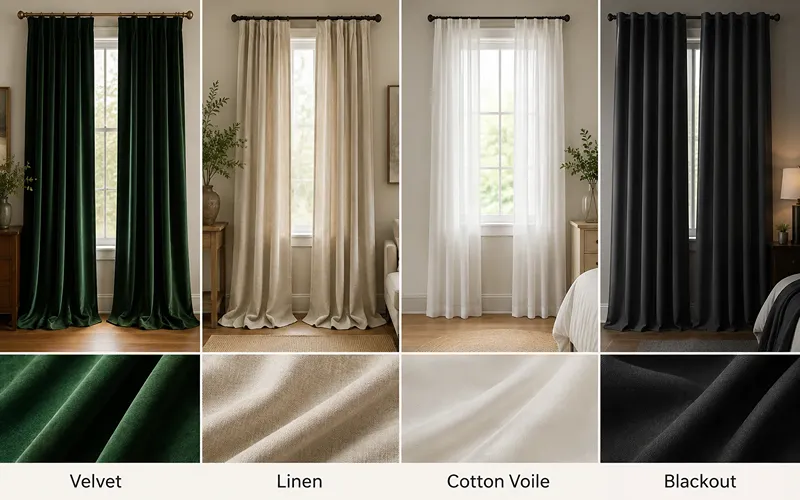
Fabric weight changes how a curtain hangs, so it’s worth factoring into your length decision.
- Heavy fabrics like velvet or thick linen drape beautifully in a puddle, the weight holds the folds in place instead of looking messy.
- Lightweight fabrics such as sheers or cotton voile look cleaner when they float just above the floor. A puddle in a light fabric tends to look flimsy rather than luxurious.
- Blackout curtains, which are usually heavier by design, tend to suit break or puddle lengths well, especially in bedrooms where you want maximum light control.
Common Mistakes to Avoid
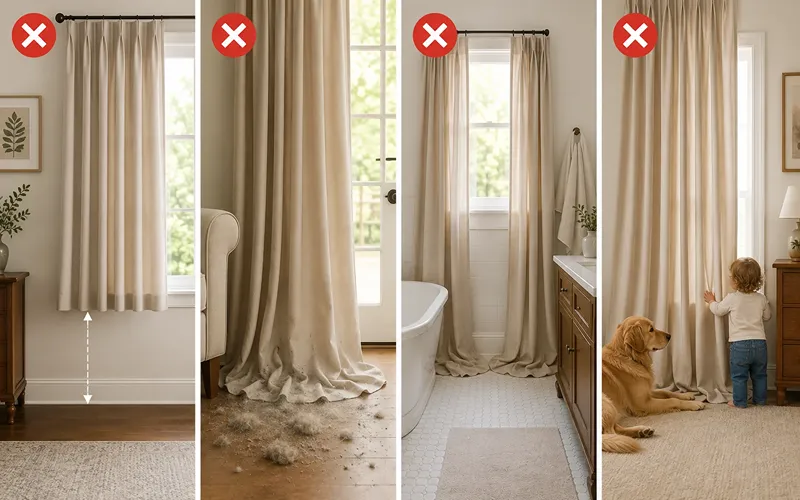
- Hanging curtains too short. Anything that floats more than an inch above the floor starts to look like a fit mistake rather than a deliberate style.
- Using heavy puddle lengths in high-traffic rooms. It looks stunning on day one and becomes a dust magnet within weeks.
- Ignoring the room’s function. A gorgeous puddle in a kitchen or bathroom will cause more problems than it solves.
- Forgetting about pets and kids. If you have a dog that likes to nap by the window or a toddler who grabs at everything, factor that into your decision before you commit to a floor-skimming length.
Final Thoughts
So, should curtains touch the floor? In most living spaces, yes, a floor-length curtain, whether floating just above the ground or gently breaking on it, gives a room a finished, elevated look that shorter curtains rarely achieve. But it’s not a one-size-fits-all rule. Bathrooms, kitchens, and homes with small children or pets often do better with shorter, more practical lengths.
The best approach is to think room by room: let your living room and bedroom curtains flow to the floor for that classic, elegant look, and reserve shorter, easier-to-maintain lengths for the spaces where practicality matters more than drama. Once you match the length to both the room and the fabric, you’ll rarely have to think about it again, it’ll just look right.