Whether you’re moving in without your old curtain rod, renting a place where drilling isn’t allowed, or simply after a window treatment that looks more custom than a store-bought rod, you don’t actually need a traditional rod to hang curtains. With a few household items, some adhesive hardware, or a little creativity, you can hang almost any curtain style securely and attractively.
This guide walks through 10 practical ways to hang window curtains without a rod, including what you’ll need, which curtain types work best with each method, the pros and cons, and tips to get a clean, professional-looking result, whether you’re a renter protecting a security deposit or a homeowner after a different look.
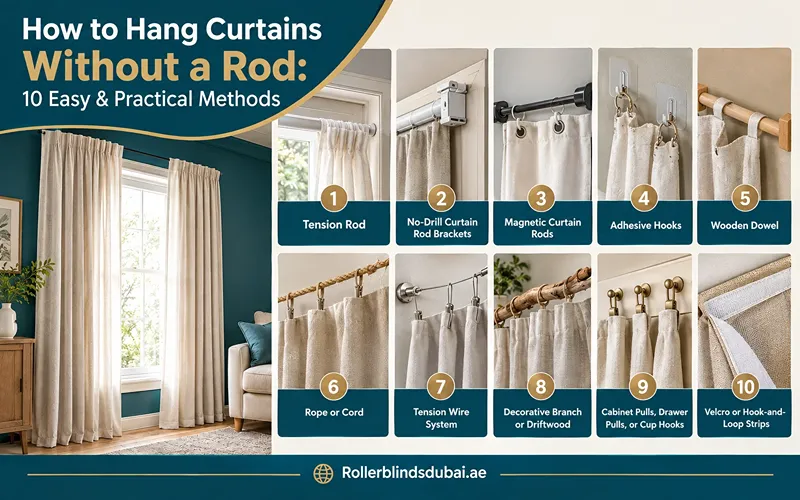
Quick Comparison: 10 Ways to Hang Curtains Without a Rod
| Method | Best For | Curtain Weight | Drilling Required |
| Tension rod | Window recesses, rentals | Light to medium | No |
| No-drill trim brackets | Wood window trim | Medium to heavy | No |
| Magnetic rod | Metal doors and frames | Light to medium | No |
| Adhesive hooks | Smooth walls, sheers | Light | No |
| Wooden dowel | Boho/rustic rooms | Light to medium | Yes (for brackets) |
| Rope or cord | Bohemian, casual spaces | Light | Optional |
| Tension wire | Modern, minimalist rooms | Light to medium | Yes (for anchors) |
| Decorative branch | Natural, farmhouse decor | Light | Yes (for brackets) |
| Cabinet pulls or cup hooks | Panels with grommets/tabs | Light to medium | Yes |
| Velcro / hook-and-loop strips | Temporary or no-sew setups | Light | No |
1. Tension Rod
How It Works
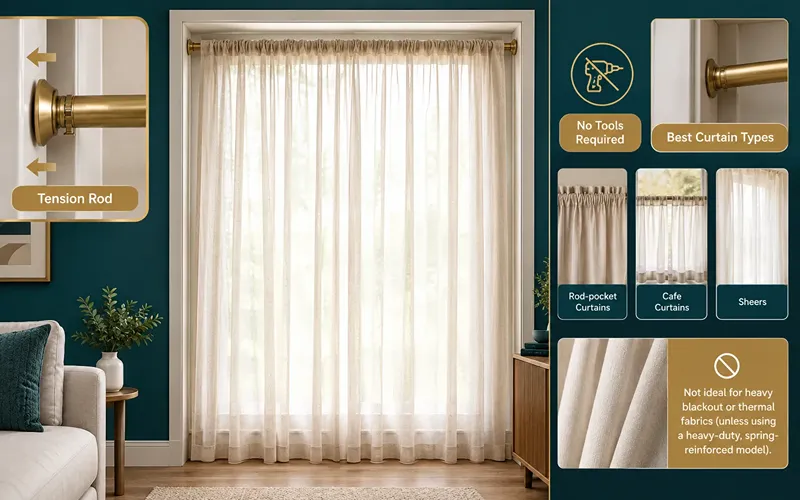
A tension rod is a spring-loaded pole that extends and locks in place using outward pressure against two solid surfaces, typically the sides of a window recess or an interior door frame. Because it relies on tension rather than hardware, it goes up and comes down in seconds.
What You’ll Need
- A tension rod sized to your window’s inside width
- No tools required
Best Curtain Types
Rod-pocket curtains, cafe curtains, and sheer curtains work best. Tension rods aren’t designed for heavy blackout or thermal fabric unless the rod is a heavy-duty, spring-reinforced model.
Pros
- No tools, drilling, or adhesive needed
- Fully reversible and reusable
- Inexpensive and widely available
Cons
- Can bow or sag under heavier fabric
- Only works inside a recessed frame or between two flat walls
- May loosen over time and need re-tightening
Installation Tips
Measure the inside width of your window frame, then choose a rod rated slightly longer so it has room to compress and expand. Twist to extend until it’s snug, and check it’s level before adding curtains.
2. No-Drill Curtain Rod Brackets
How It Works
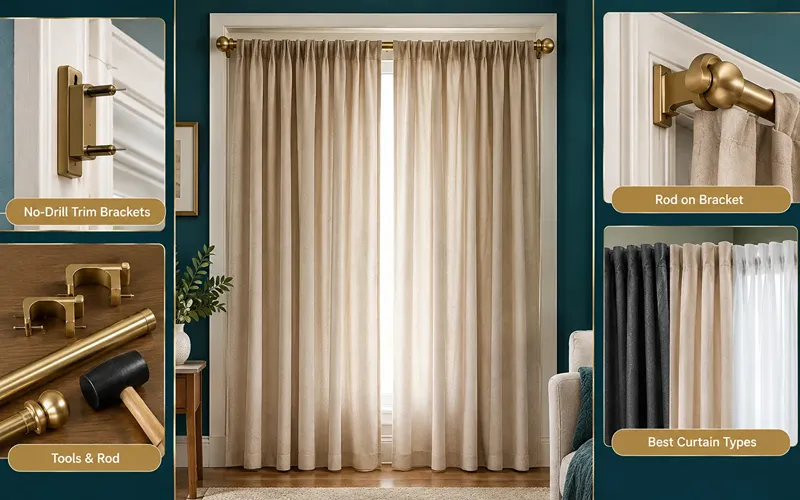
These brackets use small pins that press or tap directly into wooden window trim, similar to a thumbtack, rather than into drywall. A blackout curtain rod then rests on the bracket as it would with a traditional wall-mounted bracket.
What You’ll Need
- A set of no-drill trim brackets
- A rod compatible with the bracket size
- A rubber mallet or hammer (for tap-in styles)
Best Curtain Types
Because these brackets can support more weight than adhesive-based options, they suit heavier curtains, including blackout and lined drapery, in addition to lightweight panels.
Pros
- Higher weight capacity than most no-drill alternatives
- Fast installation, often under a few minutes per bracket
- Curtains hang and swing like a standard rod-and-bracket setup
Cons
- Requires wooden trim of a specific width, won’t work on drywall, tile, metal trim, or very wide/narrow molding
- Leaves small pin marks in the trim (minimal, but not entirely damage-free)
Installation Tips
Confirm your trim width matches the bracket’s specifications before buying. Position brackets at the same height on both sides of the window and check with a level before hanging the rod.
3. Magnetic Curtain Rods
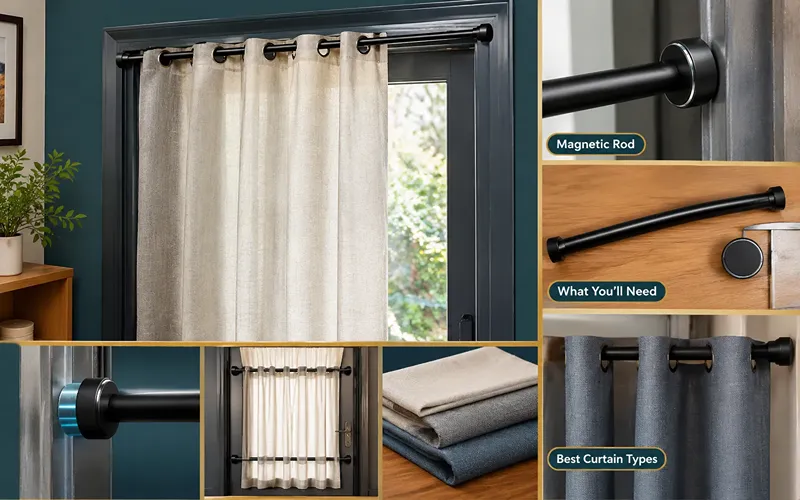
How It Works
Magnetic rods have strong magnets built into or attached at the ends, which grip metal surfaces such as steel doors or metal window frames. Simply press the rod against the surface, no tools needed.
What You’ll Need
- A magnetic linen curtain rod sized to your opening
- A metal surface with enough flat area for the magnets to sit flush
Best Curtain Types
Lightweight to mid-weight panels work well. For door curtains that need to stay in place as the door opens and closes, a top-and-bottom rod pair helps prevent swinging.
Pros
- Installs and removes in seconds
- No marks, holes, or residue
- Great for basement doors, garage entries, and metal-framed windows
Cons
- Only works on magnetic metal, won’t attach to wood, vinyl, or drywall
- Lower-cost models can shift or slide in high-traffic areas
- Weight capacity varies significantly by brand, so check the rating before buying
Installation Tips
Check that there’s enough flat metal surface above the glass or opening for both magnet ends to sit evenly, and test the rod’s hold with the curtains attached before letting go, some magnets grip well on their own but weaken once fabric weight is added.
4. Adhesive Hooks
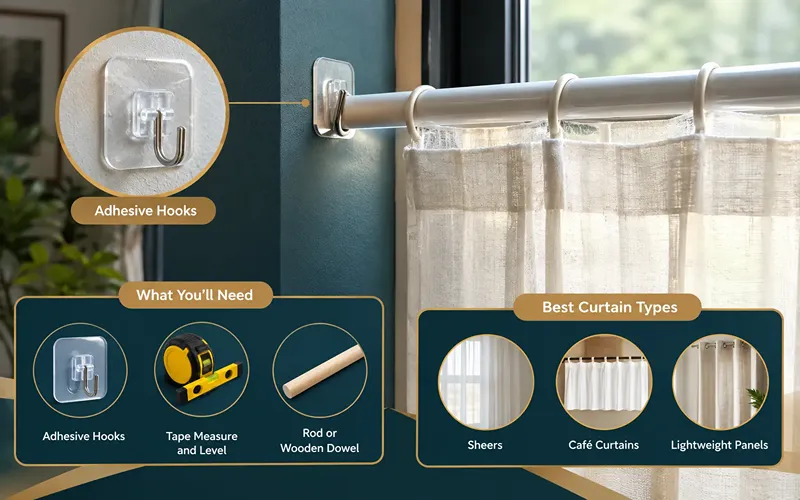
How It Works
Adhesive hooks stick directly to a smooth wall or window frame using a strong bonding strip, giving you a hook to rest a rod or curtain rings on without any hardware.
What You’ll Need
- Heavy-duty adhesive hooks rated for your curtain’s weight
- A tape measure and level
- A lightweight rod or wooden dowel
Best Curtain Types
Best suited to sheers, cafe curtains, and other lightweight panels. Most adhesive hooks are not rated for blackout or heavy drapery.
Pros
- No drilling or hardware
- Removes cleanly from most painted, smooth surfaces when instructions are followed
- Inexpensive and easy to find
Cons
- Weight limits are lower than other no-drill methods
- Won’t hold on textured walls, wallpaper, or brick
- Needs curing time (often 30-60 minutes) before you hang anything on it
Installation Tips
Measure and mark both hook positions before sticking anything down, so the rod hangs level. Press each hook firmly for the full recommended time, then let the adhesive cure completely before adding weight. For windows wider than about 30 inches, add a center hook for extra support.
5. Wooden Dowel
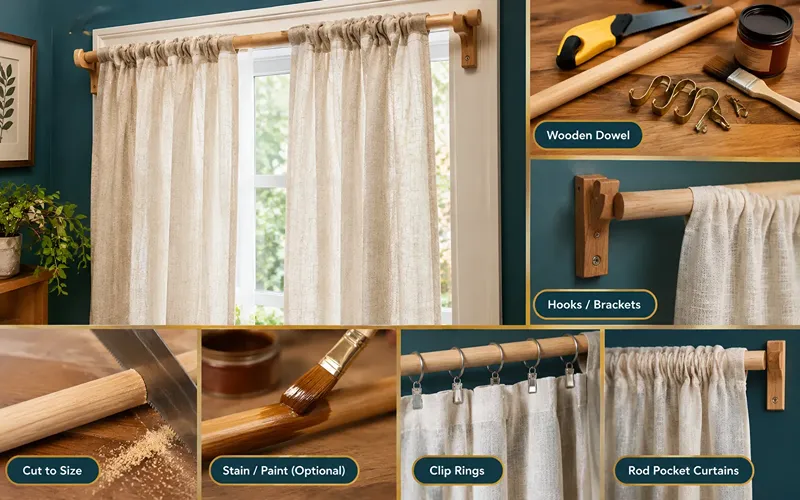
How It Works
A wooden dowel, cut to size and mounted on simple hardware such as hooks or small brackets, works as an affordable, custom-length alternative to a manufactured rod.
What You’ll Need
- A wooden dowel (diameter suited to your curtain’s rod pocket or ring size)
- A saw, if cutting to length
- Hooks, cup hooks, or small brackets to rest the dowel on
- Wood stain or paint (optional, for finish)
Best Curtain Types
Works well with rod-pocket curtains or panels with clip rings. Lighter to medium-weight fabrics suit dowels best, since thin wood can flex under heavier loads.
Pros
- Fully customizable length, diameter, and finish
- Inexpensive compared to designer curtain rods
- Fits farmhouse, boho, and natural-material decor styles
Cons
- Requires basic cutting and finishing work
- Mounting hardware (hooks or brackets) may still need drilling
- Not ideal for heavy or long curtain spans without a thicker dowel
Installation Tips
Choose a dowel diameter based on your curtain’s rings or rod pocket. Sand and finish the ends before mounting for a polished look, and support long spans with a center hook to prevent bowing.
6. Rope or Cord
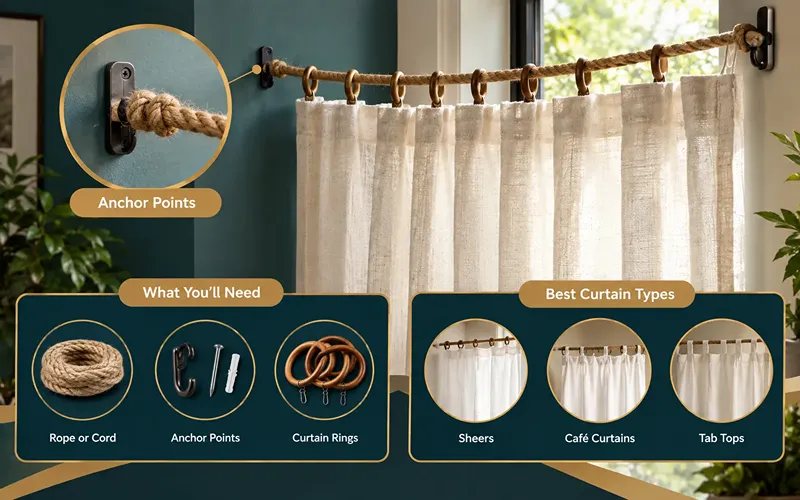
How It Works
A sturdy rope or cord is strung between two anchor points, hooks, nails, or existing hardware, and curtain rings or tab-top loops slide along it, similar to a rustic curtain rod.
What You’ll Need
- Durable rope or cord rated for your curtain’s weight
- Two anchor points (hooks or nails)
- Curtain rings, if your panels don’t have tabs or grommets
Best Curtain Types
Works best with lightweight to medium panels that have tab tops, grommets, or clip rings. Heavy drapery can stretch or sag natural fiber rope over time.
Pros
- Inexpensive and easy to source
- Adds a relaxed, bohemian look
- Adjustable tension and length
Cons
- Can sag or stretch under heavier curtains
- Anchor points may still require a nail or hook in the wall
- Less structured look than a rigid rod, which won’t suit every decor style
Installation Tips
Tie the rope taut between anchor points so it doesn’t dip in the middle. For wider windows, use a rope rated for higher weight, or add a center support point.
7. Tension Wire System
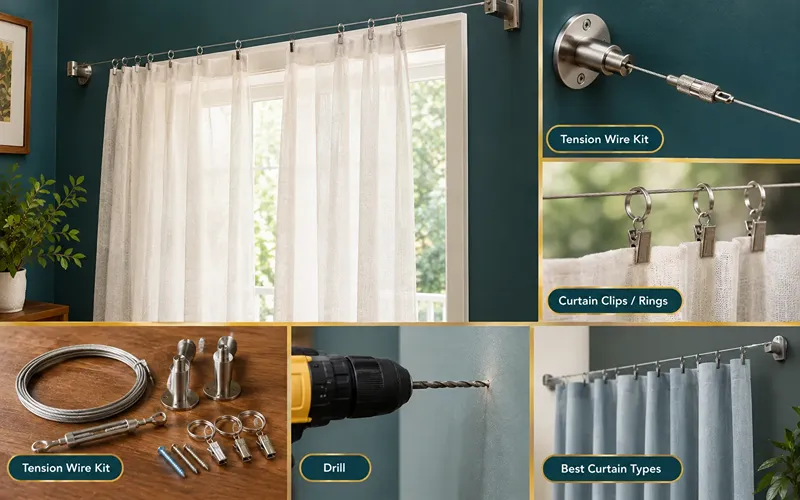
How It Works
A tension wire system stretches a thin, tensioned wire cable between two wall-mounted brackets. Curtain rings or clips attach to the wire, giving a minimal, almost invisible support line.
What You’ll Need
- A tension wire kit (wire, turnbuckle, and end brackets)
- Curtain clips or rings
- A drill, for mounting the end brackets
Best Curtain Types
Suited to lightweight to medium curtains, room dividers, or sheer panels. The thin wire profile works particularly well for a modern, minimalist look.
Pros
- Nearly invisible when not in use
- Good for room dividers and unconventional spaces, not just windows
- Adjustable tension keeps the wire taut over time
Cons
- End brackets typically require drilling to anchor securely
- Not built for heavy blackout curtains
- Overly long spans may need a mid-point support
Installation Tips
Mount the end brackets first, then thread and tighten the wire using the turnbuckle until there’s no visible sag. Test the tension with your curtains attached before considering the installation finished.
8. Decorative Branch or Driftwood
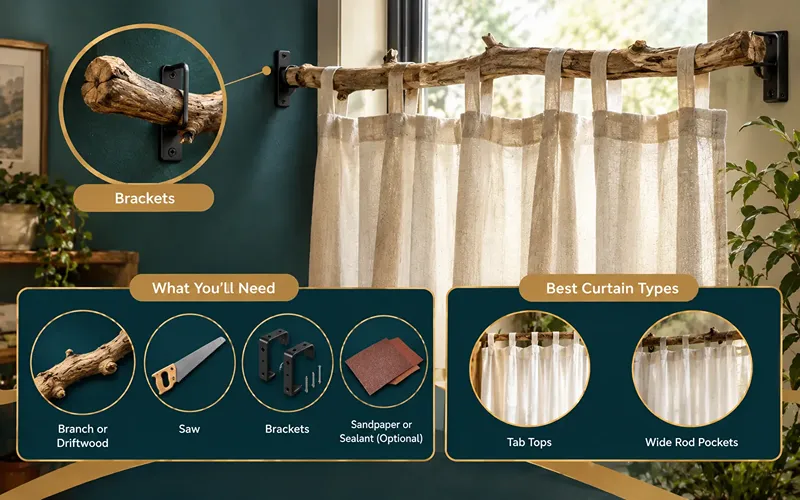
How It Works
A sturdy tree branch, piece of driftwood, or similar natural material is mounted on brackets and used in place of a manufactured rod, giving curtains an organic, one-of-a-kind look.
What You’ll Need
- A straight, sturdy branch or piece of driftwood
- A saw (to trim side branches or cut to length)
- Two brackets sized to fit the branch’s diameter
- Sandpaper or sealant (optional)
Best Curtain Types
Best for lightweight panels with tab tops or wide rod pockets, since branch diameter and strength vary. Avoid heavy drapery unless the branch is notably thick and solid.
Pros
- Completely unique and decor-specific
- Low-cost if sourced locally
- Fits natural, farmhouse, or coastal styles well
Cons
- Strength and straightness vary, so not every branch will work
- Mounting brackets usually require drilling
- Needs cleaning, drying, and sometimes sealing before use indoors
Installation Tips
Choose a branch that’s dry, pest-free, and strong enough to hold your curtain’s weight without bending. Test the fit and balance before fully mounting the brackets.
9. Cabinet Pulls, Drawer Pulls, or Cup Hooks
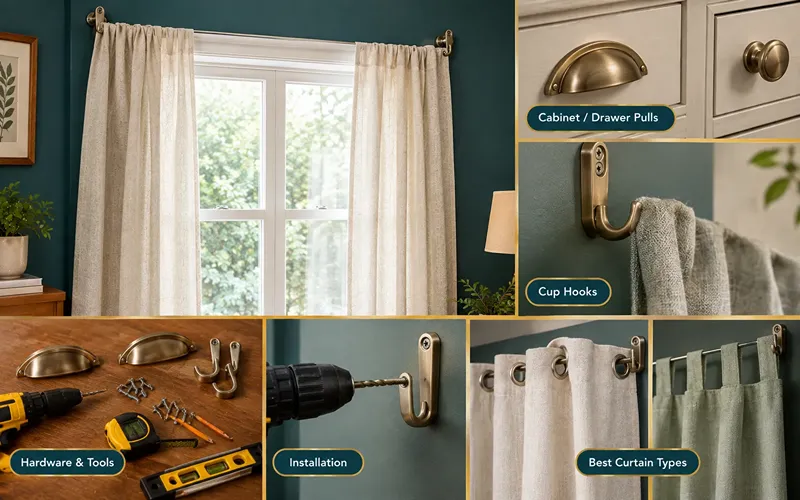
How It Works
Cabinet or drawer pulls, or simple cup hooks, are mounted at the top corners of a window and used to drape or hang fabric directly, without a rod running between them.
What You’ll Need
- Two matching pulls or hooks
- A drill and mounting screws
- A tape measure and level
Best Curtain Types
Works best for lightweight fabric or panels with eyelets, grommets, or fabric loops that can slip directly over the hardware.
Pros
- Adds a decorative, hardware-forward detail
- Wide range of finishes to match existing decor
- Simple to install with basic tools
Cons
- Mounting still requires drilling into the wall or trim
- Best suited to lightweight fabric, since there’s no rod for support along the width
- Curtains may not glide open and closed as smoothly as on a rod
Installation Tips
Measure and mark both mounting points at equal height before drilling. For a professional finish, choose pulls that complement your existing cabinet or door hardware.
10. Velcro or Hook-and-Loop Strips
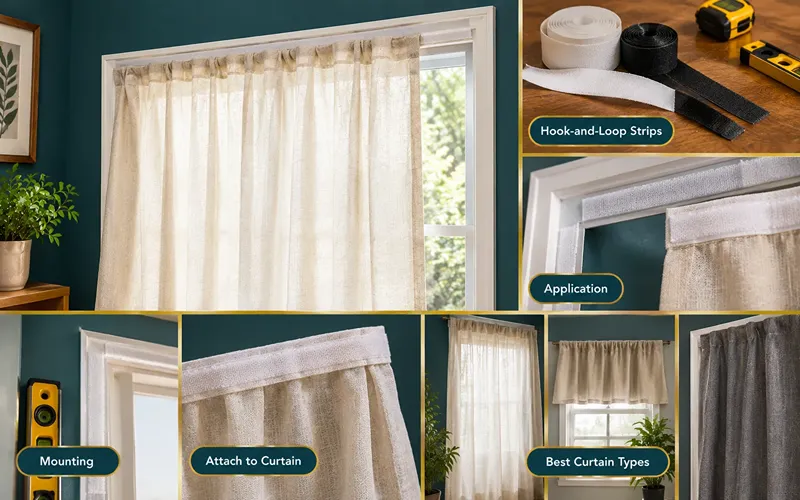
How It Works
Unlike adhesive hooks, which hold up a separate rod, hook-and-loop strips attach directly to the curtain itself: one side sticks to the wall or window frame, and the matching side sticks to the curtain’s top edge or a lightweight support strip sewn or clipped to the fabric. This skips the rod entirely.
What You’ll Need
- Heavy-duty hook-and-loop strips rated for your curtain’s weight
- A tape measure and level
Best Curtain Types
Best for lightweight curtains, valances, or fabric panels rather than structured drapery, since the bond strength is limited.
Pros
- Fully removable and reusable
- No drilling or permanent marks
- Simple to install without tools
Cons
- Lower weight capacity than brackets or magnetic rods
- Adhesive backing may not hold on textured or unfinished surfaces
- Bond can weaken over time with repeated opening and closing
Installation Tips
Press strips firmly for the full recommended time before attaching any weight, and check the manufacturer’s cure time. For wider curtains, add a center strip for extra hold.
How to Choose the Right No-Rod Method
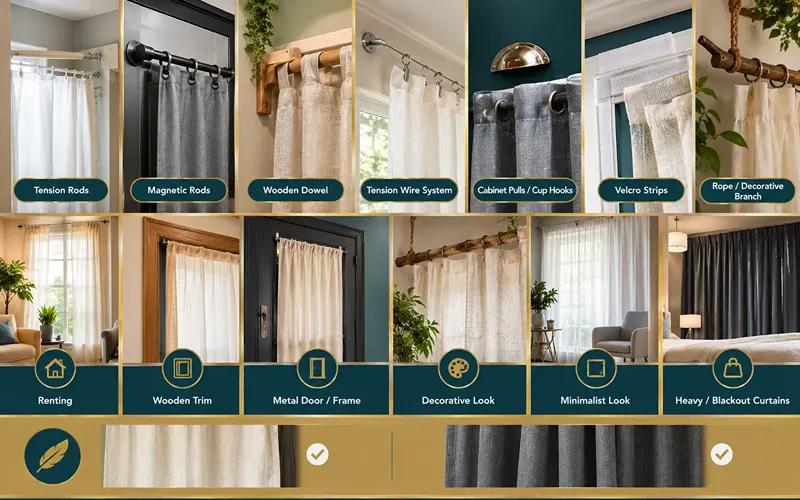
- Renting and want zero damage: tension rods, magnetic rods, adhesive hooks, or Velcro strips
- Have wooden window trim: no-drill trim brackets for the highest weight capacity without drilling into drywall
- Have a metal door or frame: magnetic curtain rods
- Want a decorative, personalized look: wooden dowels, rope, or a decorative branch
- Prefer a minimalist, modern aesthetic: a tension wire system
- Hanging heavy or blackout curtains: no-drill trim brackets or a heavy-duty tension rod rated for the weight
If your curtains are lightweight, almost any method on this list will work. For heavier fabric, prioritize methods with a stated weight rating rather than improvised solutions.
Conclusion
You don’t need a traditional curtain rod to get curtains up cleanly and securely. From no-drill trim brackets and magnetic rods to rope, dowels, and tension wire, there’s a method here to match nearly any window, wall type, and decor style, whether you’re avoiding damage as a renter or simply want a more custom look. Match the method to your curtain’s weight and your surface type, double-check the installation tips above, and you’ll have a secure, good-looking window treatment without ever picking up a drill (unless you choose to).
Frequently Asked Questions
Can I hang heavy curtains without a rod?
Yes, but your options narrow. No-drill trim brackets and heavy-duty tension rods are generally the best choices for blackout or lined drapery, since most adhesive-based and rope methods are rated for lighter fabric only.
What’s the best rod-free method for renters?
It depends on your surface: a tension rod for a recessed window, a magnetic rod for a metal door, or adhesive hooks and Velcro strips for a smooth wall. All four remove without a trace, which matters if you want your security deposit back.
Will adhesive hooks damage my walls?
Most heavy-duty adhesive hooks remove cleanly from smooth, painted walls when you follow the manufacturer’s removal instructions. They’re not recommended for textured walls, wallpaper, or unfinished surfaces.
Do magnetic curtain rods work on any door?
Only on doors or frames with enough exposed metal for the magnets to grip. They won’t hold on wood, vinyl, or fully painted-over surfaces without metal underneath.