

Most people clean their window glass and never look down. Then one day the window sticks, or you notice a gray line of dust, dead bugs, and grime packed into the corners. Window tracks are among the most overlooked spots in a home, and they get dirty fast.
The good news is that learning how to clean window tracks is simple. You don’t need special equipment or harsh chemicals. With a vacuum, an old toothbrush, and a few household supplies, you can get even very dirty tracks clean in about 15 to 20 minutes per window.
This guide by Roller Blinds Dubai covers why tracks get dirty, the tools you’ll need, a full step-by-step process, and tips for tough grime and hair. It also covers the mistakes that make the job harder and how to keep your tracks cleaner for longer.
Why Window Tracks Get So Dirty
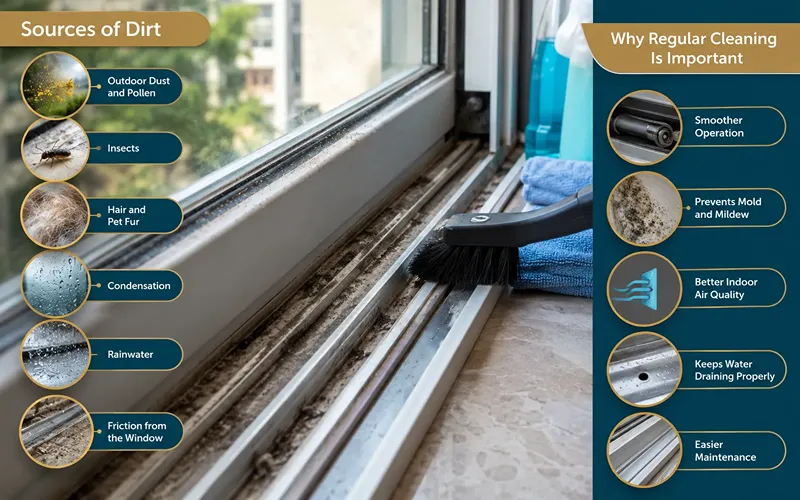
Window tracks are the grooves your window slides along when you open and close it. They sit low, they are narrow, and they are open to both indoor and outdoor air. That combination makes them a natural trap for debris.
The most common sources of dirt are:
- Outdoor dust and pollen blow in whenever the window is open, and settle in the lowest point, which is the track.
- Insects crawl into the grooves and often die there, especially in spring and summer.
- Hair and pet fur drift through the house and collect in corners, especially near windows where pets like to sit.
- Condensation forms on the glass in cold weather and runs down into the track. Moisture mixes with dust to form a sticky paste that hardens over time.
- Rainwater can splash in if the window is open or the seals are worn.
- Friction from the window itself grinds dirt into a fine black grime every time the sash slides back and forth.
Because tracks are narrow and have corners, a quick wipe rarely reaches everything. Dirt that isn’t removed becomes compacted, and compacted grime is much harder to clean than loose dust.
Why Regular Cleaning Is Important
Clean tracks look better, but there are practical reasons to keep up with them as well.
Windows open and close more smoothly. Grit in the track acts like sandpaper. It makes windows stiff, and over time it can wear down rollers, seals, and the track surface itself.
It prevents mold and mildew. Moisture plus organic debris like dust, pollen, and dead insects creates ideal conditions for mold, especially in bathrooms, kitchens, and humid climates.
It improves indoor air quality. A dirty track holds allergens right where air enters your home. Each breeze can push that dust back into the room.
It keeps water draining properly. Most windows have small drainage holes called weep holes in the outer part of the track. When dirt blocks them, rainwater can pool in the track and even seep toward walls or sills.
It’s easier in the long run. A track cleaned every few weeks takes two minutes. A track ignored for two years can take half an hour of scrubbing.
Tools and Supplies You’ll Need
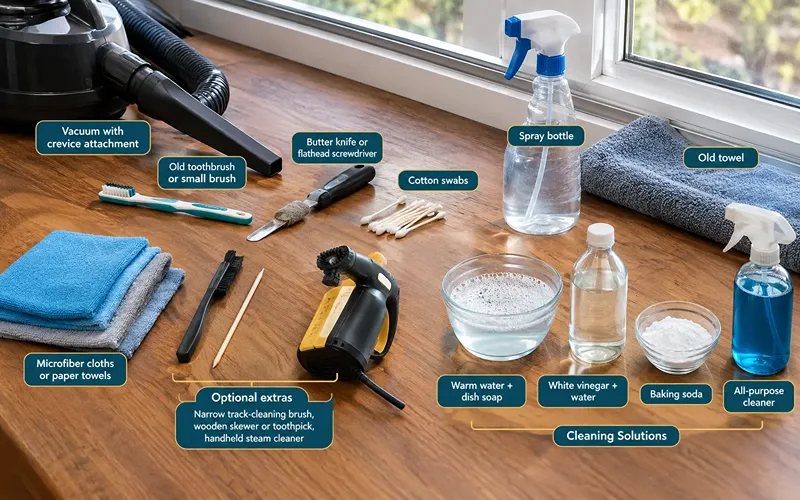
You probably already have most of what you need. Here is what works best.
Basic Tools
- Vacuum with a crevice attachment. This is the most important tool. A handheld or shop vacuum also works well.
- Old toothbrush or small stiff brush. This is for scrubbing grooves and corners.
- Butter knife or flathead screwdriver. Wrapped in a cloth, it reaches deep into narrow channels.
- Cotton swabs. These are for corners and weep holes.
- Microfiber cloths or paper towels. Use them for wiping and drying.
- Spray bottle. It applies cleaner evenly without flooding the track.
- Old towel. Lay it under the window to catch drips.
Optional extras include a narrow track-cleaning brush, a wooden skewer or toothpick for tight spots, and a handheld steam cleaner for very heavy buildup.
Cleaning Solutions
You don’t need a strong chemical cleaner. Any of these household options will do the job:
- Warm water with a few drops of dish soap. This is gentle, safe on most materials, and good for general grime.
- Equal parts white vinegar and warm water. This is good for mildew and light mineral deposits.
- Baking soda. It works as a mild abrasive for stuck-on dirt.
- An all-purpose cleaner. It’s convenient if you already have one.
Check your window frame material before choosing a cleaner. Vinyl and aluminum handle most household cleaners well. Painted or natural wood needs very little moisture and a mild, wood-safe cleaner. When in doubt, check the manufacturer’s care instructions or test a small hidden spot first.
How to Clean Window Tracks Step by Step
This method works for sliding windows, double-hung windows, and sliding door tracks. The key idea is simple: remove dry dirt first, then clean with moisture, then dry completely.
Step 1: Prepare the Window
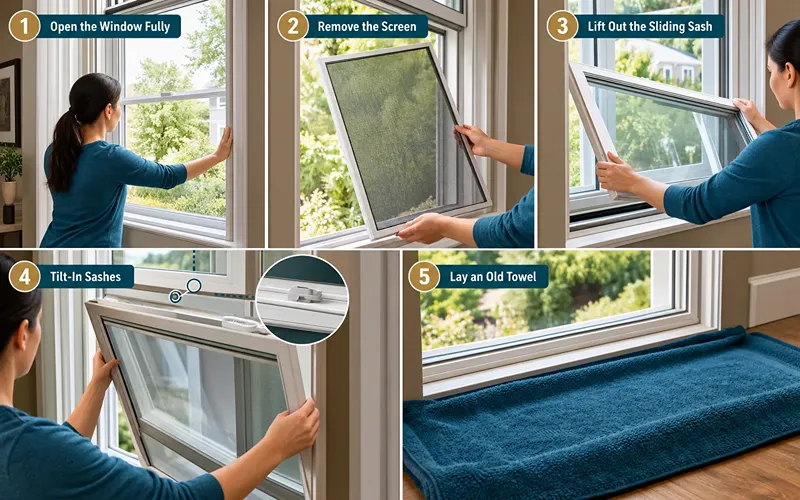
Open the window fully so you can reach as much of the track as possible. If your window has a screen, remove it and set it aside to clean separately.
For horizontal sliding windows, you can often lift the sliding sash out of the track completely. This gives you access to the full length, including the section usually hidden under the window. Handle the glass carefully, since sashes can be heavier than they look. Ask for help with large ones.
Many double-hung windows have tilt-in sashes that fold inward for cleaning. Check for small latches at the top of the sash.
Lay an old towel on the floor or sill below the window to catch any drips.
Step 2: Loosen and Remove Loose Dirt
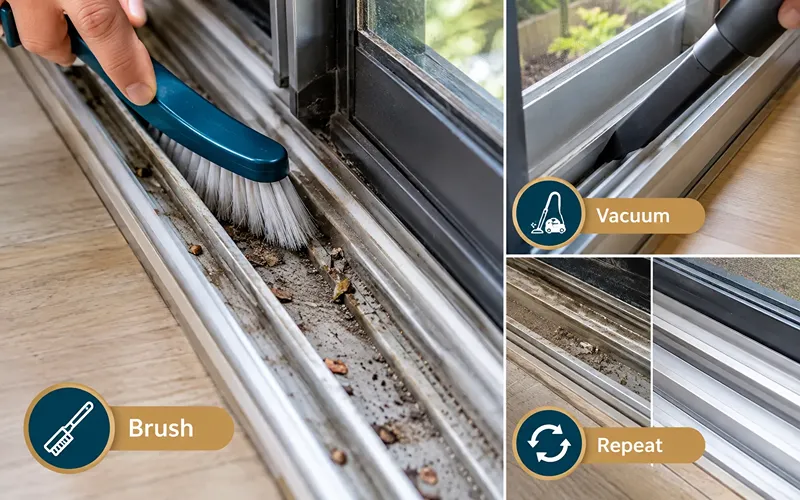
Start dry. Use your toothbrush to loosen dust, dead insects, and debris from the corners and grooves. Brush everything toward the middle of the track.
Then vacuum the entire track with the crevice tool. Go slowly and work into each corner. Repeat the brush-and-vacuum cycle once or twice if there is a lot of loose debris.
Don’t skip this step. If you add water to loose dirt, it turns into mud that smears into every corner and becomes harder to remove.
Step 3: Apply Your Cleaning Solution
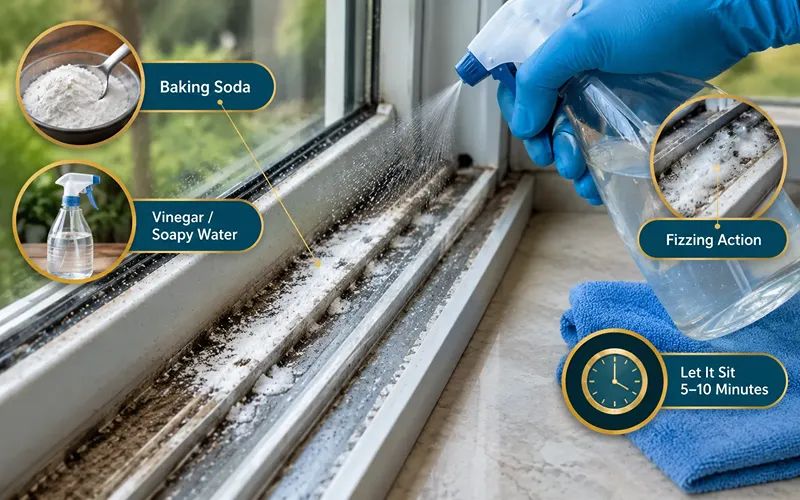
Spray the track with your chosen solution. Use enough to dampen the grime but not so much that liquid pools.
For heavier buildup, sprinkle a thin layer of baking soda along the track first, then spray it with vinegar or soapy water. The mixture will fizz. The fizzing doesn’t do much cleaning on its own, but the damp baking soda paste gives you a gentle scrubbing agent.
Let the solution sit for 5 to 10 minutes. This soaking time is what softens dried-on grime, and it saves you a lot of scrubbing.
Step 4: Scrub the Track
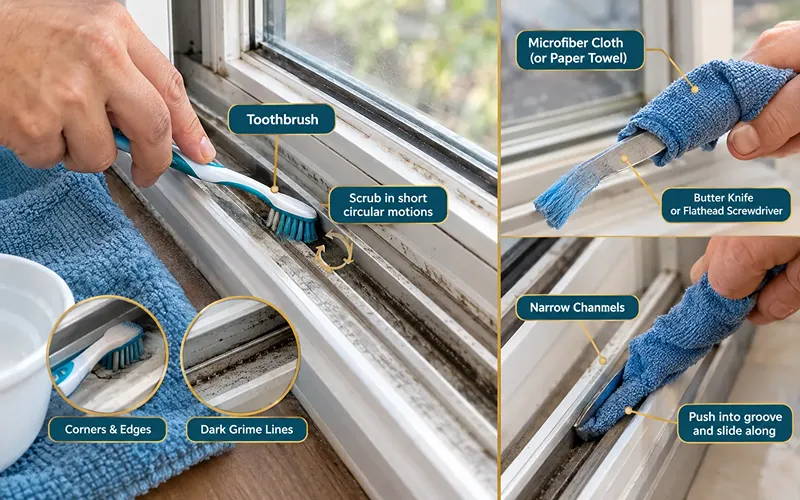
Scrub the track with your toothbrush, working in short sections. Focus on corners, edges, and any dark lines of grime. Use small circular motions for flat areas and back-and-forth strokes along the grooves.
For narrow channels your brush can’t reach, wrap a microfiber cloth or paper towel around a butter knife or flathead screwdriver. Push it into the groove and slide it along the full length.
Step 5: Wipe Out the Dirt
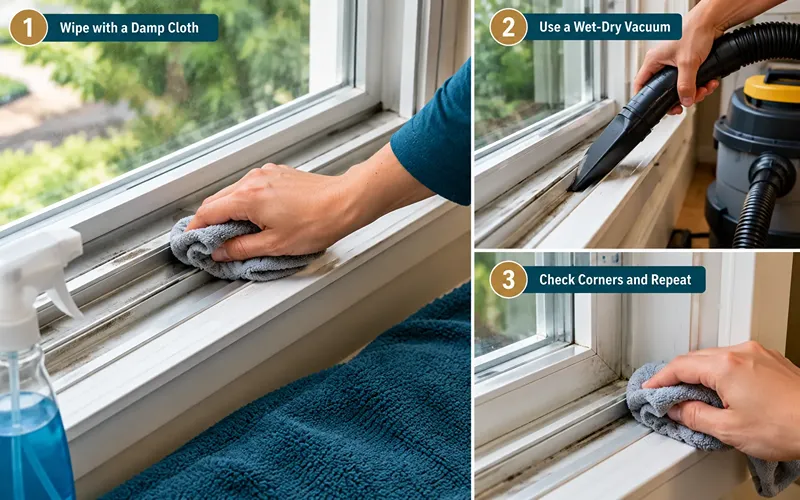
Wipe away the loosened grime with a damp cloth or paper towel. The cloth-wrapped knife works well here too. Rinse or replace your cloth often, because a dirty cloth just moves grime around.
If you have a wet-dry vacuum, you can also use it to suck up the dirty liquid.
Look closely at the corners. If grime remains, repeat Steps 3 through 5 on those spots.
Step 6: Clear the Weep Holes
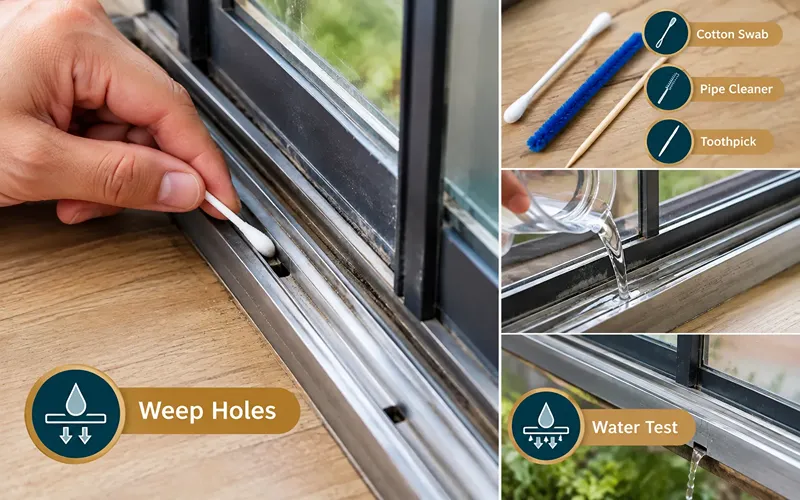
Look along the outer edge of the track for small slots or holes. These are weep holes, and they let rainwater drain outside. Gently clear them with a cotton swab, pipe cleaner, or toothpick.
To test them, pour a small amount of water into the track. It should drain out within a few seconds. If it pools, the holes are still blocked.
Step 7: Rinse and Dry Thoroughly

Wipe the track one more time with a cloth dampened with plain water to remove any cleaning residue. Soap or vinegar residue left behind can attract new dirt.
Then dry the track completely with a clean, dry cloth, including corners and grooves. Leaving moisture behind invites mold and mildew. If possible, leave the window open for 15 to 30 minutes to let the track air-dry fully before closing it.
Step 8: Lubricate the Track (Optional)
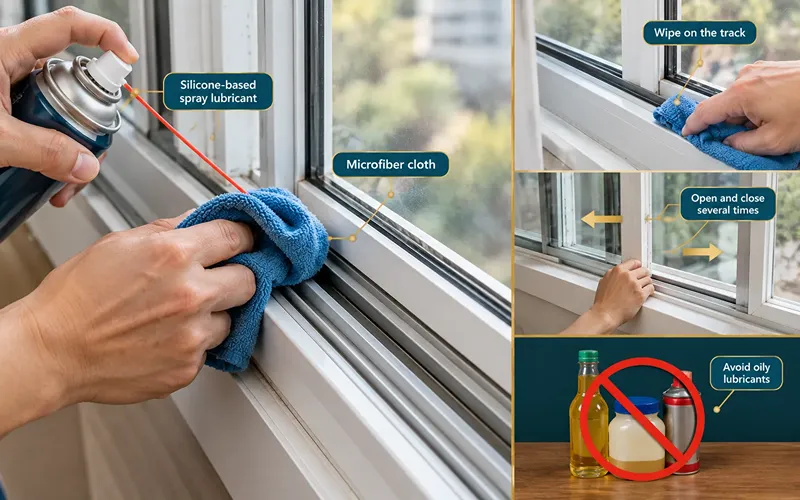
If your window still slides stiffly after cleaning, apply a small amount of silicone-based spray lubricant or dry lubricant to the track. Spray it onto a cloth and wipe it on rather than spraying directly, so it doesn’t get onto the glass. Then open and close the window several times to spread it evenly.
Avoid oily products like cooking oil or petroleum-based lubricants. They attract dust and turn into sticky grime quickly.
Tips for Removing Stubborn Dirt, Hair, and Grime
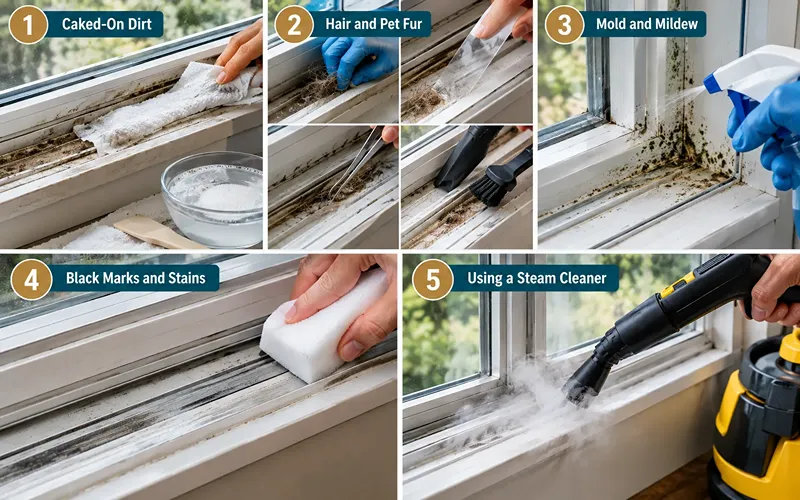
Some tracks need more than a standard clean. Here’s how to deal with the most common problem areas.
Caked-On Dirt
For dirt that has hardened into a crust, give your cleaning solution more time to work. Soak a paper towel in warm soapy water or diluted vinegar and lay it along the track for 15 to 20 minutes. This keeps the grime wet and softens it far better than a quick spray.
After soaking, gently scrape loosened chunks with a plastic scraper or a wooden skewer. Avoid metal blades on vinyl or painted surfaces, since they can scratch.
Hair and Pet Fur
Hair tends to wrap around debris and cling to damp surfaces, which makes it hard to wipe away. Remove it while the track is still dry, before adding any liquid.
A few methods work well:
- Rubber gloves. Run a slightly damp gloved fingertip along the track. Hair bunches up and is easy to pick out.
- Tape. Press strips of packing tape or a lint roller into the track to lift hair from corners.
- Tweezers. Use them for hair wrapped around rollers or tangled in the weather stripping.
- Vacuum first, then brush, then vacuum again. Brushing pulls hair out of corners so the vacuum can grab it.
If you have pets that like to sit in windows, clean those tracks more often. Fur builds up quickly and mixes with dust into a felt-like layer.
Mold and Mildew
Black or green spots in corners are usually mildew. Spray the area with equal parts white vinegar and water, let it sit for 10 to 15 minutes, then scrub and wipe clean. Dry the area very thoroughly afterward.
Wear gloves, and open the window for ventilation. If mold keeps coming back, it often points to a moisture problem such as blocked weep holes, worn seals, or heavy condensation. Fixing the cause will help more than scrubbing harder.
Black Marks and Stains
After cleaning, you may notice gray or black streaks on vinyl or aluminum tracks. A melamine sponge (often sold as a “magic eraser”) can lift these marks. Use light pressure. It is mildly abrasive and can dull glossy finishes if you scrub too hard.
Using a Steam Cleaner
A handheld steam cleaner is very effective on heavy grime, because heat and moisture soften buildup quickly. It works well on aluminum and most vinyl tracks. Avoid using steam on painted or natural wood, which can swell or blister.
A few precautions matter here. Vacuum first. Wipe as you go so loosened grime doesn’t settle back in. Don’t blast cold window glass with steam on a very cold day, because sudden temperature changes can stress the glass. If your steamer’s instructions recommend distilled water, use it to prevent mineral buildup inside the machine.
Common Mistakes to Avoid

Even a simple job can go wrong. These are the mistakes that most often make cleaning harder or damage the window.
Adding water before vacuuming. This is the most common mistake. Wet dust becomes mud, and mud spreads into corners and dries hard.
Using too much liquid. Flooding the track can push dirty water into the frame, onto walls, or through weep holes onto the exterior wall. Spray lightly and wipe often.
Mixing cleaning products. Never mix bleach with vinegar or with ammonia-based cleaners. These combinations release harmful fumes. Stick to one cleaner at a time and rinse between products.
Using harsh abrasives or metal tools. Steel wool, wire brushes, and metal scrapers can scratch vinyl, aluminum, and painted finishes. Scratches trap even more dirt later.
Ignoring weep holes. A clean-looking track with blocked drainage holes can still collect standing water after rain.
Skipping the drying step. Moisture left in corners is one of the main causes of mildew. Always dry completely before closing the window.
Using oily lubricants. Oil-based products attract dust and turn into grime. Use silicone-based or dry lubricants instead.
Forcing a stuck window. If the window won’t slide after cleaning, don’t force it. Check for debris under rollers, bent tracks, or broken hardware first.
Leaning out of upper-floor windows. For second-story windows, clean the outer track from inside using tilt-in sashes, or hire a professional. No clean track is worth a fall.
Simple Maintenance Tips to Keep Tracks Cleaner for Longer
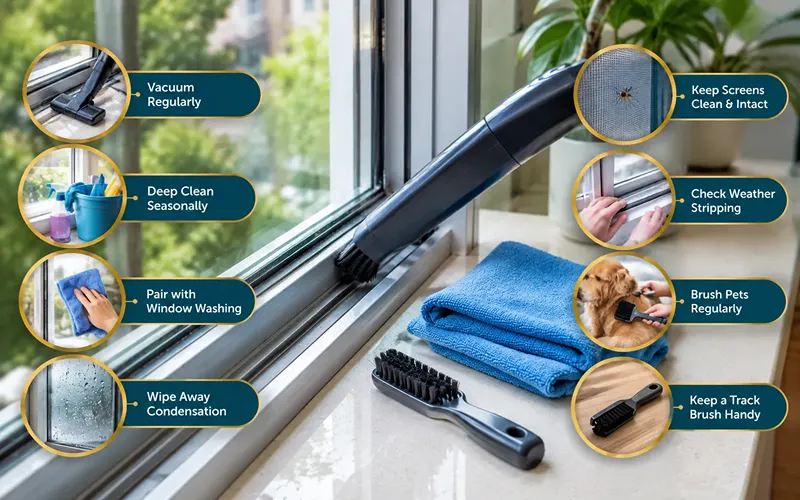
Once your tracks are clean, a few easy habits will keep them that way.
Vacuum regularly. A two-minute pass with the crevice tool every two to four weeks prevents buildup. Add it to your normal vacuuming routine.
Deep clean seasonally. A full clean every three to four months is enough for most homes. Clean more often during pollen season, after storms, or if you live near a busy road, construction, or dusty areas.
Pair it with window washing. Whenever you clean the glass, clean the tracks too. Your supplies are already out, and the window is already open.
Wipe away condensation. In cold months, wipe water off the glass and sill in the morning before it runs into the track. Good ventilation and a dehumidifier in humid rooms also help.
Keep screens clean and in good repair. Screens block insects, leaves, and some dust. Torn screens let in far more debris.
Check weather stripping. Worn or cracked seals let in more dust, water, and drafts. Replacing them is usually inexpensive.
Brush pets regularly. Less loose fur in the house means less fur in your tracks.
Keep a dedicated track brush handy. A small brush stored near the vacuum makes quick cleanups easy enough that you’ll actually do them.
Final Thoughts
Now that you know how to clean window tracks properly, the job is less of a chore than it looks. The process comes down to a few habits: remove dry dirt first, let your cleaner soak, scrub the corners, clear the weep holes, and always dry the track completely.
A deep clean once every few months and a quick vacuum in between will keep your windows sliding smoothly, reduce dust and mold, and help your windows last longer.
Frequently Asked Questions
How often should I clean my window tracks?
Vacuum them every two to four weeks, and deep clean every three to four months. Windows that are opened often, face a busy street, or are in humid rooms like bathrooms may need attention more frequently.
What is the best homemade cleaner for window tracks?
Warm water with a few drops of dish soap works for most tracks. For mildew or tougher grime, use equal parts white vinegar and warm water, plus a sprinkle of baking soda for scrubbing. Always test on a small area first, especially on wood.
Can I use vinegar on all window tracks?
Diluted vinegar is safe for most vinyl and aluminum tracks. Avoid using it heavily on natural stone sills, and use it sparingly on painted or natural wood, since excess moisture can damage the finish. Rinse with plain water afterward so no acidic residue remains.
What are the small holes in the bottom of my window track?
These are weep holes. They let rainwater drain out of the track to the outside. They clog easily with dirt and insects, so clear them with a cotton swab or pipe cleaner every time you clean the track.
Why does my window still stick after cleaning the tracks?
If the track is clean and dry, the problem may be worn rollers, damaged weather stripping, a bent track, or swelling in wooden frames. Try a silicone-based lubricant first. If the window still sticks, check the hardware or contact a window repair professional.