
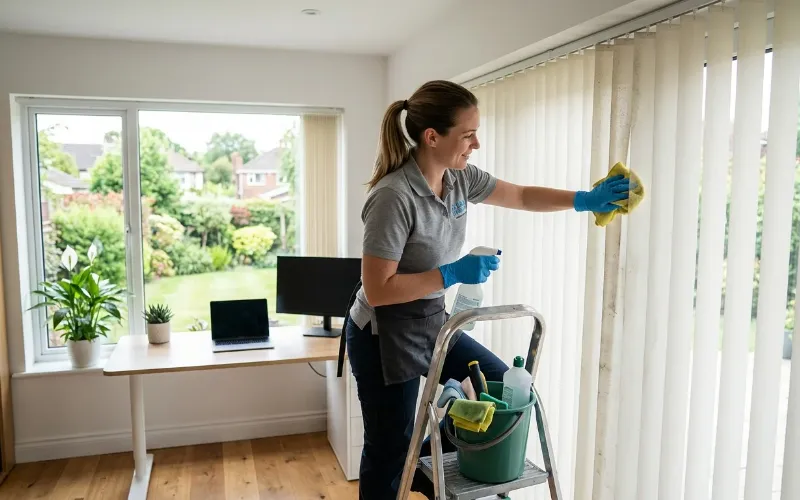
Cleaning the vertical blinds is important for dust removal, allergen elimination, and improving air quality. Tidy vertical shades create a fresh, aesthetic indoor look while providing ideal functionality. Vertical window blinds require low maintenance and prevent the cost of hiring a professional cleaner.
To clean vertical blinds safely, improper techniques cause bending, fraying, or warping that destroys the look of the blinds. Clean vertical shades can easily open and close, helping maintain overall hygiene in the home and office. If you have decided and are looking for how to clean vertical window blinds without damaging them? Then follow the expert blind-cleaning guide below for ease.
Types Of Vertical Blinds (Know Before You Clean)
Vertical window blinds are not a single type; they are available in multiple types. And every type of window blind is exposed to dirt, moisture, and wear and tear. That is why every other blind, made from a different material, requires a different cleaning method. View some of the most popular blind types below to identify how they differ in cleaning.
Fabric Vertical Blinds

Fabric vertical blinds are made from heavy-duty materials that withstand high traffic without wear and tear. They are either made with blackout, sheer, linen, velvet, or organza fabric. This fabric gives perfect light control and privacy in the room. Furthermore, they accumulate more dust than other material blinds, thus requiring more thorough cleaning.
Vinyl/ PVC Blinds
These water-resistant blinds, made from vinyl or PVC, are highly durable. To clean vinyl vertical blinds, wipe them with a microfiber cloth. They are simple to clean and stain-resistant blinds. Due to its rigid core and moisture-repellent feature, it is ideal for the kitchen and bathroom.
Aluminum Blinds

Aluminum window blinds are rust-resistant and lightweight in nature. Due to its sleek design and delicate look, they give modern appeal to interiors and exteriors. These motorized blinds are featured as vertically hanging slats that rotate 180 degrees. Due to its rotation, you get controlled light and privacy in the room. They are wipeable blinds and easy to maintain.
Why Cleaning Methods Depend On Material
The choice of blind cleaning method depends on the material, as each material has unique properties. Such as material hardness, porosity, and chemical sensitivity. Further, some materials attract grease, such as stainless steel. While others contain minerals and alkalines that increase the degradation process. You need to refer to the vertical blinds cleaning guide for quick, easy maintenance.
Tools & Supplies You’ll Need
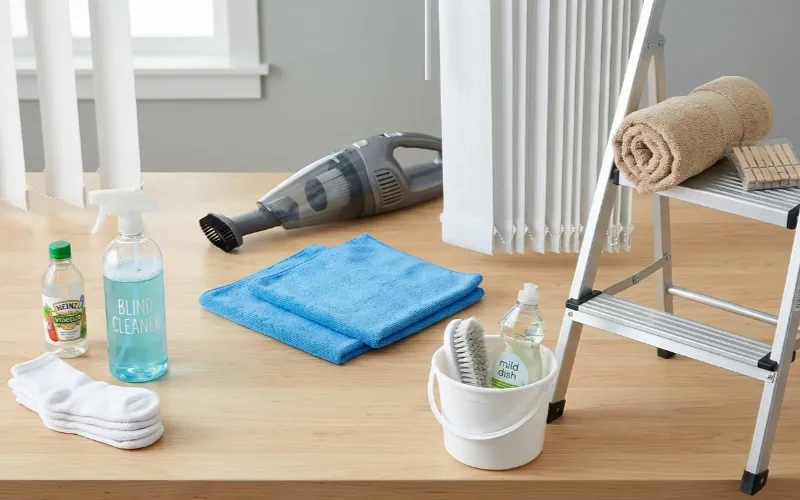
It is very important to gather all the required tools, materials, and necessary items right before cleaning. It saves you time and energy and provides a hassle-free cleanup process. Here is the list of the best tools to clean blinds.
- Dish Soap
- Towel
- Sponge
- Water
- Microfiber Cloth
- Vacuum Cleaner
- Bathtub
- Vinegar
How To Clean Vertical Blinds Without Damaging Them (Step-by-Steps)
It is important to clean the window blinds, but care should be taken during the cleaning process. To get dirt-free, hygienic vertical slats, follow the step-by-step process below for your convenience.
Regular Dusting Method
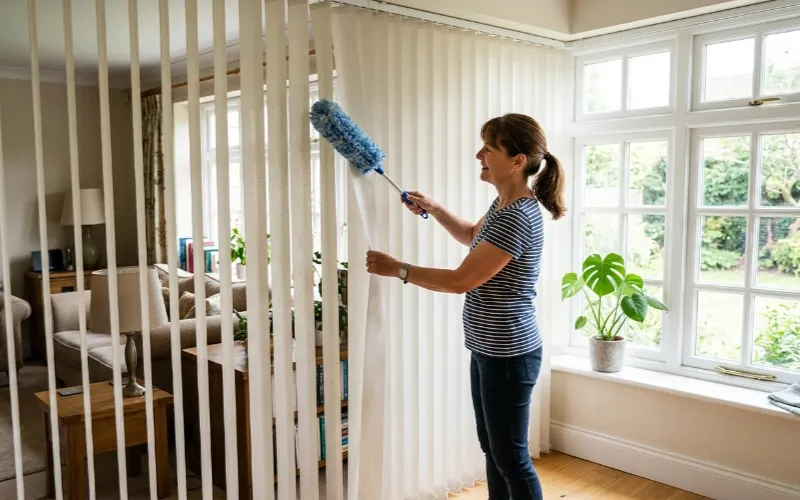
To begin the process, close these panel blinds fully and remove the surface dust from its slats. If you do not have a vacuum cleaner, then use an available brush or broom, anything to eliminate dirt from them. Make sure to extract dirt from the top to the bottom of the blinds.
Wipe the dust daily from the blinds’ surface to avoid buildup. Rotate the window blinds and turn the other side after removing the dust from one side. After that, rotate the blind to the other side. Repeat the process to achieve clean, tidy vertical window shades.
Vacuum Cleaning Method
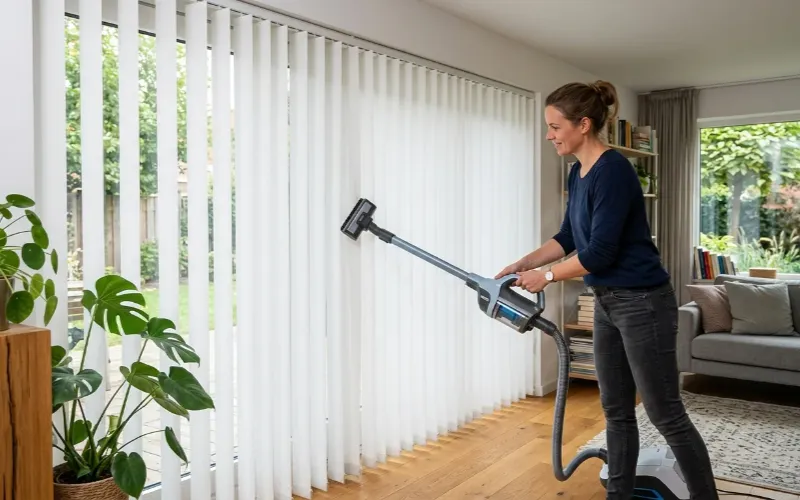
Take a soft brush attachment on an upholstery vacuum cleaner with low suction. Start extracting the dust from the top, move slowly in the middle, and take it to the bottom of the vane. You need to vacuum vertical blinds with a brush attachment and suck the built-up dirt inside the vanes. Repeat the process on both sides to completely eliminate the dust. If you do not have a vacuum cleaner, use a microfiber cloth for cleaning blinds.
Spot Cleaning Stains
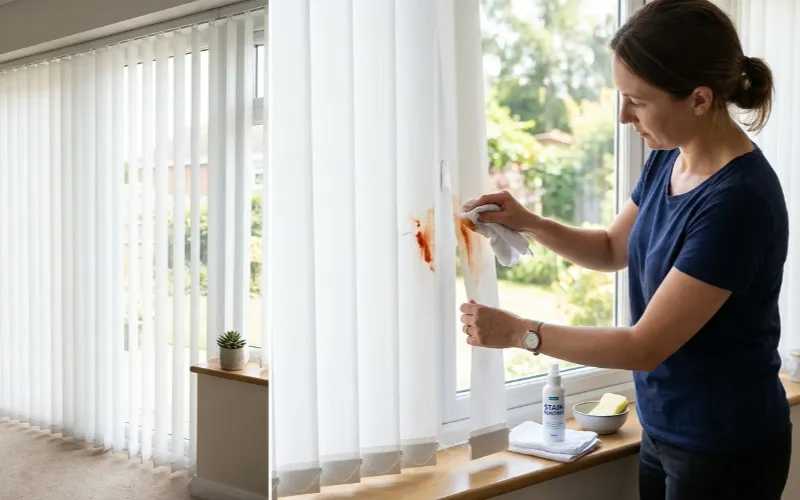
To maintain the window blinds, prepare a solution of mild soap and warm water to remove stains. Make sure to dip the microfiber cloth into the solution and squeeze it out. Gently scrub the vanes; it might damage the slats of vertical blinds. Fear is fabric that can tear, and PVC can get scratched. Thus, avoid rubbing the surface to remove stains from blinds. Fabric blinds do not need chemical treatment, which can discolor them.
You can use DIY methods, such as a lemon-and-water mixture, to remove spill marks. PVC blinds are easy to clean and eliminate stains using the bathtub method. Aluminum shades are being cleaned using a solution and a damp cloth. Make sure not to clean them using a wet fabric. That can cause corrosion and make the aluminum rusty.
Deep Cleaning Method
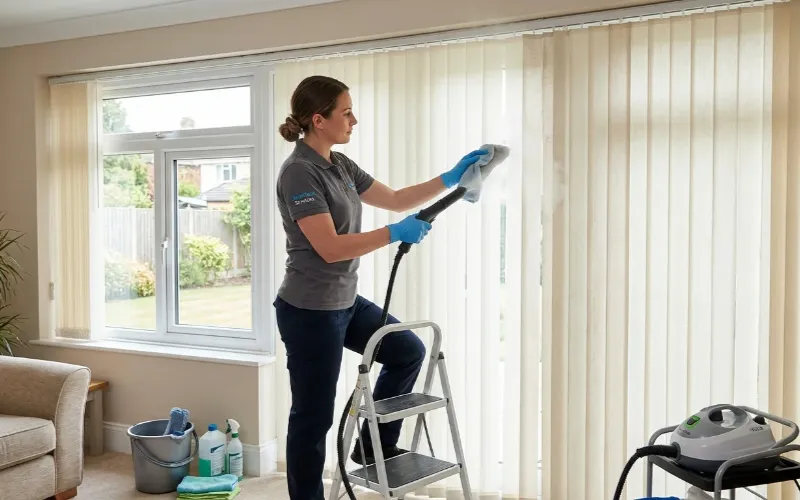
Are you seeking an answer to How to wash vertical blinds? And your vertical shades have a stubborn stain that cannot be removed easily. Then you are in the right place, as most people face issues with sticky, grimy slats and headrails. You can simply follow the ultimate guide to cleaning vertical blinds.
To begin the process, unclip the blinds from the rail and remove their bottom weight. Fill the bathtub with warm water and add mild soap or detergent. Now, submerge the blind slats in the bathtub you prepared before. Leave the slats in for 15 to 30 minutes. After that, scrub the vanes with a microfiber or a soft cloth to remove stains completely. Now, rinse the blinds with water to wash them safely.
How Often Should You Clean Vertical Blinds?
Most people want to know how often they should clean vertical blinds to keep them working smoothly. The answer is, it depends on the frequency of use. Regular cleaning prevents blinds from accumulating dust. Further, monthly deep cleaning removes allergens, bacteria, and mold growth from slats. Here is the schedule of vertical blinds maintenance.
Weekly
A weekly dusting of vertical blinds effectively removes dirt from the vanes. Using a feather duster for dust removal is the best choice. Make sure to dust from top to bottom to prevent the slats from unhooking.
Monthly
Maintain blinds once a month to get more focused cleaning and help retain their color and texture. To clean the headrail, use silicone spray once every month. It ensures louver rotation smooths out grinding.
Every 3-6 Months
Once or twice a year, a deep clean of the vertical blind is necessary. It makes significant changes in the appearance of window shades. Aluminum or PVC blinds can be easily wiped with a cleaning sponge.
What To Avoid During Vertical Blinds Cleaning
Among the most common mistakes made by people during window shade cleaning are the following.
- Using harsh chemicals can cause color fade and weaken the blinds.
- Scrubbing aggressively leads to scratches and marks that make the blind look ugly.
- Excessive water use can damage vanes or blinds.
Wrapping Up
Window vertical blind cleaning not only improves the room’s aesthetics but also extends the blinds’ lifespan. Regular dusting and gentle cleaning to remove stubborn stains make the window look brand new. To maintain a tidy look of blinds, prefer quick weekly dusting. Further, using lukewarm water can prevent fabric blinds from shrinking.
To prevent blind damage, hang them straight, and through this, crisp remove naturally. Using the right method for cleaning vertical blinds, you can achieve better light control and privacy while maintaining a clean appearance. Whether you are planning a deep cleaning or routine maintenance, these damage-free blind-cleaning methods will help.