

You step into the shower, glance left, and there it is. A band of black speckles along the bottom hem, with a pink film sitting just above it. Most people’s first instinct is to pull the whole thing down and buy a new one.
Hold off on that. Unless your liner is torn or the plastic has gone brittle, almost every stain comes off with things already under your kitchen sink. This guide by Roller Blinds Dubai covers the right method for each material, which stains need bleach and which don’t, and how to stop the mildew coming back.
Why Shower Curtains Get Moldy So Fast?
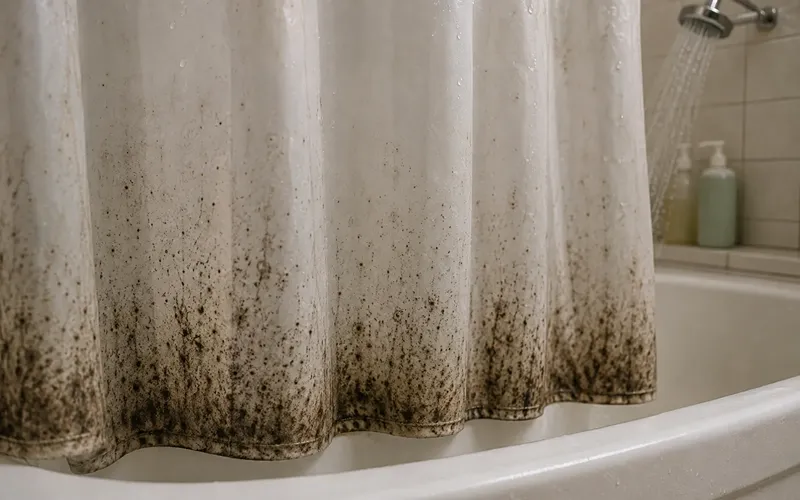
A shower blackout curtain gets soaked every day and rarely dries fully. Warm air, trapped moisture, no sunlight. That is close to a perfect setup for fungal growth.
Then there is the food supply. Every shower sprays a fine mist of body wash and shampoo onto the liner. That soap scum sticks, and mold spores feed on it. Add the folds where water pools and a weak exhaust fan, and the bottom 6 to 10 inches becomes the worst zone. That is why staining starts low and works upward.
Hard water makes it worse. Mineral deposits leave a chalky film that traps soap residue and gives spores a better grip.
Mold, Mildew, or Pink Slime?
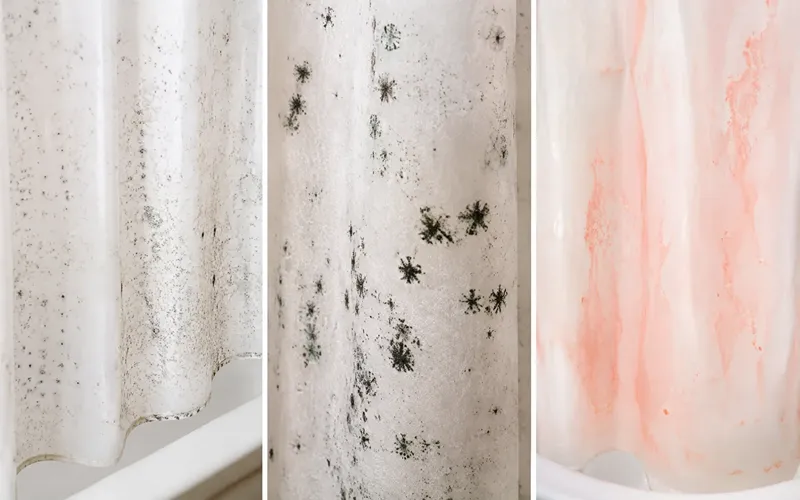
These three get lumped together, but each needs slightly different treatment.
Mildew is the flat, powdery gray or white patch on the surface. It is the most common one and the easiest to remove.
Mold shows up as raised black, green, or dark gray spots. On fabric it works into the weave, which is why fabric sometimes stays stained after a wash.
Pink slime is not mold at all. Those salmon streaks come from Serratia marcescens, an airborne bacterium that feeds on soap residue. It wipes off easily but returns fast if the soap film stays.
Knowing which one you have saves you from reaching for bleach when baking soda would do.
Check the Material First
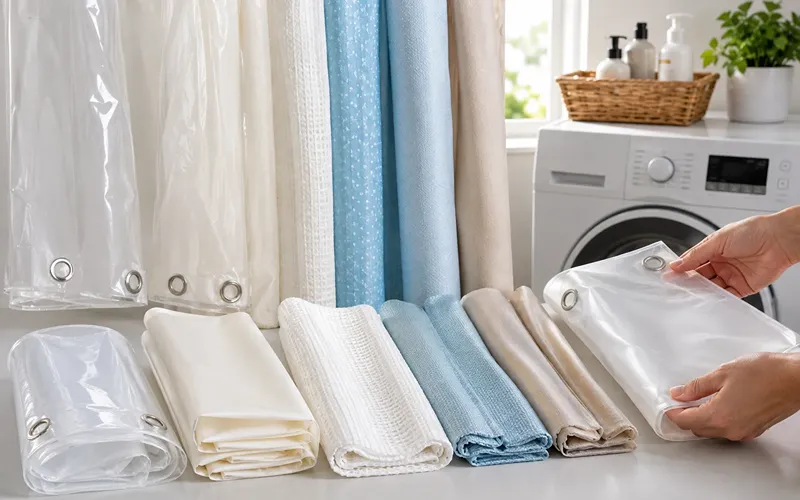
Get this wrong and you end up with a melted lump in the machine. Check the care tag, or judge by feel.
PVC or vinyl: Thick and slightly rubbery, with a strong plastic smell when new. Cold or warm water only.
PEVA or EVA: Thinner and softer, sold as the chlorine-free option. Even more heat-sensitive than PVC. Cold water only.
Polyester: the most common fabric liner. Water-repellent, quick-drying, and safe on warm.
Cotton or cotton blend: Usually a decorative outer cotton curtain. Handles hot water but shrinks, so read the tag.
Nylon: Lightweight and resists mildew better than plastic. Wash cool.
Quick rule: plastic needs cool water and no dryer. Fabric gives you far more room to work with.
What You’ll Need
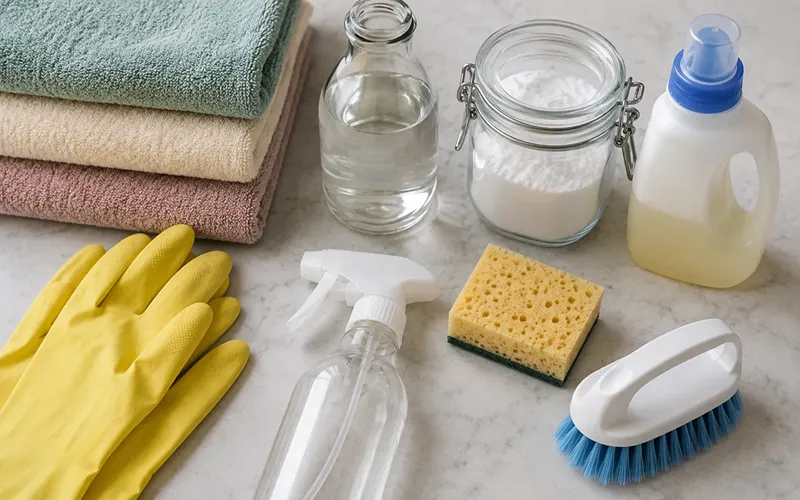
- Mild laundry detergent
- Distilled white vinegar
- Baking soda
- Chlorine bleach or oxygen bleach, depending on color
- Two or three old bath towels
- A soft sponge or non-scratch brush
- A spray bottle
- Rubber gloves
You won’t need all of it. Pick a method below and gather what it calls for.
How to Clean a Shower Curtain in the Washing Machine?
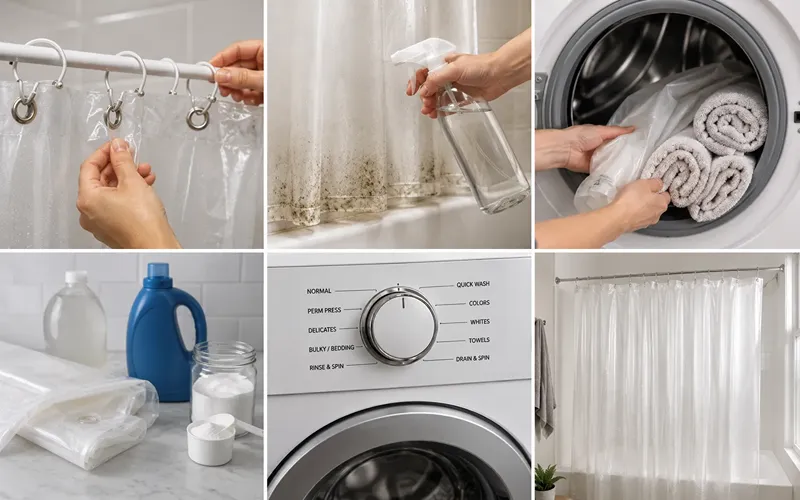
This is the fastest route. It works for plastic liners and fabric sheer curtains, with different settings.
- Unhook it carefully. Slide each ring out instead of tugging the curtain off, or you will tear the grommet holes. Set the rings aside.
- Pre-treat the bad areas. Spray the stained hem with a 50/50 mix of white vinegar and water, or rub in a baking soda paste. Leave it ten minutes.
- Add two or three old towels. They cushion the load so a plastic liner doesn’t crumple, and they rub against it like a soft scrubber. Use white towels if you are adding bleach.
- Add one cleaner, not four. A quarter cup of detergent is plenty. For more lifting power, add half a cup of baking soda to the wash, or half a cup of white vinegar to the rinse. For heavy mold on a white or clear curtain, use half a cup of chlorine bleach and cut the detergent back.
- Run a gentle cycle. Cold or warm for plastic. Warm to hot for polyester and cotton, if the label allows. Skip the high spin on plastic since it holds no water.
- Rehang it right away. Take it out damp and stretch it across the rod. Waiting even an hour sets creases.
Settings at a Glance
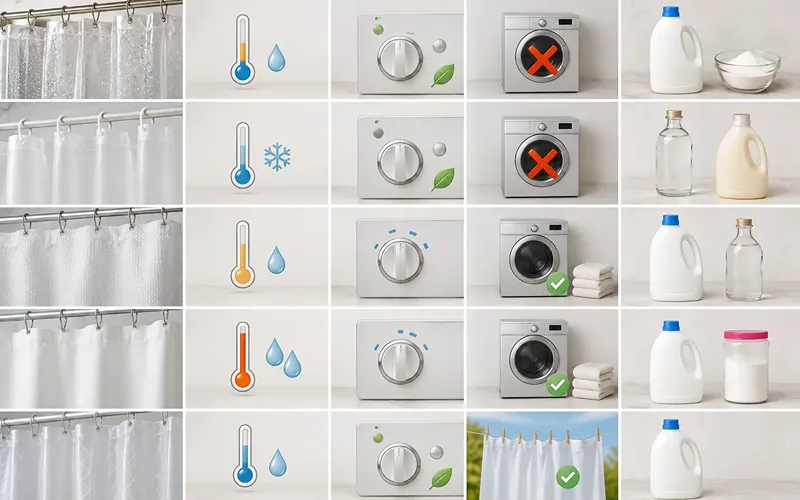
| Material | Water Temp | Cycle | Dryer? | Best Cleaner |
| PVC / vinyl | Cold–warm | Gentle | Never | Detergent + baking soda |
| PEVA / EVA | Cold | Gentle | Never | Vinegar or mild detergent |
| Polyester | Warm | Normal | Low heat, briefly | Detergent + vinegar rinse |
| Cotton | Warm–hot | Normal | Low heat | Detergent + oxygen bleach |
| Nylon | Cool | Gentle | Air dry | Detergent |
How to Clean a Shower Curtain by Hand?
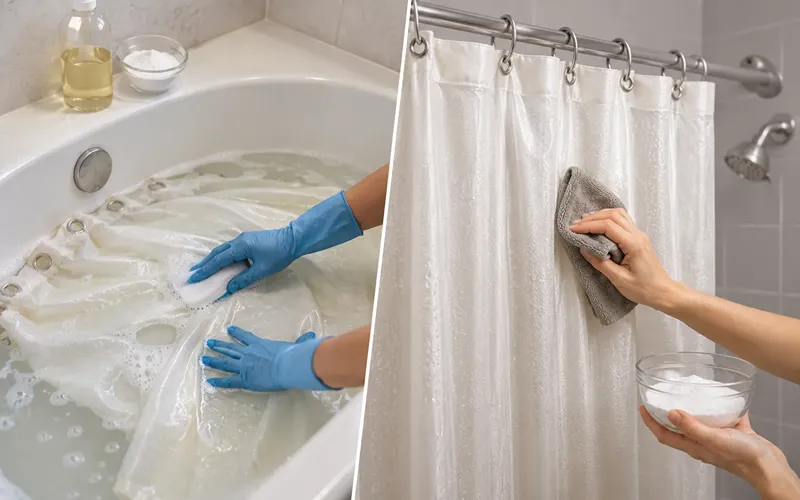
No machine, or a liner too delicate to risk it? Two options.
The bathtub soak. Fill the tub with warm water, a tablespoon of detergent, and a quarter cup of baking soda. Let the curtain sit 15 minutes, then work over it with a soft sponge. Focus on the hem. Drain, rinse, and hang it up dripping.
The on-the-rod scrub. Good for weekly upkeep before real staining starts. Dampen a microfiber cloth, sprinkle baking soda on it, and wipe from top to bottom while the curtain hangs. Rinse the cloth and go over the surface again to lift every trace of powder. Five minutes, and it stops buildup early.
How to Remove Mold and Mildew Stains
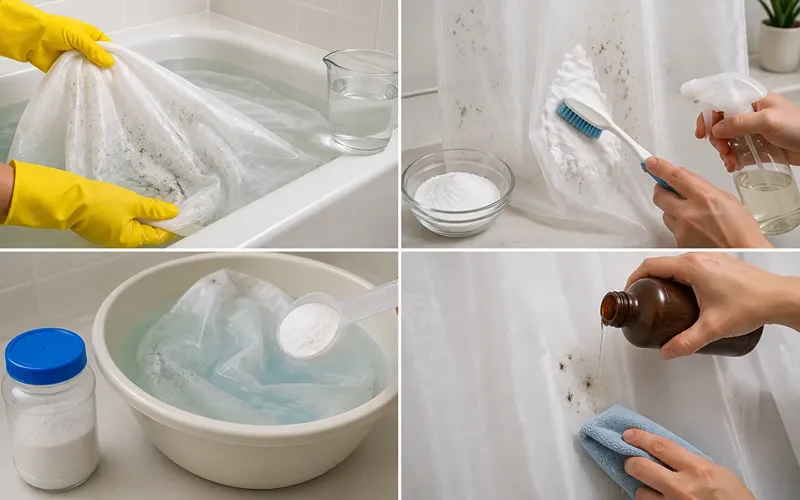
If a normal wash didn’t shift the marks, step it up. Match the method to the color of your curtain.
Bleach Soak (White and Clear Only)
Mix a quarter cup of chlorine bleach into a gallon of warm water in the tub or a bucket. Submerge the stained section, usually just the bottom third, and leave it 20 to 30 minutes. Rinse well afterward. Leftover bleach yellows plastic over time.
Test a hidden corner first. Bleach strips color from dyed curtains permanently, and it can leave some vinyl chalky.
Baking Soda and Vinegar (Colored and Fabric)
Spread a thick baking soda paste over the stains and leave it 15 minutes. Scrub with a damp sponge, then spray white vinegar on top. The light fizzing lifts residue off the surface. Rinse clean.
For stubborn fabric stains, add ten drops of tea tree oil to the paste. It is naturally antifungal and leaves a fresher smell.
Oxygen Bleach (Colored Curtains That Need More)
Oxygen bleach is the powdered, color-safe kind. Dissolve it in warm water as the packet says and soak for an hour. Slower than chlorine bleach, but it won’t ruin your pattern.
Hydrogen Peroxide (Spot Treatment)
For a few isolated black spots, apply 3% hydrogen peroxide straight from the bottle, wait ten minutes, and wipe. Fine for small areas, impractical for a whole liner.
Removing Soap Scum and Hard Water Stains
That cloudy white haze is not mold. It is mineral deposit and dried soap, and bleach does nothing to it. You need acid.
Spray undiluted white vinegar on the area and leave it 15 to 20 minutes to dissolve the mineral crust. Scrub with a non-scratch sponge and rinse. Warming the vinegar first speeds it up on heavy limescale.
Lemon juice works too if the vinegar smell bothers you, though it is weaker on serious buildup.
Do this step before you tackle mold. Soap scum is what the mold was feeding on.
Clean the Rings and Rod Too
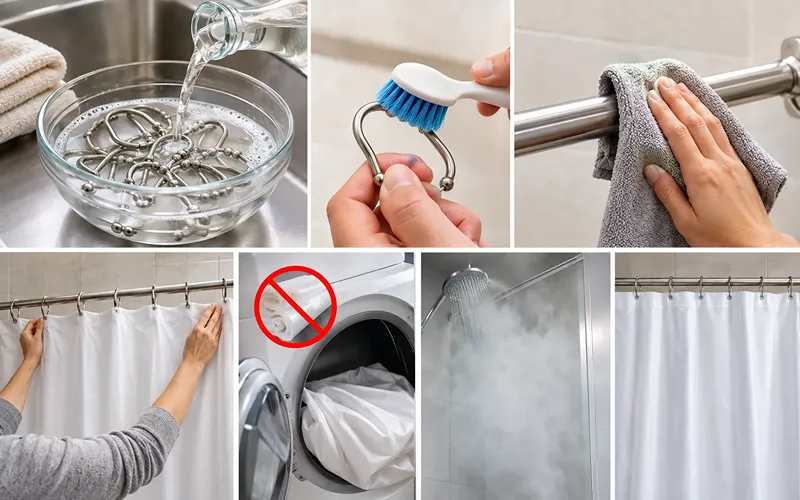
Rehanging a clean curtain on grimy hooks defeats the point. Rings collect soap residue, and metal ones leave rust marks.
Drop them in a sink of warm water with a cup of white vinegar while the curtain is in the machine. Rinse, then scrape off any crust with a brush. Wipe the rod as well. Dust collects on top, condensation underneath.
Drying It Properly
Drying is where most people undo their own work.
Stretch the curtain to its full width on the rod as soon as it comes out. A bunched curtain traps damp in every fold, which recreates the exact problem you just fixed.
A plastic or vinyl liner will melt in a tumble dryer, so never put one in. Polyester can take ten minutes on the lowest setting to knock out wrinkles, but hang it immediately after.
Still creased? Run a hot shower with the door shut and let the steam relax the plastic. It flattens out on its own.
Cleaners You Should Never Mix
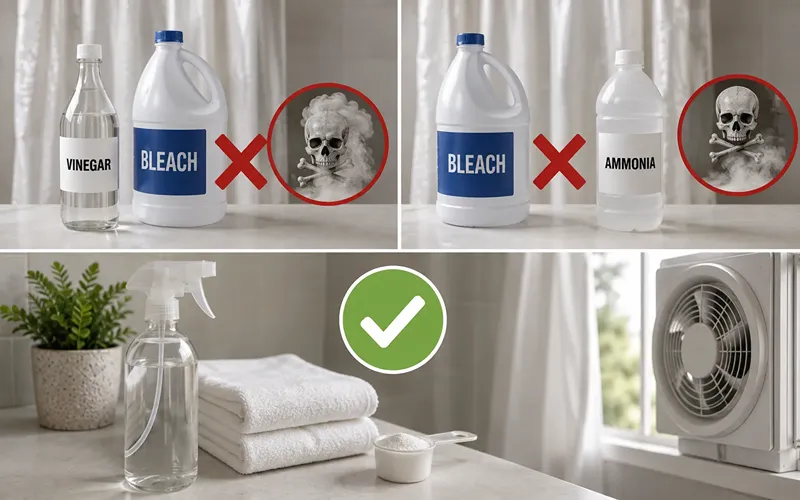
Bleach and vinegar produce chlorine gas. Bleach and ammonia produce chloramine vapor. Both are dangerous in a small bathroom.
Use one cleaning agent per wash. If you have used vinegar and want to switch to bleach, rinse everything thoroughly first. Keep the fan running or the door open while you work.
How Often Should You Wash a Shower Curtain?
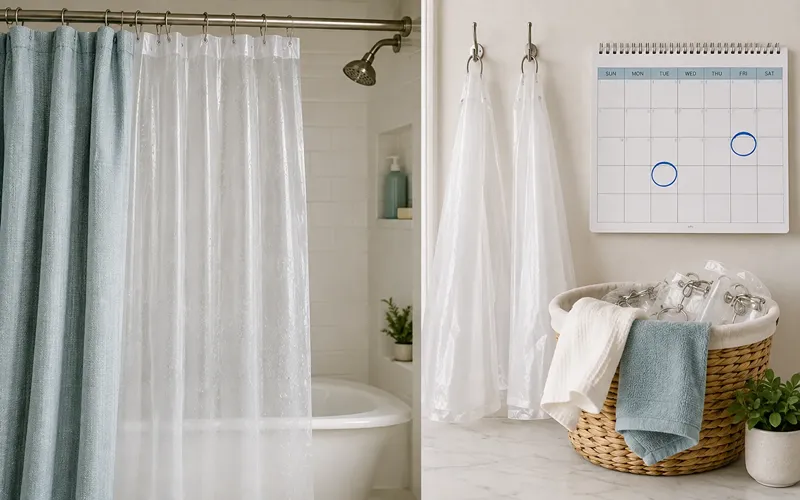
The liner and the outer curtain need different schedules. The liner takes the direct spray, so wash it monthly. In a humid climate, a windowless bathroom, or a busy household, every two to three weeks is more realistic.
The outer decorative curtain stays mostly dry and can go every three months. One useful trick: buy two liners and rotate them. One hangs while the other is in the wash, so you are never left with a wet bathroom floor.
When to Stop Cleaning and Replace It?
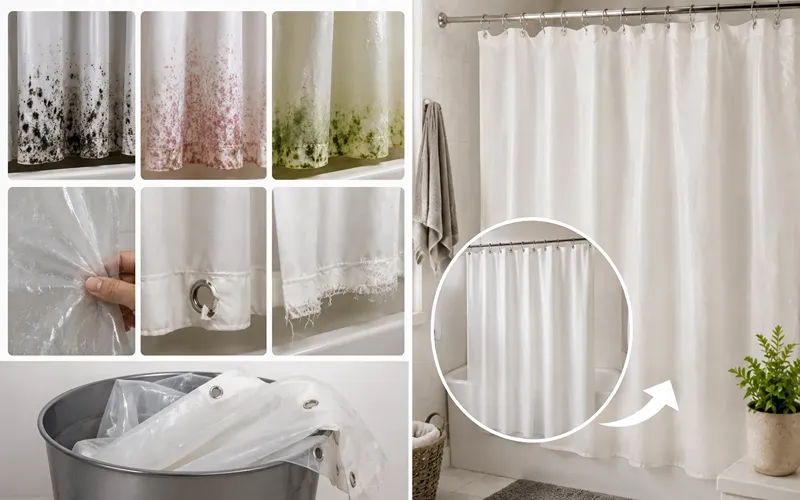
Cleaning has limits. Replace the liner if:
- Black, pink, or green spots survive a proper wash and soak
- Large splotches of pink, orange, red, or black spread across the hem
- A musty smell lingers even when the curtain is bone dry
- The plastic feels tacky, cloudy, or brittle
- Grommet holes are torn or the hem is fraying
Plastic liners generally last six to twelve months. Polyester ones last longer because they wash better. If you have asthma or a weakened immune system, replace early rather than trying to save a badly affected liner.
7 Ways to Keep Mold From Coming Back
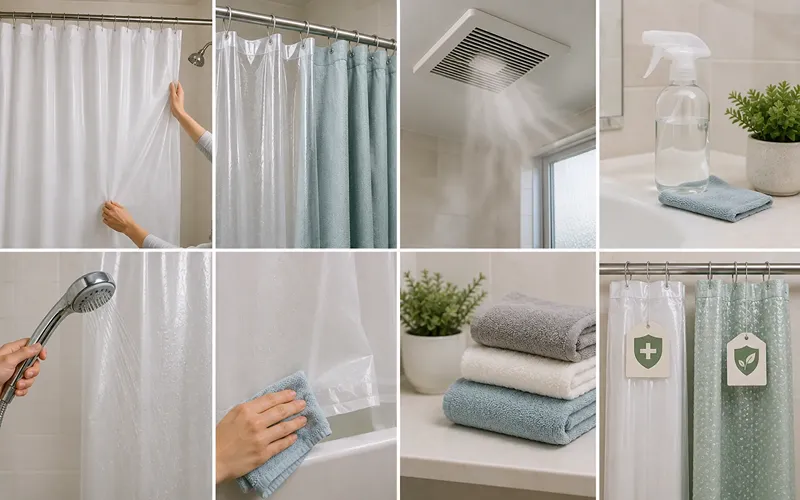
- Stretch the curtain flat after every shower. Thirty seconds, and it is the single most effective habit here.
- Separate the liner and outer curtain so air moves between them.
- Run the exhaust fan during your shower and for 15 to 20 minutes after.
- Keep a spray bottle of half water, half vinegar in the bathroom and mist the liner two or three times a week.
- Rinse the walls and liner with cool water to wash soap residue away.
- Towel the bottom hem dry once a week when you clean the bathroom.
- Choose polyester or an antimicrobial liner over standard PVC next time you buy.
Troubleshooting: Stain by Stain
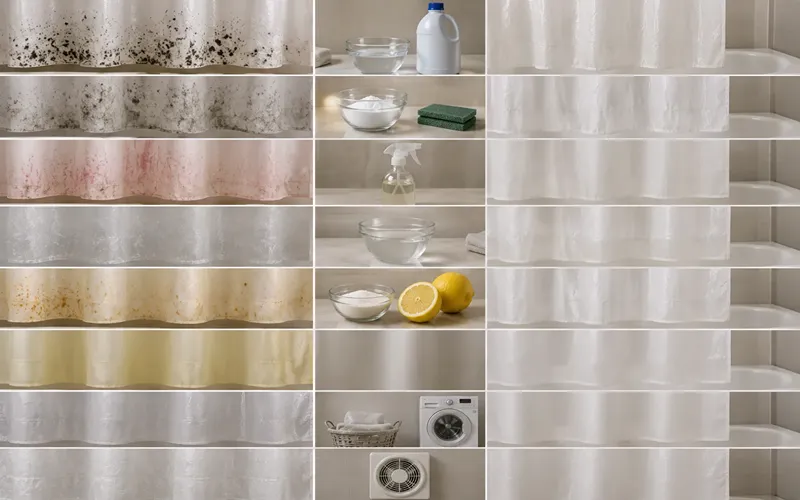
| What you’re seeing | Cause | What fixes it |
| Black speckles at hem | Mold | Bleach soak (white) or oxygen bleach (colored) |
| Gray powdery patches | Mildew | Baking soda scrub |
| Pink or salmon streaks | Bacteria in soap film | Vinegar spray, then wash |
| White cloudy haze | Hard water and soap scum | Undiluted vinegar soak |
| Orange-brown spots | Rust from metal rings | Lemon juice and salt paste |
| Yellowing all over | Age or bleach damage | Replace |
| Musty smell, no marks | Trapped moisture | Wash, then improve ventilation |
The Short Version
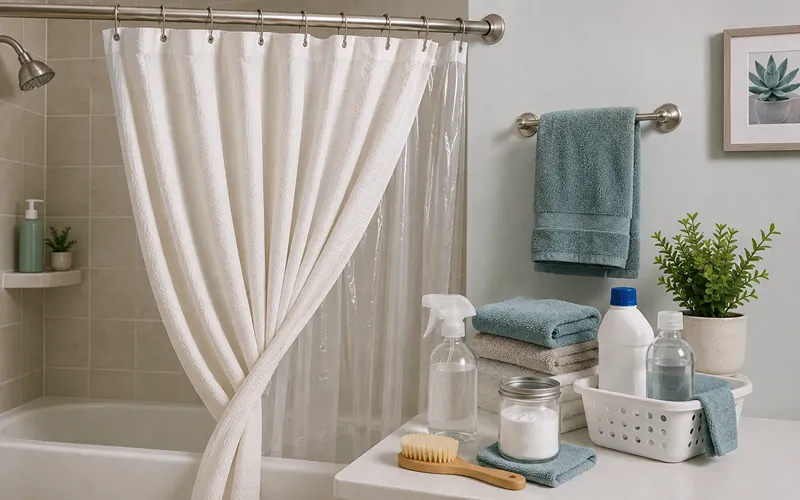
Match the method to the material, clear the soap scum before you attack the mold, and never mix bleach with vinegar. Wash the liner monthly and the outer curtain quarterly.
Do that, plus the thirty-second stretch after each shower, and you will rarely see the stains that sent you looking for this guide.
Frequently Asked Questions
Can you put a plastic shower curtain in the washing machine?
Yes, on a gentle cycle with cool or warm water and a couple of towels for cushioning. Hot water warps it, and it must never go in the dryer.
Does vinegar actually kill mold?
It kills many common household species and is excellent at preventing regrowth, which makes it ideal for upkeep. For heavy black mold, bleach or oxygen bleach is more reliable.
Why does my liner get moldy again so quickly?
Almost always ventilation. If the curtain stays damp for hours, spores get everything they need. Fix the airflow before you blame the cleaning method.
Can I wash the curtain and liner together?
Yes, if both take the same water temperature. A hot-wash cotton curtain will ruin a cold-wash vinyl liner.
Is a moldy shower curtain dangerous?
For most healthy people it is unpleasant rather than harmful. If you have asthma, mold allergies, or a weakened immune system, treat it more seriously.
How do I clean it without a washing machine?
Soak it in the bathtub with warm water, detergent, and baking soda for 15 minutes. Scrub with a sponge, rinse, and hang to drip dry.