Transforming a room often feels like it requires a massive budget and a crew of contractors. But the truth is, one of the most impactful changes you can make is installing the right window treatment. Roller blinds are the crucial element of interior design due to their versatility, timelessness, and effortless functionality.
Whether you are looking to achieve a blackout effect for better sleep or want to diffuse harsh sunlight in a home office, learning to install roller blinds in Dubai is a foundational DIY skill. In this comprehensive guide, we will break down the process into manageable steps, share trade secrets for a professional finish, and help you feel confident picking up the right option.
What Are Roller Blinds?

Roller window blinds are a minimalist window treatment consisting of a piece of fabric that rolls around a tube. It is operated either by motor or manually via a chain system. These blinds provide a clean, compact aesthetic and are ideal for modern homes. Here is the list.
Sunscreen
It is a mesh-like material that filters out UV rays, reduces glare, and maintains privacy in the room.
Blackout
Generally, these blackout window blinds are made with opaque fabric and block 100% of the light. It gives total privacy even in the daytime.
Light-Filtering
These light-diffusing blinds filter out dust and UV rays, provide subtle privacy, and maintain an airy atmosphere in the room.
Day And Night
Dual, layered, or day-and-night blinds provide equal privacy during the day and at night. With attached sheer and thick fabric, you get custom privacy at any time of day.
Tools You Need To Install Roller Blinds
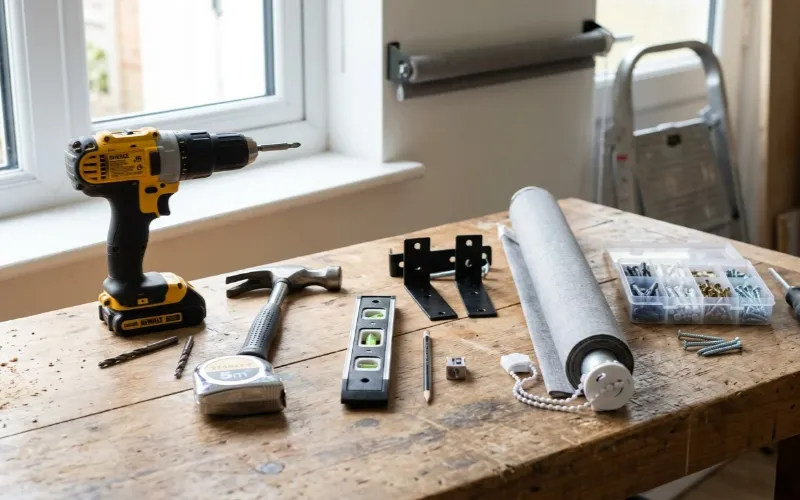
Before you move on to installing roller blinds, take a look at the important tools you will need to carry out the process. Various tools are reused when fitting roller blinds in windows; from them, we have crafted this list for your convenience.
Essential Tools
- Pencil
- Philips Screwdrier
- Metal Tape Measure
- Spirit Level
- Step Ladder
- Cordless Drill
- Wall Plugs
Optional Tools
- Scissors
- Laser Level
- Stud Finder
- Masking Tape
- Hacksaw
Measuring Your Windows Correctly
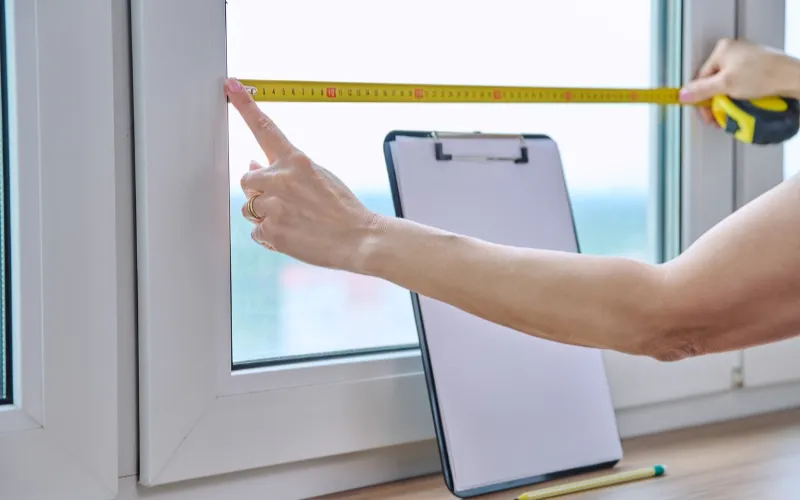
Roller shade installation requires window measurements, which directly affect the window’s appearance. That is why deciding on mount placement is very important before actually installing the windows.
Inside Mount Vs Outside Mount
Inside mount is a method in which the window frame recess provides a tailored, clean, and aesthetic look. You need to measure the exact width and height of the opening. Take the smallest width and add the largest height to get the final dimension. Consider ¾ inches to 2 inches as the minimum depth.
A window blind is mounted outside the frame and covers the entire window. Take the height and width of the window frame. Make sure to add at least 3 inches on each side for light management.
Step-by-Step Measuring Guide
For a precise window measurement, an easy DIY roller blind installation guide is needed. Here is the detailed process of how to measure windows for roller blinds.
- Use metal tape and measure it; cloth tape is stretchable and can give wrong results.
- Take measurements from three spots: height, width, and depth.
- Remove all the obstacles, such as handles and cranks, for precise measurement.
- For the inside mount, there will be a size deduction to keep some extra inches during measurement. The outside mount is measured in the exact size requested by customers.
- In case the window is in a square shape, start measurement from diagonal.
A Comprehensive Guide to Installing Roller Blinds
Roller blinds installation is a straightforward DIY project that improves room privacy and light control. To begin with, you need to follow some key steps for bracket positioning, drilling, mounting, and snapping. Here is the Installation of roller blinds procedure for quick DIY-friendly work.
Step 1: Mark The Bracket Positions
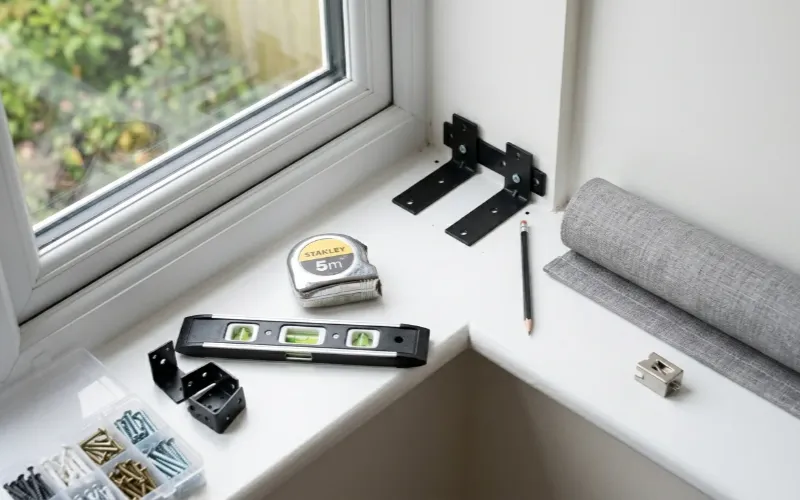
Take a tape measure and measure the brackets; check whether they are on the same level as the brackets or not. Hold the brackets near the desired spot, such as inside the window recess or outside the frame. Now, mark the spot using a pencil. For an inside mount, make sure there is at least 60mm distance from the window glass. This is necessary to prevent obstructions.
Step 2: Drill Holes
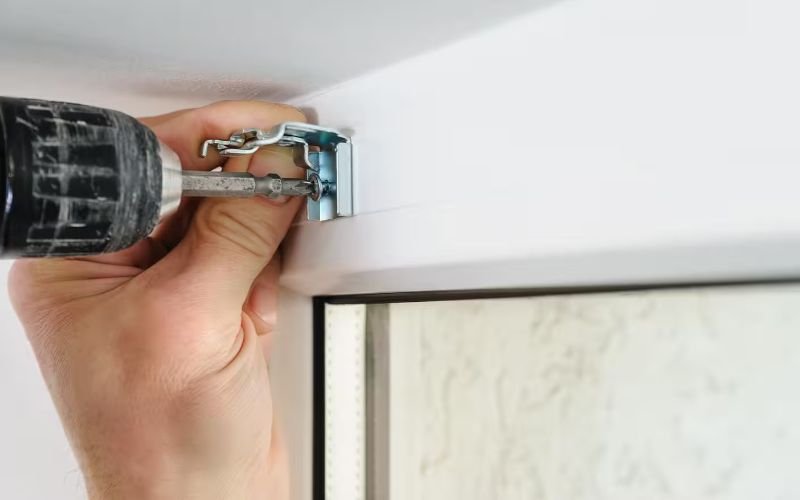
Mark small points in appropriate size with the help of a pencil. If you are planning to drill a spot inside masonry or plastic walls, then insert the wall plugin. It is necessary to secure brackets.
Step 3: Decide On Chain Placement
These window shades are easy to roll up and down; for that, you need to place a chain system. These are rolled up and down under the roller. You need to decide on which way you want the roller blind chain to operate.
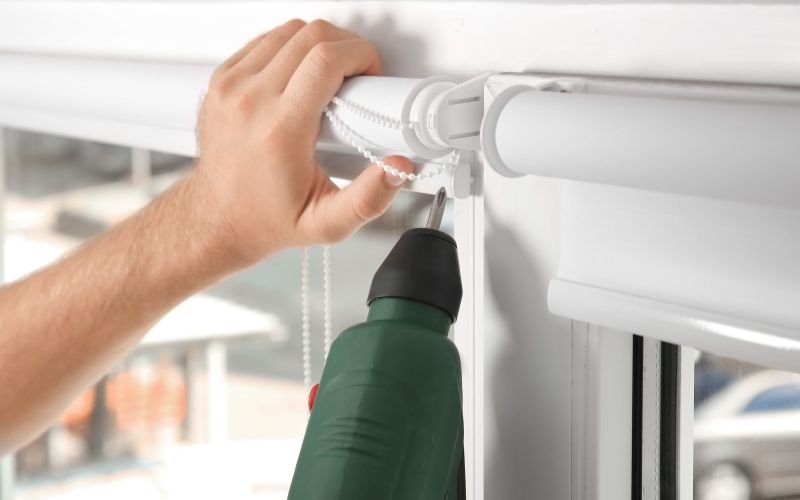
Step 4: Install The Brackets
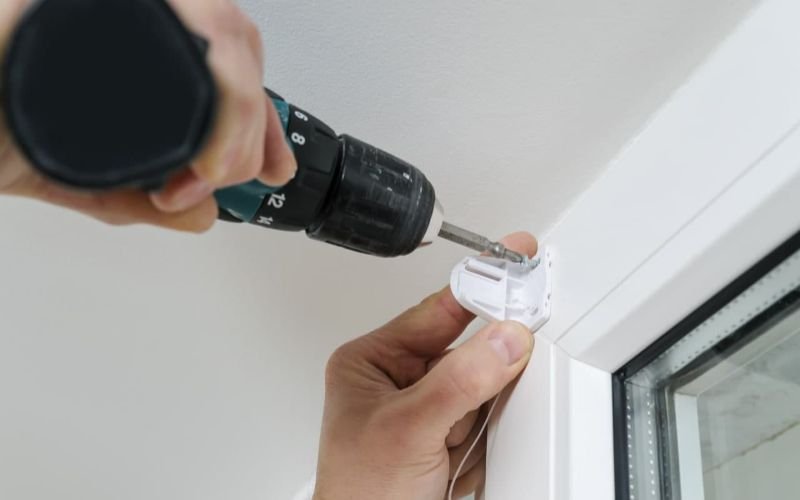
Screw the brackets into place. Do not tighten the screws all the way immediately. Use your spirit level. If fixing into plasterboard or masonry then use appropriate rawl plugs. After that, insert the plain end of the window blind and then click the chain control end into its brackets. Make sure to install a child safety tension device for the control to prevent hazards.
Step 5: Test The Blinds
Testing of roller window blinds requires the following steps.
- Pull the blinds down gently; it should glide without jerking.
- If the blind rolls to one side, pull it all the way down, then apply one or more pieces of masking tape to the opposite side.
- If the blind is slow to rise, remove it, roll it up manually, and replace it.
- Ensure brackets are secure and the blind is not pulling away from the wall.
- For chain-operated blinds, always install a child safety tensioning device.
Common Mistakes To Avoid When Installing Roller Blinds
Various mistakes have been identified during the installation of the roller window blinds.
Inaccurate Measuring
Not measuring the windows from multiple places and not distinguishing between inside and outside mounts.
Forgetting To Account For Obstructions
Ignoring window handles, cranks, or window frames, which can block the movement of the blinds.
Misaligning
Failing to use a spirit level to ensure brackets are perfectly leveled, causing the fabric to hang unevenly.
Choosing Incorrect Wall Fixing
Using the wrong anchors for drywall, plaster, or brick can cause the blind to fall.
Mounting Too Low Or Too High
Installing too high can leave large gaps, while installing too low can restrict use or look awkward.
Overlooking Child Safety
Skipping the installation of chain tensioners or safety clips essential for child safety.
Incorrect Fabric Direction
Installing the blind so it rolls off the back instead of the front, which can cause it to rub against the window handle.
Maintenance Tips After Installation
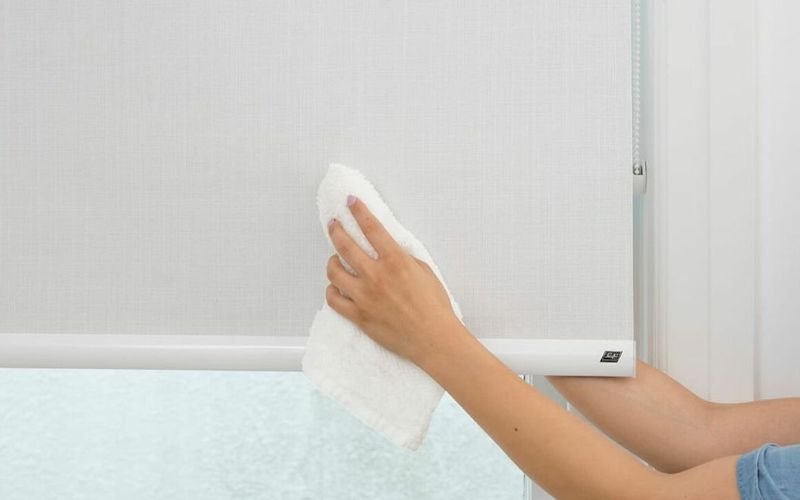
Along with roller blind installation, there are certain maintenance practices you need to carefully consider.
- Dust the blinds weekly with the help of a microfiber cloth.
- Using stain remover or mild detergent, dab over the stubborn stain.
- Remove the blinds from the frame and clean them; air-dry to remove moisture.
- Prevent moisture that can cause mold growth on the blind surface.
- Lubricate the chain using a silicon-based spray.
What Benefits Do You Get From Roller Window Blinds
Roller window shades offer superior light control and privacy. Additionally, they act as a barrier, preventing harsh heat from entering your space. Besides, roller shades block 99% of sunlight, making the room darker even on a bright, sunny day.
That is why they are considered ideal for bedrooms, nurseries, and media rooms. They give a minimalist, clean aesthetic to the window recess. Further, they increase the room size to make it appear larger than normal. You can easily maintain them at home without hiring a professional installer.
Wrapping Up
Roller blinds are an ideal choice for reviving your old windows and protecting them from dust. They are perfect to install either outside or inside the windows. Installing roller blinds is a straightforward project that requires accurate measurements, level bracket placement, and the installation of a child-safety tension device. Achieving a professional finish involves selecting the proper wall fixings, ensuring the brackets are level, and accounting for window hardware to ensure smooth operation. By following these step-by-step instructions, you will be able to handle quick roller blinds installation on your own.