

Curtains are one of the hardest-working fabrics in your home, yet they’re usually the last thing on the cleaning list. They block sunlight, trap dust, soak up cooking smells, and quietly collect pet hair for months. The good news is that learning how to clean curtains properly is easier than most people think, and you rarely need a professional.
The trick is matching the cleaning method to the fabric. Cotton can handle a warm machine wash, while silk and velvet need a much gentler touch. Use the wrong approach and you risk shrinkage, faded colors, or water stains that won’t come out.
This guide walks you through everything: how to read care labels, which method suits each fabric, step-by-step washing instructions, stain and odor removal, cleaning curtains while they’re still hanging, and the drying and ironing habits that keep drapes looking fresh for years. Whether you have simple everyday drapes or premium Curtains In Dubai, following the right cleaning techniques will help maintain their beauty, freshness, and durability.
Why Regular Curtain Cleaning Matters

Clean curtains do more than look nice. Because they hang near windows and doors, they catch everything that drifts through your home.
- Better indoor air quality. Curtain fabric traps dust, pollen, pet dander, and dust mites. Shaking or brushing past dirty drapes releases those allergens back into the air.
- Fewer lingering odors. Fabric absorbs smoke, cooking smells, and humidity. Kitchens and living rooms are the worst offenders.
- Longer fabric life. Dust particles are slightly abrasive. Over time, built-up grime weakens fibers and speeds up fading from sunlight.
- Mold and mildew prevention. Curtains near bathrooms or condensation-prone windows can develop musty spots if left damp and dirty.
- A brighter room. Sheer and light-colored curtains turn dull gray with dust, which noticeably dims the natural light coming in.
How Often Should You Clean Curtains?
| Task | How often | Best for |
| Dust or vacuum | Every 1-2 weeks | All curtains |
| Freshen or spot clean | Monthly, or as needed | Stains, odors, high-traffic rooms |
| Deep clean (wash or dry clean) | Every 3-6 months | Kitchens, homes with pets, smokers, allergy sufferers |
| Deep clean (wash or dry clean) | Every 6-12 months | Bedrooms and low-traffic rooms |
Before You Start: Read the Care Label and Prep Your Curtains

The care label is your most reliable guide. It is usually sewn into a side hem or the top header. Here’s what the common symbols mean:
- Washtub with a number or dots: machine washable at that maximum temperature.
- Washtub with a hand: hand wash only.
- Crossed-out washtub: do not wash with water.
- Circle with a letter (P or F): professional dry clean.
- Crossed-out circle: do not dry clean.
No label? Treat the curtains as delicate and test before committing to a method.
Quick Prep Checklist
- Remove all hardware. Take off hooks, rings, clips, and weights so they don’t snag fabric or damage your washer.
- Check for lining. Lined curtains can shrink unevenly because the face fabric and lining are often different materials. Many lined and blackout curtains are safer dry cleaned.
- Do a colorfastness test. Dab a damp white cloth with a little detergent on a hidden corner. If color transfers, skip the water and choose dry cleaning.
- Shake out loose dust. Take curtains outside and give them a good shake, or vacuum both sides first. Washing a heavily dusty curtain just turns dust into muddy streaks.
- Measure before washing. Note the length of natural fabrics like cotton and linen so you can spot shrinkage early and reshape while damp.
Curtain Cleaning Methods Explained

There are four main ways to clean curtains. Most households use a mix of them depending on the room and fabric.
| Method | Best for | Avoid for | Effort |
| Machine washing | Cotton, polyester, sturdy sheers, unlined casual curtains | Silk, velvet, lined or blackout drapes, pleated or embellished panels | Low |
| Hand washing | Delicate sheers, lace, light linen, small panels | Very large or heavy drapes | Medium |
| Steam cleaning | Refreshing hanging curtains, killing dust mites, removing odors and wrinkles | Silk and water-sensitive fabrics | Low to medium |
| Dry cleaning | Silk, velvet, wool, lined, blackout, and “dry clean only” curtains | Budget-only or frequent light cleans | Low (but costs money) |
Machine Washing
The fastest option for durable fabrics. Use the gentle or delicate cycle, cold or lukewarm water (30°C / 86°F or below), and a mild liquid detergent. Wash one or two panels at a time so they have room to move, and place delicate sheers in a large mesh laundry bag.
Hand Washing
Ideal when the label says “hand wash” or the fabric feels fragile. Fill a bathtub or large basin with cool water and a small amount of gentle detergent, then soak and swish rather than scrub. Hand washing gives you full control and is less likely to cause shrinkage or snags.
Steam Cleaning
A handheld garment steamer refreshes curtains without taking them down. Heat loosens surface dirt, relaxes wrinkles, neutralizes odors, and helps kill dust mites. It won’t remove set-in stains, so pair it with spot cleaning.
Dry Cleaning
The safest choice for expensive, structured, or water-sensitive fabrics. Professional cleaners use solvents that clean without shrinking or distorting fabric. If curtains are lined, interlined, or custom-made, dry cleaning is usually worth the cost.
How to Clean Curtains by Fabric Type
Every fabric reacts differently to water, heat, and agitation. Always defer to the care label, but these guidelines cover the most common curtain materials.
Cotton Curtains

Cotton Curtains are durable and usually machine washable, but it can shrink 3–5% in hot water.
- Wash on a gentle cycle in cold water with a mild detergent.
- For white cotton, add half a cup of oxygen bleach or baking soda to brighten without chlorine damage.
- Remove while slightly damp and hang to finish drying, or tumble dry on low only.
- Iron on the cotton setting while still a little damp for the crispest result.
Linen Curtains

Linen Curtains get softer with each wash but wrinkles easily and can shrink.
- Hand wash or use the delicate cycle in cool water.
- Avoid overloading the drum; linen needs room to avoid deep creases.
- Skip the dryer. Hang to dry and gently stretch the panels back to shape while damp.
- Iron on medium-high heat while damp, or steam once hung if you like a relaxed look.
Polyester and Synthetic Blends

Polyester is the easiest curtain fabric to care for. It resists shrinking and wrinkles.
- Machine wash on a gentle or permanent-press cycle in warm (not hot) water.
- Use a small amount of detergent; synthetics can hold onto residue.
- Tumble dry on low for 10–15 minutes, then rehang immediately so wrinkles drop out.
- If needed, iron on a low synthetic setting. High heat can melt or glaze polyester.
Velvet Curtains

Velvet’s soft pile crushes and water-marks easily, so it rarely belongs in a washing machine.
- Vacuum weekly with a soft upholstery brush, moving in the direction of the pile.
- Spot clean with a barely damp cloth and dab, never rub.
- Steam lightly from the back side, holding the steamer a few inches away, to lift crushed pile.
- For a deep clean, use a professional dry cleaner, especially for cotton velvet or lined drapes. Some polyester velvets are machine washable; only wash if the label confirms it.
Silk Curtains
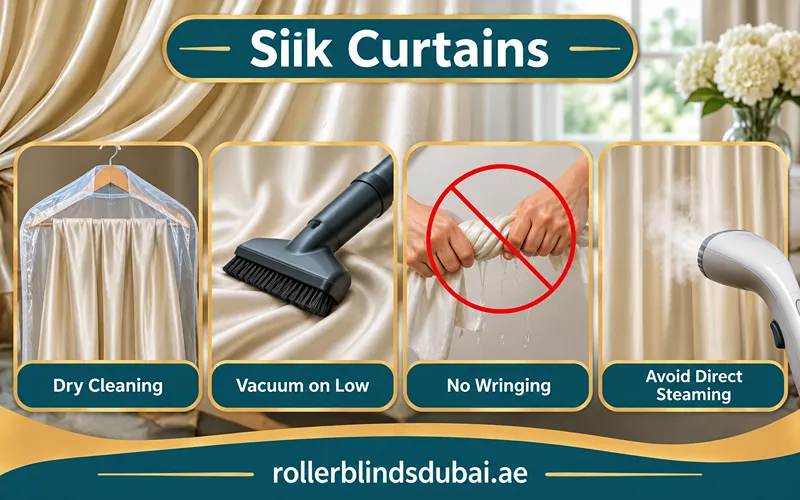
Silk Curtains are the most delicate curtain fabric. Water can leave rings, and sunlight weakens it over time.
- Dry cleaning is the safest choice for silk drapes, particularly lined ones.
- For light dust, use a vacuum on low suction with a brush attachment, or a lint roller.
- Never wring, twist, or tumble dry silk.
- Avoid steaming directly on the face; water droplets can spot the fabric.
Sheer and Lace Curtains

Sheer Curtains (voile, chiffon, organza, lace) are lightweight and tear easily, but they show dirt and yellowing quickly.
- Hand wash, or machine wash one panel at a time in a mesh laundry bag on the delicate cycle with cold water.
- To remove yellowing, soak for 30 minutes in cool water with oxygen bleach or a quarter cup of white vinegar before washing.
- Don’t use the dryer. Rehang sheers while damp; their own weight pulls out most wrinkles.
- Use a cool iron with a pressing cloth if needed.
Step-by-Step: How to Clean Curtains at Home
What You’ll Need
- Mild liquid detergent (fragrance-free or wool/delicate formula for sensitive fabrics)
- White vinegar and baking soda
- Oxygen bleach (for whites and yellowed sheers)
- Large mesh laundry bags
- Vacuum with upholstery brush attachment
- Clean white cloths or microfiber towels
- Clothes steamer or iron
How to Machine Wash Curtains
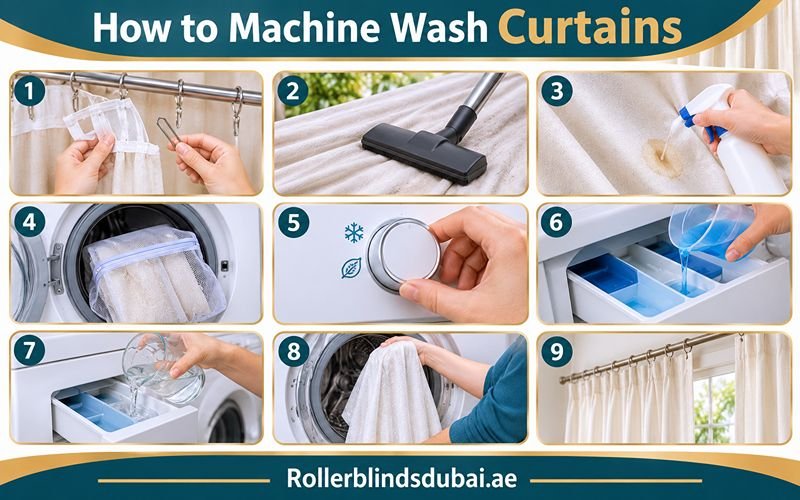
- Take the curtains down and remove all hooks and rings.
- Vacuum or shake out loose dust outdoors.
- Pre-treat any stains (see the stain section below) and let the treatment sit for 10–15 minutes.
- Load one or two panels only. Overcrowding causes creasing and uneven cleaning. Put sheers in a mesh bag.
- Select a gentle or delicate cycle with cold water and a reduced spin speed.
- Add a small amount of mild detergent. Too much leaves residue that attracts dust faster.
- Optional: add half a cup of white vinegar to the rinse compartment to soften fabric and remove odors.
- Remove promptly when the cycle ends to prevent deep wrinkles and musty smells.
- Dry and rehang following the drying tips below.
How to Hand Wash Curtains

- Fill a clean bathtub or large basin with cool or lukewarm water.
- Add about a tablespoon of gentle detergent per gallon (roughly 4 liters) of water and swish to dissolve.
- Submerge the curtains and let them soak for 15–30 minutes.
- Gently agitate by pressing and swishing the fabric. Don’t scrub, twist, or wring.
- Drain the soapy water and refill with clean cool water. Rinse until no suds remain, usually two or three times.
- Press out excess water by folding the curtain and pressing it against the side of the tub, or roll it in a large towel.
- Hang or lay flat to dry away from direct sunlight.
How to Remove Dust, Stains, Odors, and Stubborn Dirt
Removing Dust
- Vacuum from top to bottom using the upholstery brush on low suction. Do both sides, and pay extra attention to the top hem and folds where dust settles.
- Use a lint roller or rubber glove for pet hair. Run a slightly damp rubber glove down the fabric and hair clumps together.
- Tumble on air-only for 15 minutes with a damp microfiber cloth to lift dust from machine-safe curtains without a full wash.
Removing Common Stains
Always blot, never rub, and test any solution on a hidden spot first. Work from the outside of the stain toward the center so it doesn’t spread.
| Stain | What to use | How to treat it |
| Food and drinks (coffee, tea, juice) | Cool water + a drop of dish soap | Blot with the solution, rinse with a clean damp cloth, repeat until gone |
| Grease and oil | Cornstarch or baking soda, then dish soap | Sprinkle powder, leave 20 minutes, brush off, then dab with diluted dish soap |
| Mildew spots | 1 part white vinegar, 1 part water | Dab on, leave 15 minutes, then wash; dry fully in fresh air |
| Water rings | Distilled water + steam | Lightly dampen the whole area evenly, then dry with a hairdryer on cool so no edge forms |
| Ink | Rubbing alcohol on a cotton ball | Dab gently, blot with a clean cloth, rinse (not for silk or acetate) |
| Pet accidents | Enzyme cleaner | Apply per label to break down proteins and odor, then rinse |
| Lipstick or makeup | Micellar water or mild dish soap | Dab, lift with a clean cloth, rinse |
Removing Odors
- Baking soda: Sprinkle lightly over curtains laid flat (or into the lower folds while hanging), leave for several hours or overnight, then vacuum thoroughly.
- Vinegar spray: Mix equal parts white vinegar and water in a spray bottle. Mist lightly from 30 cm (12 inches) away. The vinegar smell fades as it dries and takes odors with it.
- Steam: Heat neutralizes smoke and cooking smells. Steam both sides and open the window for airflow.
- Fresh air: On a dry, breezy day, hang curtains outdoors in the shade for a few hours.
Tackling Stubborn Dirt and Discoloration
- Yellowed or grayed whites: Soak for one to two hours (or overnight for heavy discoloration) in cool water with oxygen bleach, following the product’s dilution guidance, then wash normally.
- Nicotine or smoke staining: Pre-soak in warm water with half a cup of baking soda and a little detergent, then wash. You may need two cycles.
- Grimy hems and leading edges: These areas get touched most. Pre-treat with a paste of detergent and water, gently work it in with a soft toothbrush, wait 15 minutes, then wash.
How to Clean Curtains Without Taking Them Down
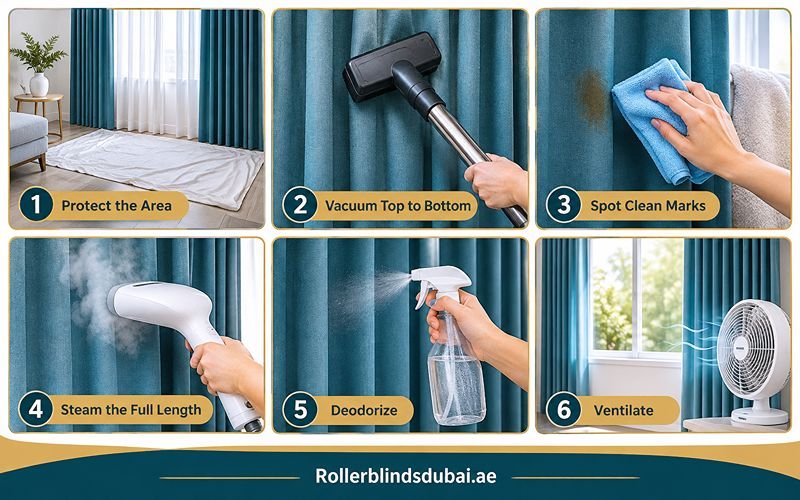
Heavy drapes, high windows, and fiddly hooks make removal a chore. You can keep curtains looking fresh between deep cleans without ever unhooking them.
- Protect the area. Lay an old sheet or towel on the floor beneath the curtains to catch dust and drips.
- Vacuum top to bottom. Use the brush attachment on low suction. Hold the bottom of the fabric taut with one hand so it doesn’t get sucked into the nozzle. Use an extension wand or a sturdy step stool for the top header.
- Spot clean marks. Blot stains with a microfiber cloth dampened with diluted mild detergent. Place a dry towel behind the fabric to absorb moisture and stop it soaking through.
- Steam the full length. Work in vertical strips from top to bottom, keeping the steamer head moving and a few centimeters from the fabric. Steam lifts dirt, kills dust mites, and removes wrinkles in one go.
- Deodorize. Lightly mist with a vinegar-water spray or a fabric refresher suitable for the material.
- Ventilate. Open the window or run a fan so the fabric dries completely within an hour or two. This prevents mildew and water marks.
Bonus tip: Wipe down the curtain rod, tracks, and window sill at the same time. Dust sitting on the rod drops straight back onto clean curtains.
Drying, Ironing, and Maintenance Tips
How to Dry Curtains Properly
- Air drying is safest for almost every fabric. Hang curtains over a clothesline, shower rod, or drying rack, or lay them flat on clean towels.
- Rehang while slightly damp (cotton, polyester, sheers). Gravity pulls out wrinkles and helps the panels keep their length.
- Dry in the shade. Strong direct sunlight fades colors and weakens fibers, especially silk, linen, and dark dyes.
- If you use a dryer, choose the lowest heat or air-fluff setting and remove curtains after 10–15 minutes while still damp. Never fully tumble dry lined, blackout, silk, or linen curtains.
- Blackout curtains: Their coating can crack in heat. Always air dry flat or on a line.
How to Iron Curtains
- Check the iron temperature against the fabric: low for synthetics and silk, medium for blends, high for cotton and linen.
- Iron while slightly damp for the smoothest finish, or use the steam function.
- Iron on the reverse side to protect color and sheen. Use a pressing cloth for dark, delicate, or textured fabrics.
- Start with hems and headers, then iron the main panel in long vertical strokes.
- Never iron velvet flat. Steam it from behind instead to avoid crushing the pile.
Short on time? Hang curtains back up and use a handheld steamer. It’s faster and gentler than ironing large panels.
Everyday Maintenance
- Vacuum or lint-roll curtains every week or two.
- Open curtains and windows regularly to air out fabric and reduce humidity.
- Use tie-backs in kitchens and bathrooms to keep fabric away from grease and steam.
- Rotate panels every few months so sun exposure and wear are even.
- Keep pets and sticky fingers away from hems where possible.
- Consider UV-protective window film or linings to slow fading.
Common Curtain-Cleaning Mistakes (and How to Avoid Them)
| Mistake | What goes wrong | Do this instead |
| Ignoring the care label | Shrinkage, color bleeding, ruined lining | Read the label first; when unsure, test a hidden corner or dry clean |
| Washing in hot water | Natural fibers shrink and colors fade | Use cold or lukewarm water on a gentle cycle |
| Overloading the washer | Deep creases, poor rinsing, strain on seams | Wash one or two panels at a time |
| Using too much detergent | Sticky residue that attracts dust faster | Use half the usual amount of mild detergent |
| Using chlorine bleach | Weakened fibers and yellowing on synthetics | Use oxygen bleach or white vinegar |
| High-heat tumble drying | Shrinkage, melted synthetics, cracked blackout coating | Air dry or use low heat for a few minutes only |
| Leaving curtains in the washer | Musty smells and set-in wrinkles | Remove and hang immediately after the cycle |
| Rubbing stains | Spreads the stain and damages fibers | Blot gently from the outside in |
| Forgetting the hardware | Snagged fabric and damaged washer drum | Remove hooks, rings, and weights first |
| Rehanging damp curtains on a dusty rod | Instantly re-soils clean fabric | Wipe rods, tracks, and sills before rehanging |
| Machine washing lined or pleated drapes | Uneven shrinkage and lost pleats | Steam at home and dry clean periodically |
Frequently Asked Questions
How often should curtains be washed?
Deep clean most curtains every 3–6 months, and every 6–12 months in low-traffic rooms. Vacuum or dust them every week or two in between. Kitchens, homes with pets, and households with allergy sufferers benefit from more frequent cleaning.
Can I put curtains in the washing machine?
Yes, if the care label allows it. Cotton, polyester, and many sheers are machine washable on a gentle, cold cycle. Silk, velvet, lined, pleated, and blackout curtains are usually safer hand washed, steamed, or dry cleaned.
How do I clean blackout curtains?
Vacuum regularly and spot clean with a damp cloth and mild soap. If the label permits washing, use a cold gentle cycle without fabric softener, and always air dry. Heat and wringing can crack the blackout coating.
How can I wash curtains without them shrinking?
Use cold water, a gentle cycle, and a low spin. Skip the dryer or remove curtains while still damp, then hang them to finish drying. Gently stretch natural fabrics like cotton and linen back to their original length while damp.
What’s the best way to clean curtains with hooks or eyelets?
Remove hooks before washing. Metal eyelet (grommet) curtains can usually be washed with the rings in place if you use a mesh bag and a gentle cycle, but check for rust and remove any loose plastic rings first.
How do I get the musty smell out of curtains?
Wash with half a cup of white vinegar in the rinse cycle, or sprinkle with baking soda, leave overnight, and vacuum. Then dry completely in fresh air. A lingering musty smell usually means the curtains stayed damp too long.
Is steam cleaning safe for all curtains?
Steam is safe for most cotton, polyester, linen, and velvet curtains. Avoid it on silk and water-sensitive fabrics, which can spot. Test on a hidden area first and keep the steamer moving.
Final Thoughts
Once you know your fabric, cleaning curtains is a simple routine rather than a dreaded chore. Check the care label, dust regularly, treat stains quickly, and choose the gentlest method that gets the job done. Machine wash sturdy cotton and polyester, hand wash delicate sheers, steam curtains in place between deep cleans, and leave silk, velvet, and lined drapes to a professional dry cleaner.
A little attention every few weeks keeps your curtains fresh, your air cleaner, and your window treatments looking good for years. Start with a quick vacuum this week, and your next deep clean will be much easier.