Patio curtains are one of the quickest ways to change how an outdoor space looks and feels. Hang a few panels around a bare patio and it gains the softness and shape of a real room, often in a single afternoon.
They are useful, too. The right outdoor curtains can filter harsh afternoon sun, screen the view from a neighboring balcony, block a chilly breeze, or keep mosquitoes away from the dinner table. They also suit almost any setup, from a covered patio or pergola to a rooftop terrace or narrow apartment balcony. Some options need no drilling at all, which makes them a good fit for renters.
These 10 patio curtain ideas cover a range of styles, budgets, and problems to solve. Each one explains how the look works, which materials hold up best, and how to make it work at home.
Before You Shop: Outdoor Curtain Fabric and Color
Fabric decides how long your curtains will last, so choose it first. Indoor curtains can fade or grow mildew quickly outside, so look for panels labeled for outdoor use.
Weather-Resistant Fabrics Compared
| Fabric | Look and feel | Main strengths | Watch out for |
| Solution-dyed acrylic | Soft, matte, canvas-like | Excellent fade resistance, breathable, sheds light moisture | Higher price |
| Outdoor polyester | Smooth, with many colors and sheer options | Affordable, dries quickly | Can fade sooner in strong sun |
| Olefin (polypropylene) | Lightly textured weave | Resists fading, moisture, and stains | Smaller range of styles |
| Polyester mesh | Fine, see-through netting | Keeps insects out and lets air through | Offers little shade or privacy |
| Clear vinyl (PVC) | Transparent, like a window | Blocks wind and rain while keeping the view | Can scratch, trap heat, and stiffen in the cold |
Choosing Colors and Patterns
Light colors reflect heat and make small spaces feel more open, but they show dirt sooner. Darker shades hide marks and add drama, although they absorb more heat and can show fading more clearly.
Take your color cue from things you won’t be changing, such as the house trim, flooring, or outdoor sofa. Match scale to space as well: large prints need room to breathe, while small balconies usually look better with solids, subtle textures, or narrow stripes.
Before committing, hang a sample outside and check it in morning and evening light. Outdoor colors can look very different from how they appear on a screen.
1. Floaty White Sheers for a Resort Feel
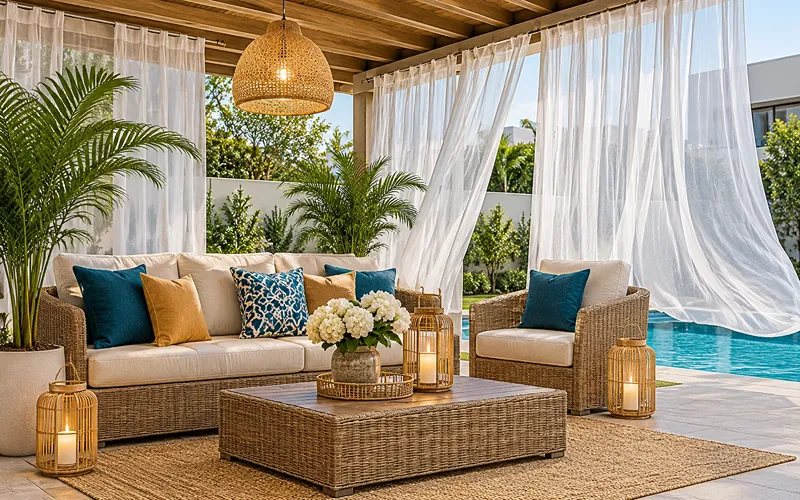
Nothing says “vacation” quite like white sheer curtains moving in a breeze. They soften hard edges, diffuse bright light, and make even a plain concrete patio feel relaxed and airy. Because they let light through, they also help small spaces feel larger.
Best Materials for Sheer Outdoor Curtains
Choose an outdoor-rated polyester voile or similar lightweight sheer. Skip cotton gauze, which holds moisture and is prone to mildew. Sheers offer limited sun protection and little privacy after dark when the lights are on, so treat them as a daytime and decorative layer.
How to Style Sheer Panels
Thin fabric looks skimpy without enough fullness, so plan for about twice the width of the opening. A 12-foot opening needs roughly 24 feet of fabric, or five to six 54-inch panels. Hang them as high as you can, then add pale wicker, simple lanterns, and a few potted palms to complete the look.
2. Cabana Stripes for Graphic Impact
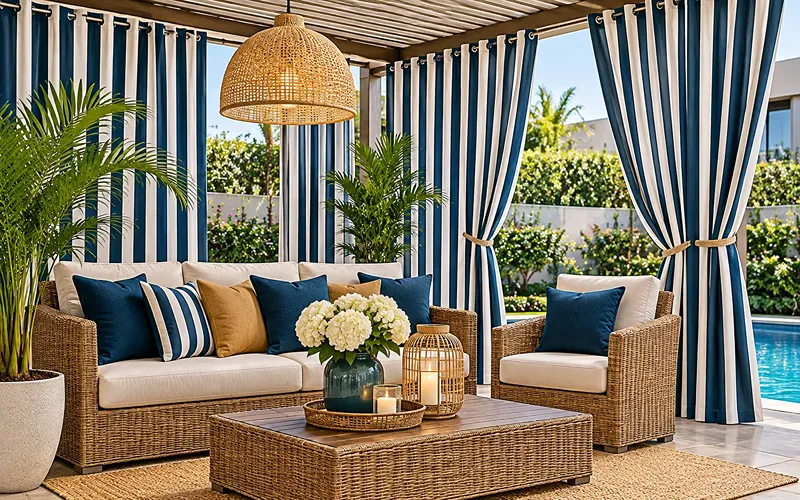
Wide awning stripes bring instant personality and a touch of old-school beach club glamour. Navy and white feels classic, black and white looks sharp and modern, and mustard or coral with cream feels more playful. Vertical lines also draw the eye upward, which can make a low patio ceiling seem taller.
Best Fabrics for Striped Curtains
A medium-weight, solution-dyed acrylic is ideal because it holds strong color well in the sun. Outdoor polyester is a good lower-cost alternative. Choose a fabric opaque enough for the stripes to stay crisp when the sun shines through it.
How to Keep Stripes from Overwhelming the Space
Let the curtains be the main pattern, and keep cushions and rugs mostly solid. Pull one color from the stripe into a few accessories to tie the space together. If you have several panels, buy them at the same time and line up the stripes at the top so the pattern reads as one clean run.
3. Floor-to-Ceiling Drapes on a Pergola
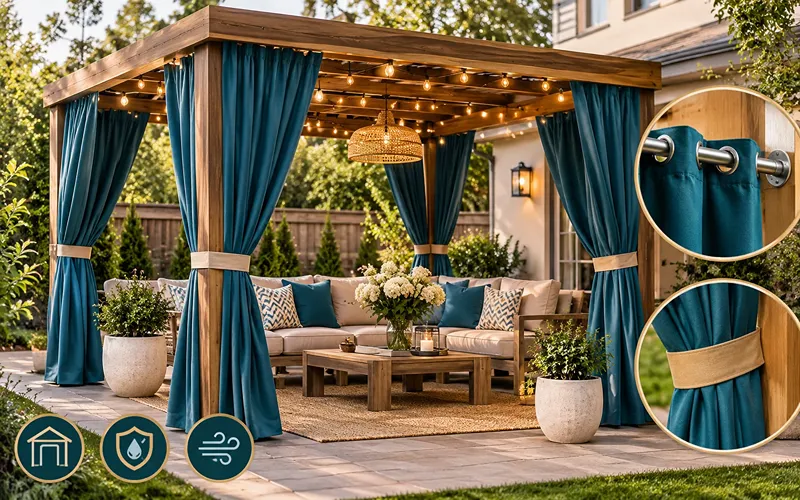
Full-length blackout curtains turn a pergola or gazebo into an outdoor room with real presence. Tied back at each post, they frame the seating area and add height. Drawn closed, they create a cozy, tent-like retreat with shade from the side.
Materials and Hardware for Pergola Curtains
Midweight acrylic or polyester has enough body to fall in neat, generous folds. Use rustproof rods mounted between posts, or stainless steel cable for long spans. Because pergolas are open on all sides, every panel needs a tieback or a way to be secured when the wind picks up.
How to Plan the Layout
Start with one panel at each post if you mainly want a decorative frame. Add full coverage only on the sides that face the sun or a neighbor, leaving the best view open. An open-roof pergola will still need a canopy or shade sail for overhead sun, since curtains only protect from the side.
4. Layered Sheer and Solid Panels
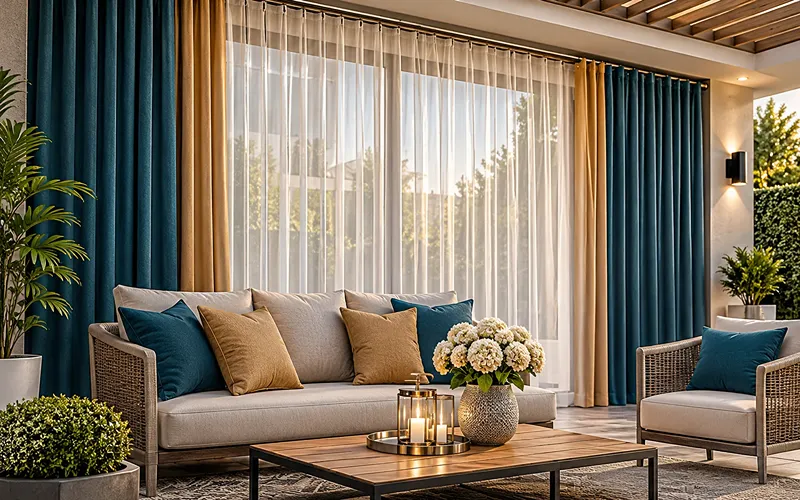
This idea borrows from hotel-style window treatments and gives you the most flexibility. A sheer inner layer softens daylight, while a solid outer layer adds privacy and a richer, more tailored look.
Pairing Your Fabrics
Use an outdoor sheer with a medium-weight, opaque acrylic or polyester. Tone-on-tone pairings, such as ivory and warm taupe, look calm and elegant. For more contrast, try white sheers with charcoal or deep green outer panels.
How to Use Both Layers Through the Day
Install a double rod bracket or two parallel cables, with the sheer closest to the seating area. You might open everything in the morning, close the sheers against midday glare, and draw the solid panels at night when lights make the patio more visible to neighbors.
5. Sun-Blocking Panels for Hot Exposures
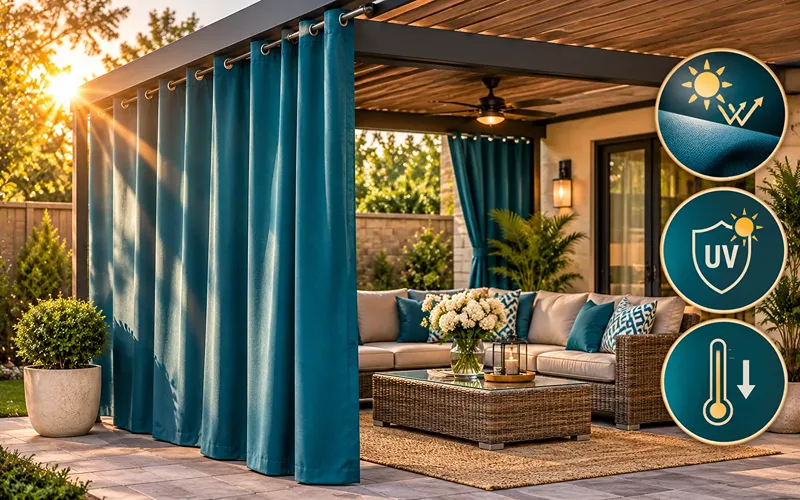
A west-facing patio can be unusable on summer afternoons. Dense, sun-blocking soundproof curtains cut glare, provide welcome shade, and help protect cushions and rugs from fading. Their tailored, substantial look also suits modern homes.
Best Fabrics for Sun Protection
Look for tightly woven solution-dyed acrylic, or an outdoor blackout curtain with a stated UV-blocking rating. Lighter colors are often the better choice because they reflect more heat. Heavy panels can act like a sail in strong wind, so use sturdy hardware that can carry the extra weight.
How to Place Them Well
Watch how the sun crosses your patio for a full day before buying anything. You may need to cover only the one side that receives direct afternoon light. Leave another side open so warm air can escape, since fully enclosing a hot patio can make it feel stuffy.
6. Earthy Linen-Look Panels on Wood Poles
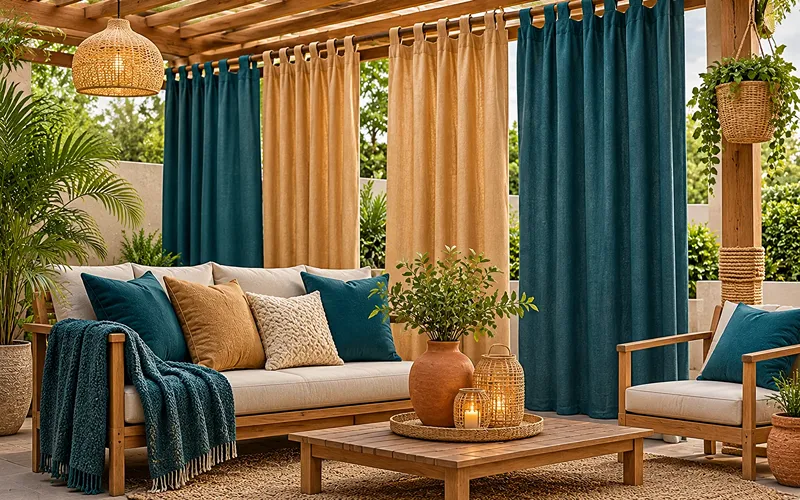
For a warm, organic style, hang oatmeal, sand, terracotta, or olive panels from natural wood or bamboo poles. The slightly rumpled texture feels casual and collected, and it pairs beautifully with plants, clay pots, and rattan.
Getting the Linen Look Outdoors
Real linen is prone to mildew in damp conditions, so choose a linen-look outdoor polyester or textured acrylic instead. Seal wood poles with an exterior finish and treat any cut ends, which absorb moisture easily. Earthy shades are forgiving as well, since they hide dust and pollen better than bright white.
How to Style the Boho Look
Tab-top panels suit this style, though they don’t slide easily, so use them where curtains will mostly stay in place. Add chunky rope tiebacks, a woven-look outdoor rug, and low seating with layered cushions. Choose one or two earthy tones and repeat them, so the space feels relaxed instead of cluttered.
7. No-Drill Balcony Curtains for Renters
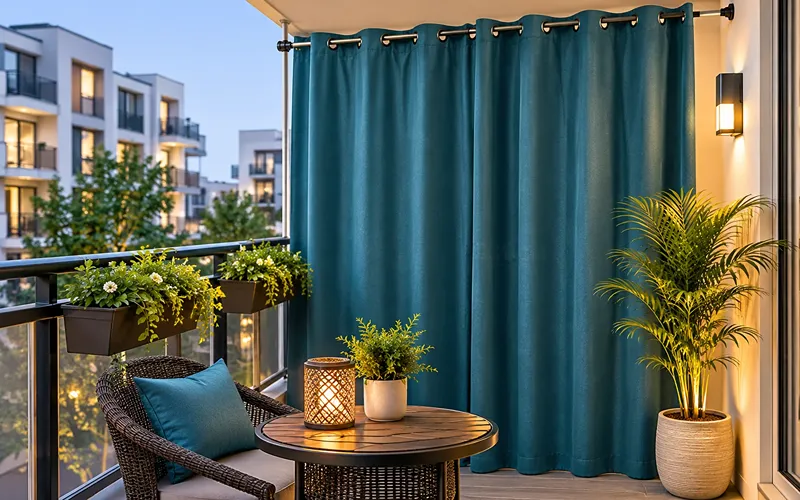
A small balcony often needs privacy more than anything else, and you can add it without losing your security deposit. A simple pair of lightweight panels can block a neighbor’s sightline and make the space feel more private and finished.
No-Drill Hanging Options
Heavy-duty tension rods work well between two solid side walls. Where there is no wall to brace against, try floor-to-ceiling tension poles with a crossbar, or a freestanding frame. Lightweight outdoor polyester on clip rings is the easiest match, since it keeps the load low and comes down quickly.
Smart Tips for Small Balconies
Read your lease and building rules first, as some restrict what can be seen from outside. Check the weight rating of your rod, keep everything inside the railing, and take curtains down before high winds. To keep the space from feeling boxed in, try covering only the side closest to your neighbor and leave the view open.
8. Mesh Curtains for Bug-Free Evenings
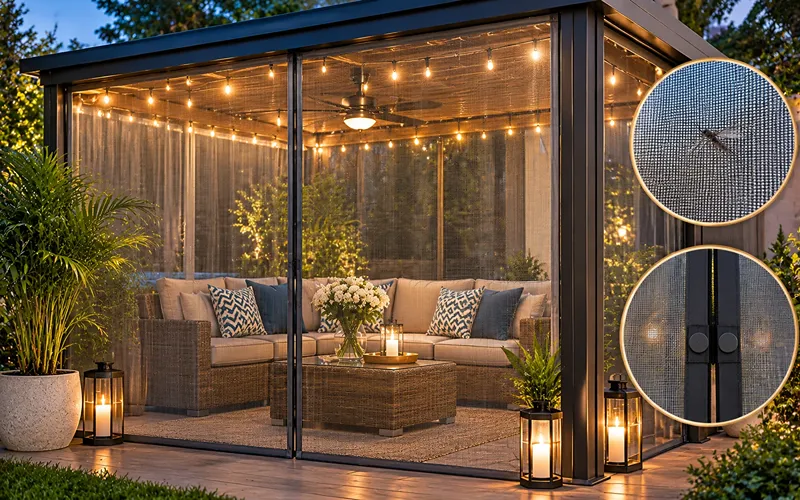
Fine mesh curtains make a patio far more pleasant during mosquito season. White netting looks soft and romantic, almost like a large canopy, while charcoal mesh tends to fade into the background and is easier to see through.
Choosing the Right Mesh
Standard polyester mesh handles mosquitoes and flies. If tiny biting gnats are a problem in your area, look for a tighter no-see-um mesh. The finer weave blocks more insects but also reduces airflow slightly, so a fan can help on still evenings.
How to Close the Gaps
Mesh only works if the enclosure is complete, so pay attention to the edges. Choose weighted hems to keep the bottom close to the floor, then overlap panels and join them with magnets or hook-and-loop strips. If you want a more decorative look, hang the mesh on its own track behind fabric panels and pull it across only when needed.
9. Clear Vinyl Panels for Wind and Rain
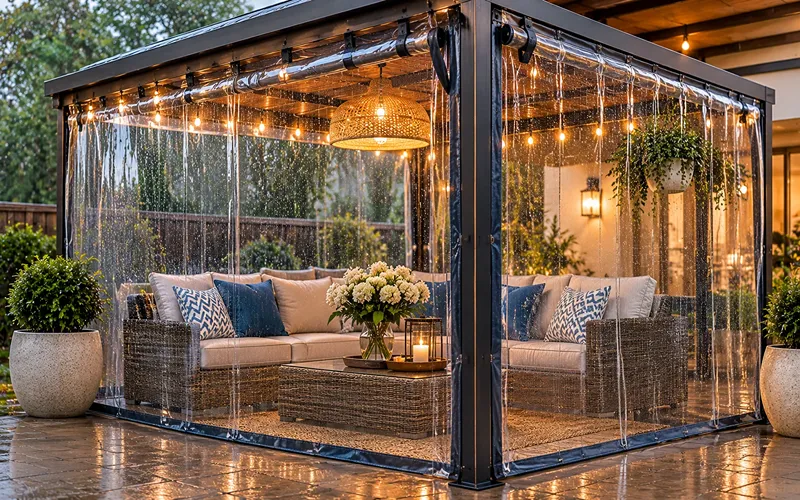
Clear vinyl patio curtains work almost like removable windows. They shield a covered patio from wind and rain while keeping the view, so you can keep using the space in cooler weather or on stormy days. Their look is practical, but fabric side panels can soften it considerably.
What to Look For in Vinyl
Choose thick, clear, outdoor-grade PVC with reinforced edges and rustproof fittings. Be aware that vinyl can trap heat in direct sun, and it may stiffen in cold weather. Roll or fold it gently when it’s warm enough to stay flexible, as creases can become permanent.
How to Use It Safely
Open a panel or two for ventilation whenever the sun is out. Clean with mild soapy water and a soft cloth, since abrasive products will scratch the surface. Never run a grill, gas heater, or fire pit inside closed vinyl panels, because fumes, including carbon monoxide, can build up quickly.
10. Curtain Room Dividers with String Lights
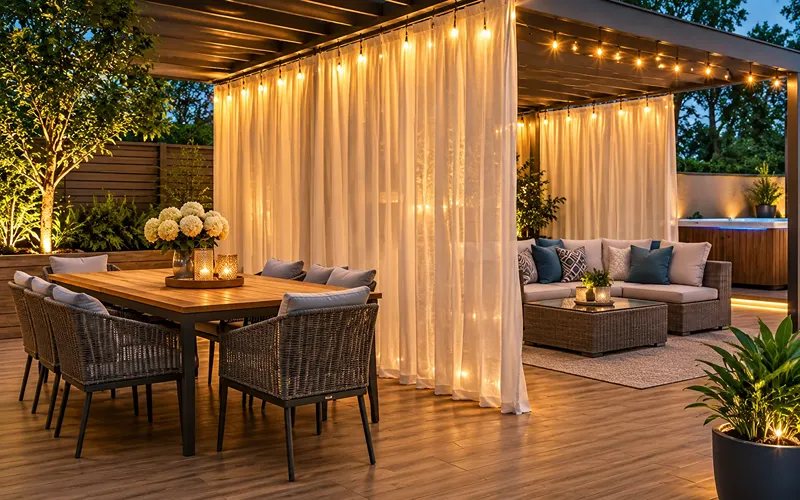
On a larger patio, curtains can define separate areas instead of surrounding the whole space. A pair of panels can separate the dining table from the lounge, or screen a hot tub, storage bin, or trash area. Warm string lights behind the fabric add a soft glow after dark.
Materials for Dividers
Use opaque fabric to hide something completely, and semi-sheer fabric when you only want gentle separation. Because both sides will be visible, choose panels that look good from either side. Stainless steel cable or a ceiling-mounted track keeps the setup neat and easy to slide.
How to Add the Evening Glow
Run outdoor-rated LED string lights along the top of the curtain line, slightly behind the fabric, and let the fabric diffuse the light. LEDs run cooler than older incandescent bulbs, but still keep connections off the floor and away from standing water. For example, a dining zone with glowing sheers behind it can feel like a private restaurant table.
Patio Curtain Installation and Maintenance Tips
Good installation keeps curtains looking neat, and simple upkeep helps them last for more than one season.
Measure Before You Buy
Measure the width of the opening and multiply it by 1.5 for heavier panels or 2 for sheers. For length, measure from the planned rod height to the floor at several points, since patios often slope for drainage. Subtract about an inch so hems stay clear of puddles and dirt.
Choose a Hanging Style
| Hanging style | Look | Best for |
| Grommet | Modern, with even folds | Panels you open and close often |
| Tab-top | Relaxed and casual | Panels that mostly stay in place |
| Rod pocket | Soft and gathered | Sheers and lightweight fabrics |
| Clip rings | Simple and adjustable | Renters and easy seasonal removal |
| Cable wire | Slim and minimal | Long spans and pergolas |
| Ceiling track | Clean and tailored | Heavy panels and room dividers |
Install for Wind and Weather
Use stainless steel or powder-coated aluminum hardware to prevent rust stains. Fasten brackets into solid framing or use anchors made for masonry, and add a center support to long rods. Tiebacks, weighted hems, or floor hooks will help control movement, but it’s still safest to secure or remove panels before a storm.
Keep all fabric well away from grills, fire pits, and patio heaters. Check that it can’t blow toward them, even when untied.
Keep Curtains Clean
Follow the care label first. Most outdoor fabrics can be brushed to remove dry dirt, washed with mild soap and water, then rinsed well. Let panels dry fully before rehanging or storing them, as trapped moisture is what usually causes mildew.
If you get snow or long stretches of wet weather, take curtains down for the season. Store them clean and dry in a breathable bag, then check grommets, seams, and hardware before rehanging them in spring.
Conclusion: How to Choose the Right Patio Curtains
The best patio curtains solve your biggest problem first and add style second. Start by asking what is bothering you most about the space:
- Harsh sun: Choose dense, UV-resistant panels on the side that gets the most direct light.
- Nosy neighbors: Use opaque or layered curtains where sightlines are most direct.
- Insects: Install a fully closed mesh enclosure.
- Wind and rain: Try clear vinyl on a covered patio.
- A plain, unfinished look: Add sheers, stripes, or earthy panels that suit your outdoor furniture.
- A rental balcony: Start with lightweight panels on a no-drill system.
Once you know the job, choose an outdoor-rated fabric, measure carefully, and pick hardware that can handle your local weather. If you’re unsure about a color or style, begin with one side of the patio. Living with a single pair of panels for a week or two will tell you more than any photo, and you can build from there.
Patio Curtain FAQs
What is the best fabric for outdoor curtains?
Solution-dyed acrylic is one of the best all-around choices because it resists fading and handles moisture well. Outdoor polyester is a good budget option, especially for sheers or seasonal use.
Can I use indoor curtains outside?
They’re fine for a dry-weather party, but they aren’t a good long-term choice. Most indoor fabrics aren’t made to withstand constant sun and moisture, so they can fade, weaken, or develop mildew.
How do I stop patio curtains from blowing around?
Use tiebacks, weighted hems, or floor hooks with hold-down ties. In strong winds, tie the panels back securely or take them down so they don’t strain the hardware.
How can I hang curtains on a patio without drilling?
Tension rods work well between two solid walls. Other options include floor-to-ceiling tension poles and freestanding frames. Keep panels lightweight and check any building rules first.
Can patio curtains stay up all year?
In mild climates, quality outdoor curtains can often stay up year-round with regular cleaning. In places with snow, storms, or long wet seasons, it’s better to take them down and store them clean and dry.