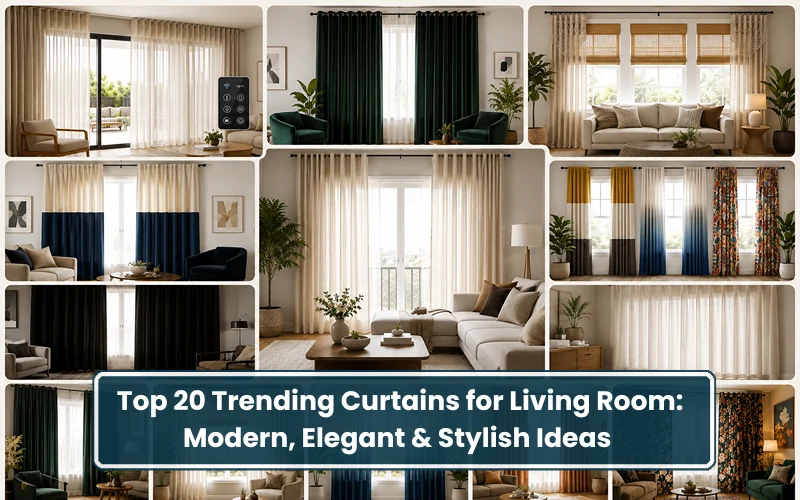
Curtains are no longer an afterthought you pick up on the way out of a furniture store. In 2026, they’ve become one of the most powerful design tools a homeowner has, shaping how light moves through a room, how tall the walls feel, and how the whole space reads the moment someone walks in.
This year’s living room curtain trends move away from the cool, minimal greys that dominated the last few years. In their place: warm neutrals, tactile linens, jewel-toned velvets, and smarter, more functional hardware. Whether you’re working with a small apartment window or a full wall of glass doors, there’s a curtain style below built for it.
Here are the 20 living room curtain ideas defining the year, with guidance on fabric, color, and styling for each.
1. Floor-to-Ceiling Linen Panels
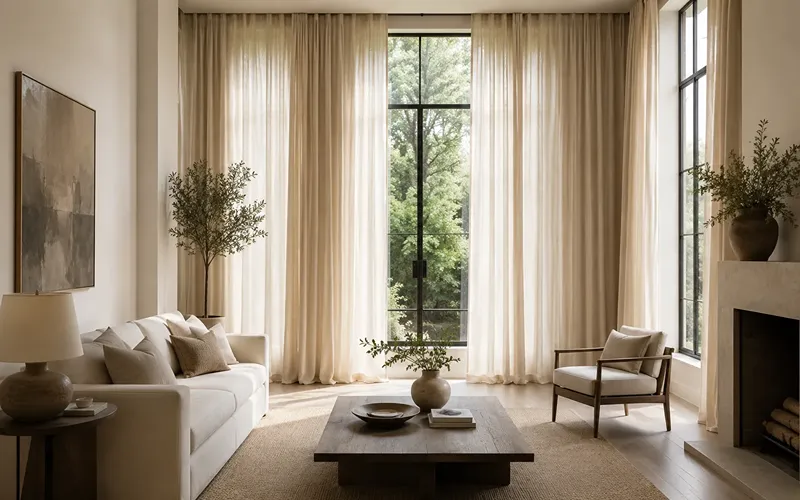
Hanging curtains from ceiling height rather than just above the window frame is one of the simplest ways to make a room feel bigger. Long linen panels in oat, sand beige, or soft ivory draw the eye upward and give even a modest living room a sense of height that shorter, window-hugging curtains can’t deliver.
2. Layered Sheer and Blackout Combinations
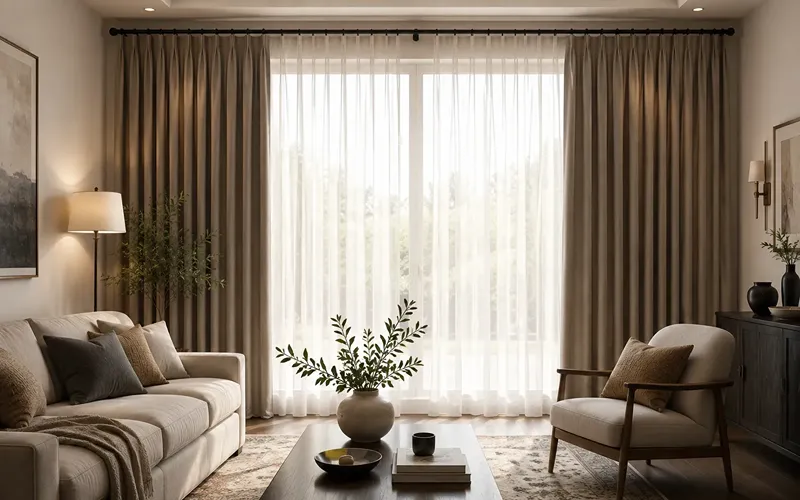
Double-rod setups pairing an airy sheer curtain with a heavier thermal or blackout drapes are dominating 2026 living rooms. The sheer inner layer filters daylight into a soft glow during the day, while the outer drape closes for privacy, insulation, and a cozier feel at night. It’s the most practical trend on this list, and also one of the most stylish.
3. Deep Jewel-Tone Velvet Drapes
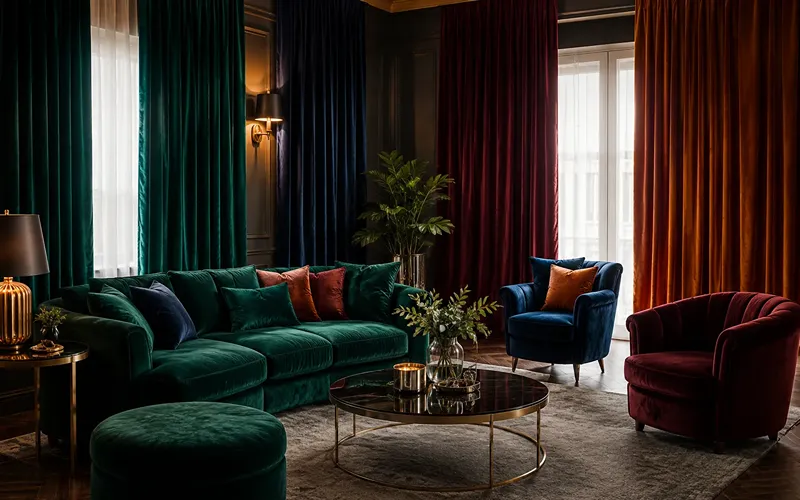
Emerald green, sapphire blue, wine red, and burnt amber velvet curtains are bringing a sense of luxury back into living rooms this year. Beyond the color, velvet’s plush texture absorbs sound, softens hard-edged furniture, and instantly elevates a neutral sofa or plain walls.
4. Textured Sheers
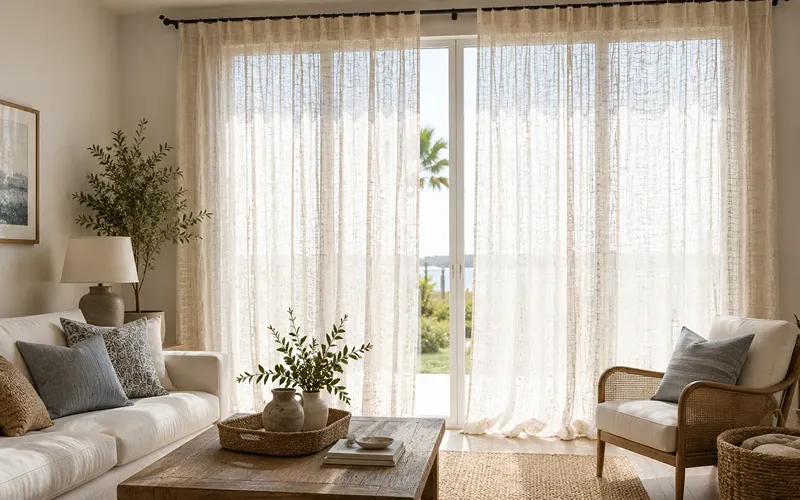
Plain white voile has been replaced by textured sheers, slub cotton, crinkled linen, and embroidered organza among them. These fabrics still let daylight in, but they diffuse it into something warmer and less harsh, which works especially well in bright, coastal-style living rooms.
5. Earth-Toned Curtains
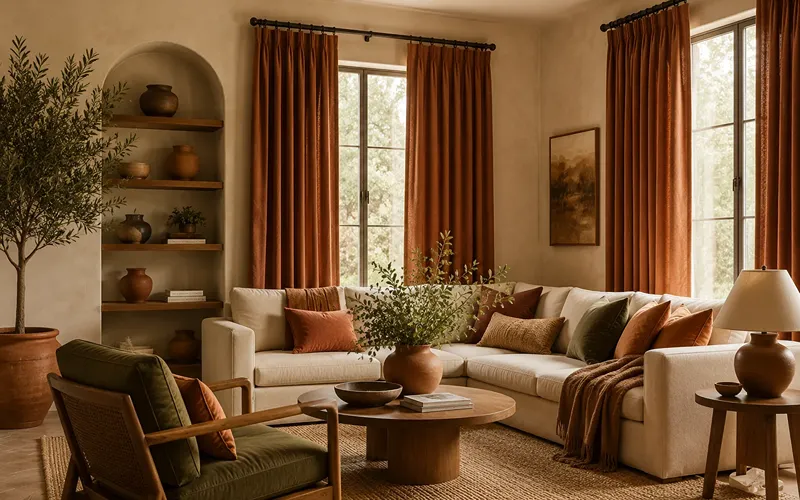
Terracotta, burnt sienna, golden ochre, clay, and olive are the colors showing up again and again in 2026 curtain roundups. Paired with cream walls and brass or black hardware, earth tones give a room warmth without tipping into “bold accent wall” territory.
6. Boho-Style Curtains with Macrame Details
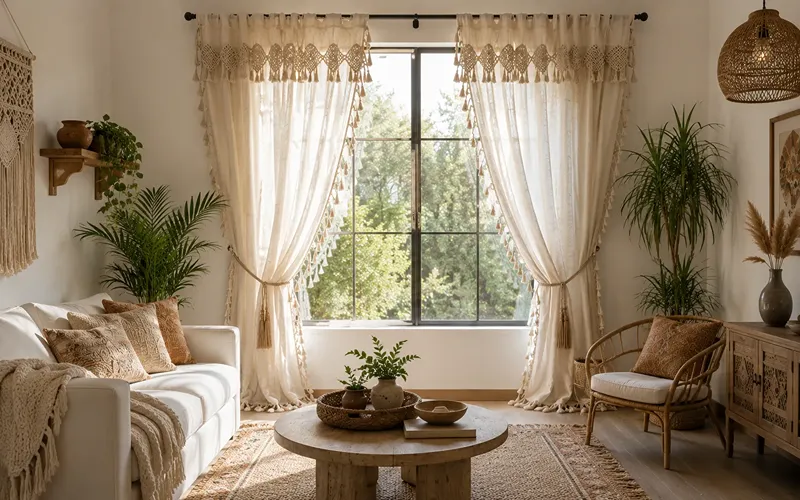
For more casual or eclectic living rooms, lightweight cotton or linen curtains finished with macrame trim, tassels, or fringe bring a relaxed, global-inspired feel. Loose tiebacks and flowing panels complete the laid-back look.
7. Two-Tone and Color-Block Panels
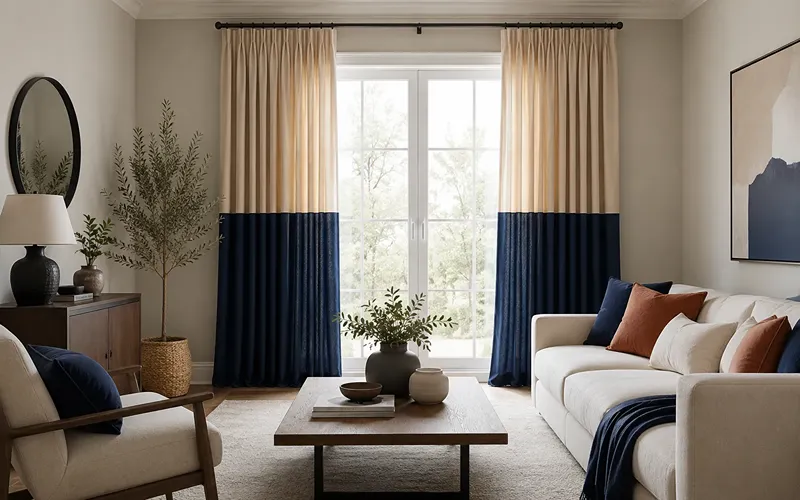
Two-tone curtain panels let you introduce an accent color at the window instead of committing to it on a wall or sofa. Because the color lives at the curtain rather than in a fixed surface, it’s also one of the easiest trends to update later if your taste shifts.
8. Fully Blackout Curtains with a Tailored Finish
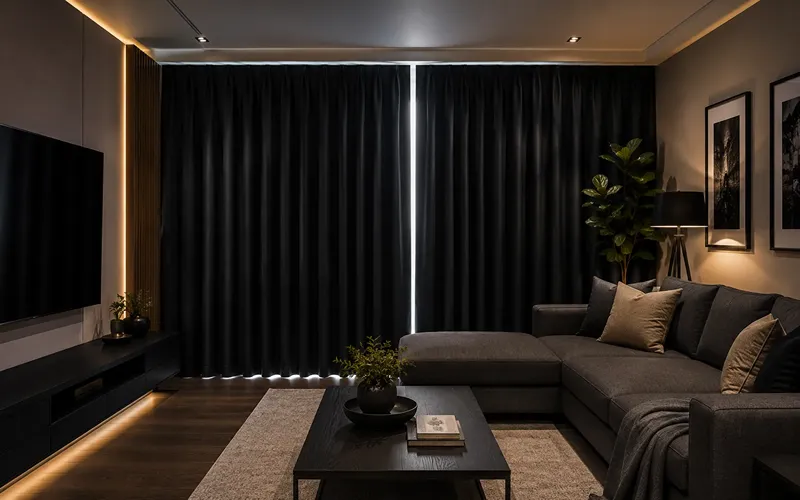
Blackout curtains have shed their strictly functional reputation. In 2026 they come in clean, tailored silhouettes that suit media rooms, west-facing windows, or any living room that gets harsh afternoon sun, without looking like a hotel conference room.
9. Natural-Fiber Curtains Over Woven Shades
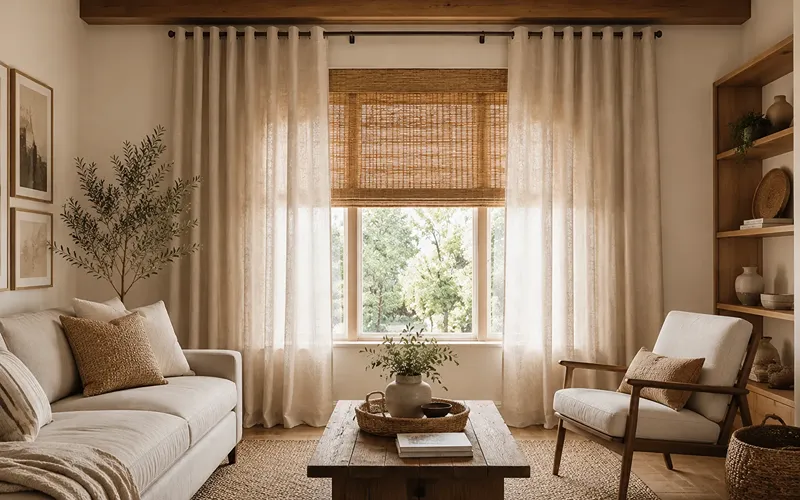
Layering a linen, cotton, or hemp-blend curtain over a woven wood or bamboo shade adds a second layer of texture and light control. It’s part of a broader shift toward sustainable materials like jute and organic cotton, and it pairs especially well with a ripple-fold or soft pinch-pleat header.
10. Patterned Curtains for Added Character
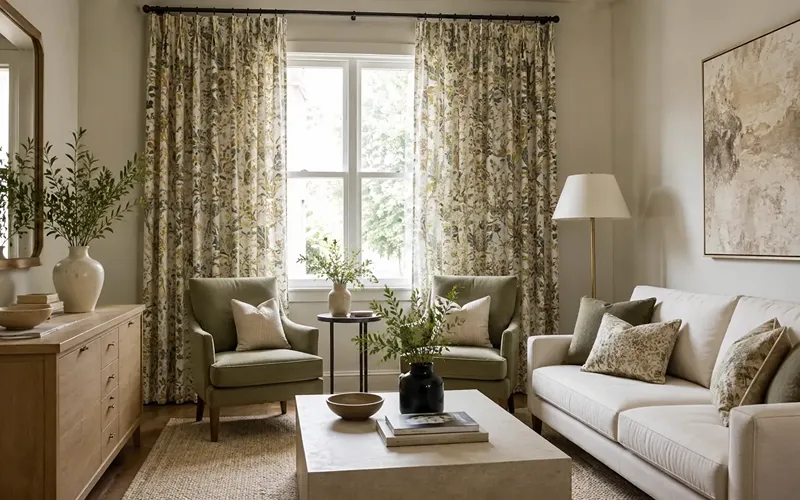
After several years of solid neutrals, patterned curtains are making a comeback, subtle stripes, botanical prints, and abstract weaves that add depth without overwhelming the room. They work best as a single accent element rather than competing with patterned upholstery.
11. Motorized and Smart Curtain Tracks
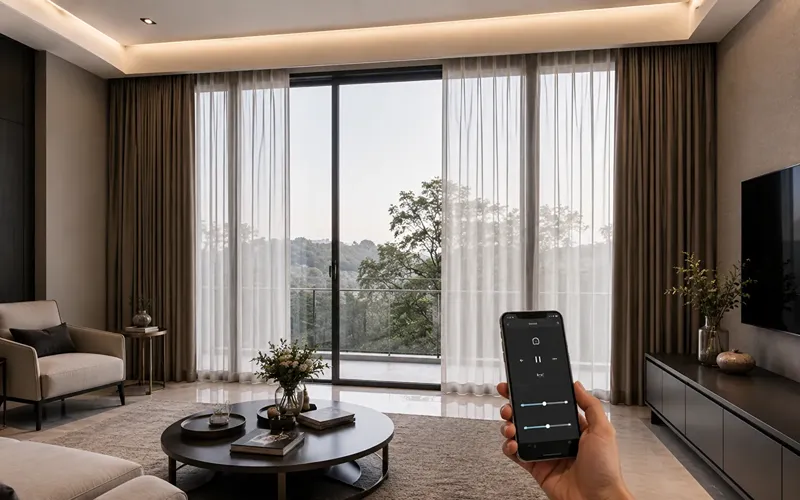
Smart home integration has reached the curtain rod. Motorized tracks that open and close on a schedule, voice command, or app are increasingly common in 2026 living rooms, especially for hard-to-reach floor-to-ceiling windows.
12. Ripple Fold Headers
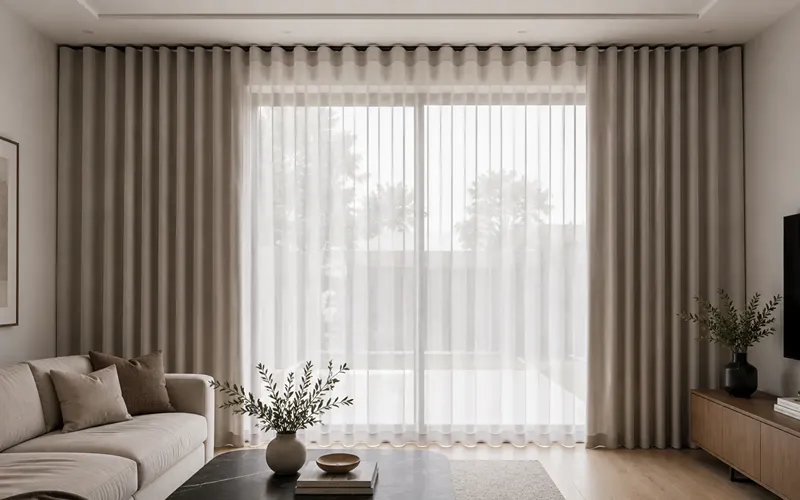
The ripple fold, a continuous S-shaped wave across the top of the curtain, has become the header style of choice for a clean, contemporary look. It hangs closer to the track than pleated styles and suits modern, minimal living rooms particularly well.
13. Soft Pinch Pleat Curtains
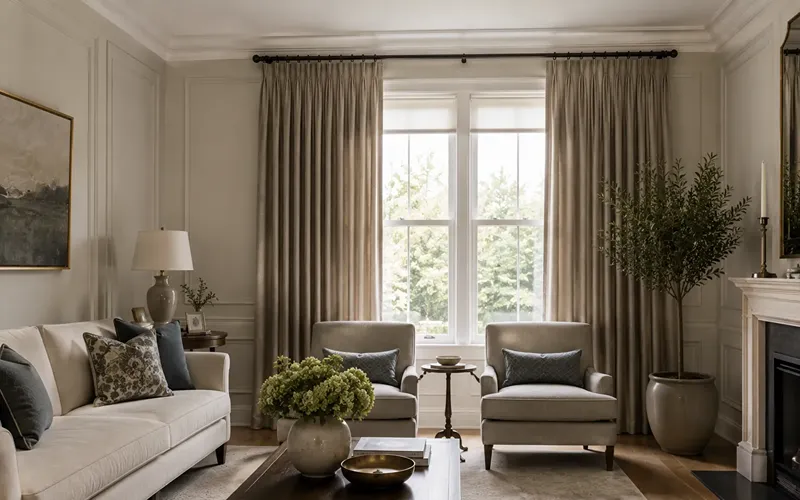
For a slightly more traditional but still tailored look, the pinch pleat remains a strong option in 2026. It creates structured folds that hold their shape, giving a more formal finish than a ripple fold without feeling stiff.
14. Chenille and Boucle Curtains
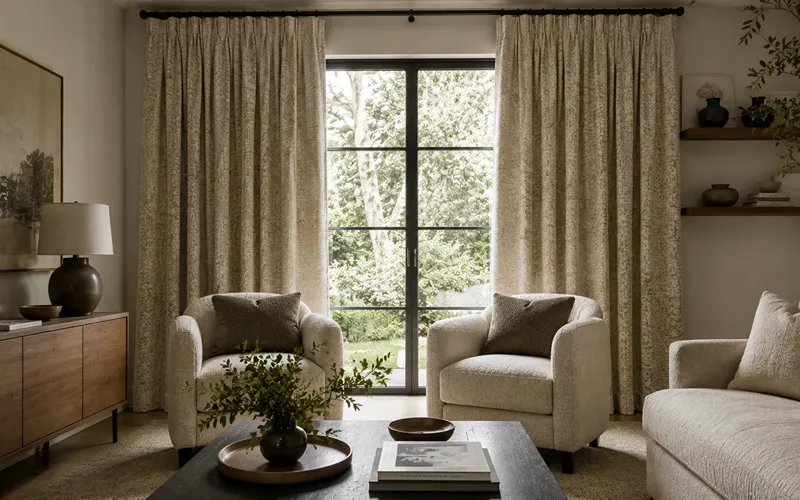
Chenille and boucle fabrics bring the same tactile, cozy quality that’s dominating furniture and throw pillows straight to the window. Their nubby, textured surface adds visual interest even in an otherwise neutral color palette.
15. Warm Neutral Curtains
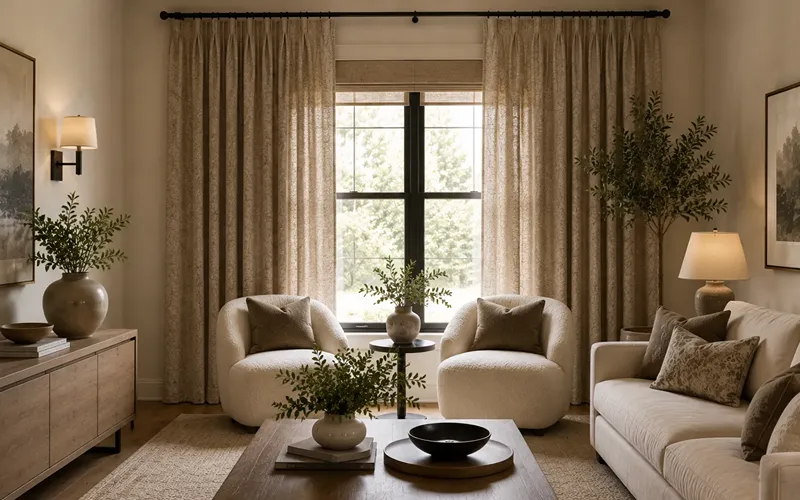
Cool grey has lost ground to warmer neutrals this year, think oatmeal, mocha, walnut, and soft ivory. These shades still act as a flexible backdrop for changing decor, but they read as considerably cozier than the stark greys of recent seasons.
16. Ombre and Dip-Dye Curtains
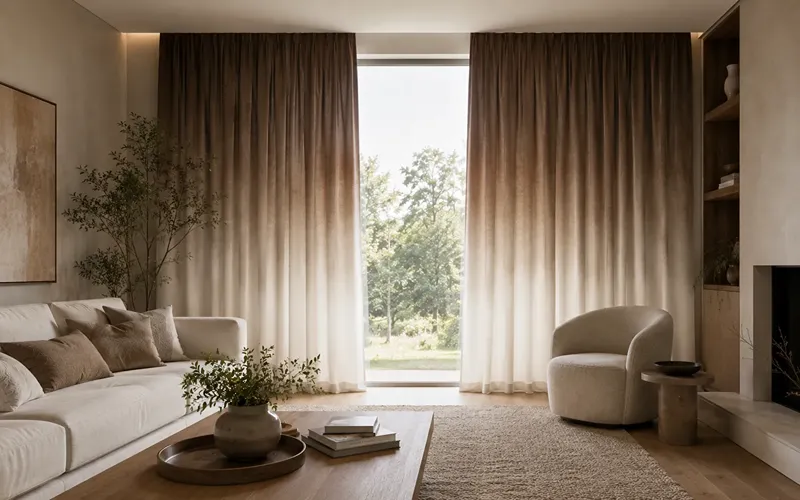
A subtle color gradient, usually darker at the top and fading toward the hem, gives curtains a soft, artistic quality without the commitment of a bold print. This trend suits living rooms that want a statement piece without adding pattern.
17. Curtains for Sliding Doors and Large Glass Walls
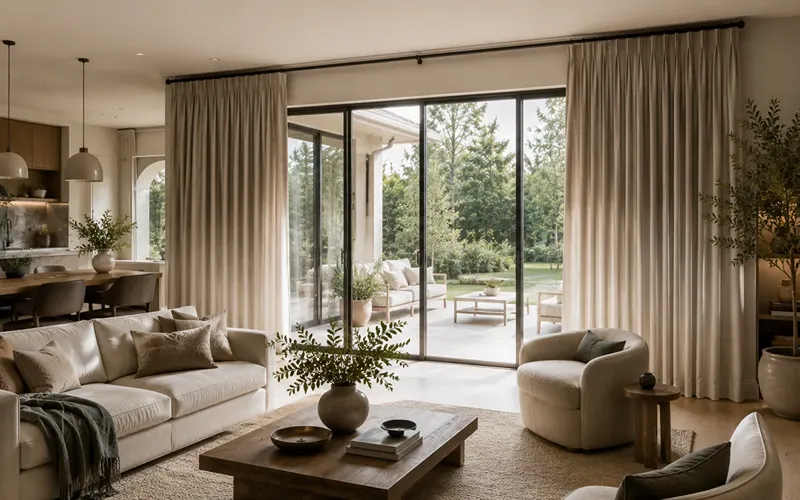
As open-plan living rooms with sliding or French doors become more common, curtain solutions built specifically for wide openings, wide-panel tracks, extra-long rods, and heavier fabrics that hang well at scale, are a growing category of their own.
18. Structured Black Hardware and Rods
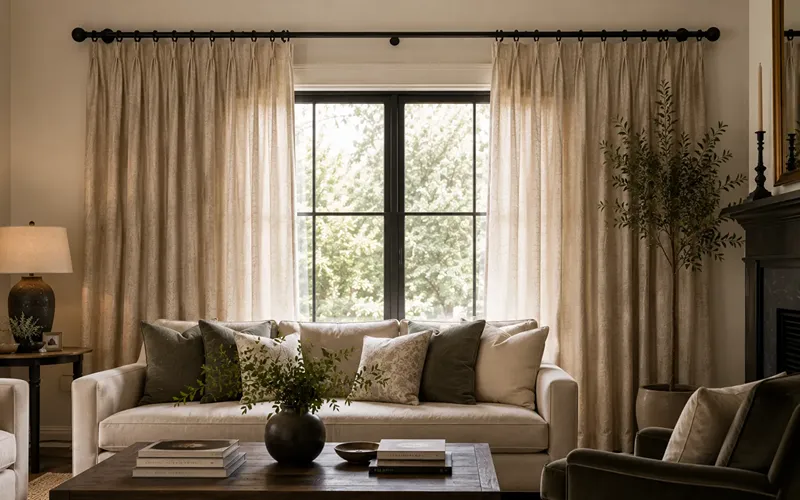
Matte black curtain rods and rings are having a resurgence as a “returning trend,” offering a structured, luxury look that pairs particularly well with jewel-tone velvet or warm neutral linen panels.
19. Small Window Curtains
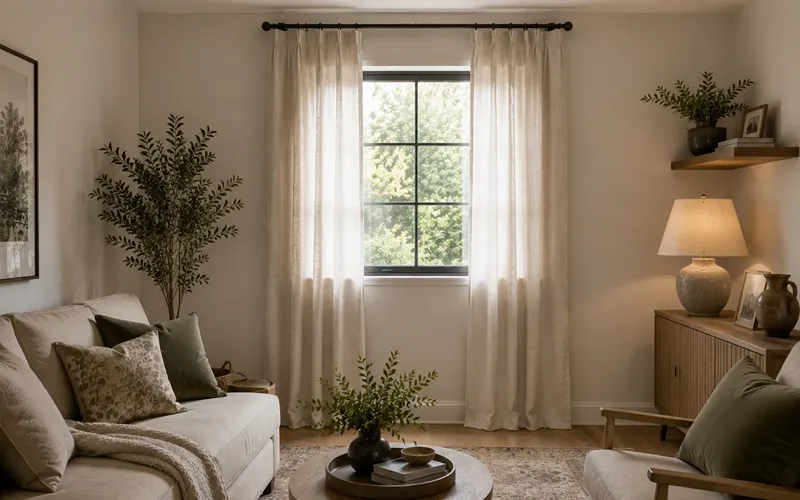
Not every living room has a dramatic picture window. For smaller openings, lighter fabrics, higher-mounted rods, and slimmer panels help avoid overwhelming the space while still adding softness.
20. Curtains as the Room’s Statement Piece
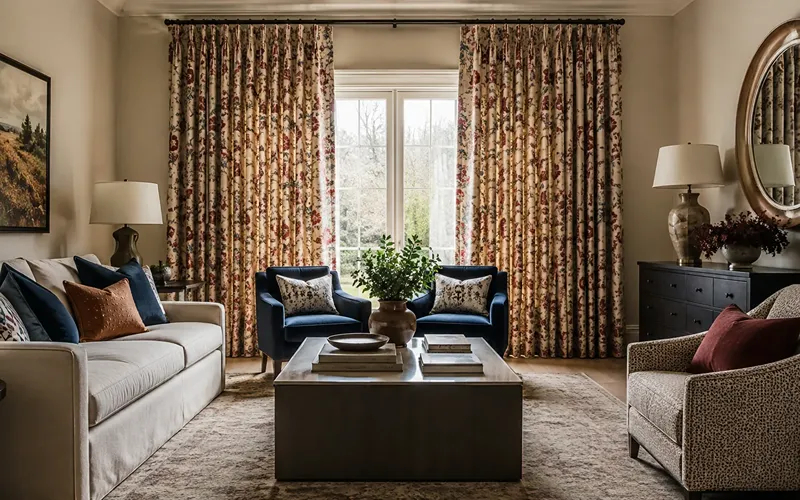
Perhaps the biggest shift in 2026 thinking: curtains are being chosen first, not last. Designers increasingly treat them as the anchor piece of a living room’s color and texture story, building the rest of the decor around the curtain rather than squeezing curtains in at the end.
Curtain Fabric Comparison Table
Choosing between fabrics gets a lot easier once you compare them side by side. Here’s how the most popular living room curtain fabrics stack up on light control, privacy, and ideal use case.
| Fabric | Light Control | Privacy | Insulation | Best For |
| Linen | Medium | Medium | Low | Modern, minimalist, and coastal living rooms |
| Velvet | High | High | High | Luxury, formal, or media rooms |
| Cotton | Medium | Medium | Low | Everyday, budget-friendly living rooms |
| Sheer (voile/organza) | Low | Low | Low | Bright, sunlit spaces that still need airflow |
| Chenille/Boucle | High | High | Medium | Cozy, textured, contemporary interiors |
| Blackout (poly-blend) | Very High | Very High | High | Media rooms, west-facing or sun-heavy windows |
| Cotton-Linen Blend | Medium | Medium | Low-Medium | Transitional homes that want durability with a relaxed drape |
As a general rule, the heavier and denser the weave, the better a fabric performs at blocking light and sound, but that same weight also makes a room feel warmer and more formal. Lighter fabrics like linen and sheer voile trade some of that light control for a softer, more breathable feel, which is why layering two fabrics has become such a popular middle-ground solution in 2026.
Curtain Color Trends Chart
Fabric decides the texture of a room, but color decides the mood. Here’s how the four leading 2026 color families compare, along with the shades and room styles each one suits best.
| Color Family | Popular Shades | Mood | Best Paired With |
| Warm Neutrals | Oatmeal, sand beige, walnut, soft ivory | Cozy, calm, timeless | Cream or beige walls, natural wood furniture |
| Earth Tones | Terracotta, olive, clay, burnt sienna, ochre | Grounded, warm, nature-inspired | Brass or black hardware, linen upholstery |
| Jewel Tones | Emerald green, sapphire blue, wine red, burnt amber | Luxurious, dramatic, rich | Neutral sofas, black rods, velvet or brass accents |
| Soft Whites | Ivory, chalk white, pale linen white | Airy, bright, minimal | Sheer fabrics, coastal or Scandinavian interiors |
Warm neutrals have taken over from the cool greys that defined the past decade, offering the same flexibility as a backdrop color but with a noticeably cozier feel.
Earth tones are the standout trend of 2026 specifically, shades like terracotta and olive show up across nearly every major curtain trend report this year, usually paired with warm metal hardware.
Jewel tones work best as a deliberate style statement rather than a safe default. They suit living rooms that already lean toward a more formal or maximalist look.
Soft whites remain the go-to for anyone prioritizing brightness over drama, especially in smaller rooms or spaces with limited natural light, where a dark curtain color can make the room feel smaller.
How to Choose the Right Curtains for Your Living Room
Once you’ve narrowed down a fabric and color from the tables above, a few practical factors decide whether the final result actually works in your space.
Room orientation: North-facing living rooms get softer, indirect light most of the day and can usually handle heavier fabrics like velvet or chenille without feeling dark. South- or west-facing rooms with strong afternoon sun tend to look better with lighter linens or a sheer-and-drape combination that gives you control over the harsher hours.
Budget and longevity: Cotton and linen blends offer the best balance of cost and durability for everyday living rooms, while velvet and blackout fabrics involve a higher upfront cost that tends to pay off in insulation and noise reduction over time. If budget is tight, warm neutral or earth-toned cotton is the safer long-term pick over a trend-driven pattern you may tire of.
Mounting height and hardware: Wherever possible, mount the rod close to the ceiling rather than directly above the window frame, it’s the single change that makes the biggest difference to how tall a room feels. Match the rod finish (matte black, brushed brass, or bronze) to your other metal fixtures so the hardware supports the fabric choice instead of competing with it.
Common Curtain Mistakes to Avoid
Even with the right fabric and color, a few common mistakes can undo an otherwise well-planned living room. Here are the ones worth double-checking before you order.
Hanging rods too low. Mounting a rod just above the window frame is one of the most common mistakes homeowners make. It visually shortens the wall and works against the ceiling-height trend covered earlier in this guide. Aim to mount the rod as close to the ceiling as practical, even if the window itself sits lower.
Choosing curtains that are too narrow. Panels that are only as wide as the window frame look skimpy once closed and rarely gather well when open. As a rule of thumb, total curtain width should be about two to two-and-a-half times the width of the window for a full, gathered look.
Ignoring natural light. Picking a fabric based purely on color or texture, without checking how the room’s orientation affects it, is a fast way to end up with a space that’s too dark during the day or too exposed at night. Test how the fabric looks against the window at different times of day before committing to a full order.
Using only one panel on wide windows. A single curtain panel on a wide window or sliding door tends to look unbalanced and struggles to fully cover the opening when closed. Wide windows generally call for two panels, or a wide-track solution built for larger openings.
Mismatching hardware. Rods, rings, and finials are part of the overall look, not just functional add-ons. Pairing a soft, casual linen curtain with an overly ornate rod, or a luxurious velvet drape with a flimsy plastic track, tends to undercut the style you’re going for rather than complete it.
Final Thoughts
The living room curtain trends of 2026 all point in a similar direction: warmth, texture, and intention. Whether that means a floor-to-ceiling linen panel, a jewel-toned velvet drape, or a smart motorized track, the common thread is treating curtains as a deliberate design choice rather than a last-minute purchase. Pick the fabric, color, and header style that fits how your living room is actually used, and the rest of the room tends to fall into place around it.
Frequently Asked Questions
Are curtains still in style in 2026?
Yes. Curtains have moved well past their purely functional role and are now treated as a central design element, competing with, and often replacing, blinds and shutters as the preferred window treatment.
What curtain colors are trending in 2026?
Warm neutrals like oatmeal and walnut, earth tones like terracotta and olive, and deep jewel tones like emerald and sapphire are the standout colors this year.
Should living room curtains touch the floor?
Most current design guidance recommends curtains either brush the floor or puddle slightly for a softer, more finished look, rather than stopping short above the floor.
What fabric is best for a living room?
Linen and cotton blends suit most living rooms thanks to their breathability and relaxed texture, while velvet is the top choice for a warmer, more luxurious feel.