
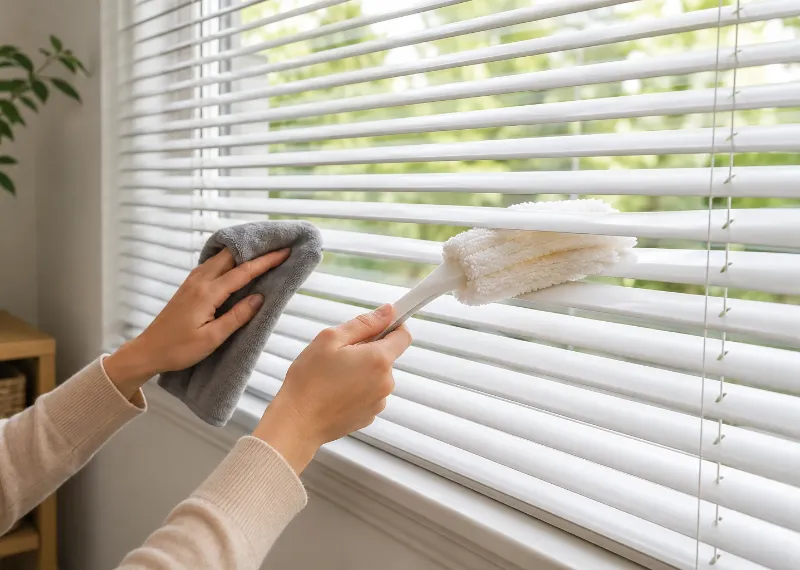
Blinds collect dust, stains, and allergens more quickly than many homeowners realize. Over time, dirty blinds can affect the appearance of your room and reduce indoor air quality. Different blind materials also require different cleaning methods. A technique that works for wooden blinds may damage fabric or aluminum ones. That’s why proper cleaning is important to maintain both appearance and durability.
Regular maintenance can prevent dust buildup, keep blinds looking fresh, and extend their lifespan. Whether you have roller blinds, Venetian blinds, Roman shades, or vertical blinds, using the right approach makes the cleaning process faster and safer. In this complete guide, you’ll learn how to clean all types of window blinds with simple methods, useful tools, and easy maintenance tips for everyday care.
Cleaning Methods by Blind Type
Cleaning methods for blinds depend on their type, and using the right approach helps maintain durability and appearance. For vertical blinds, regular dusting with a microfiber cloth or vacuum brush keeps dirt away, while spot cleaning removes stains.
Venetian blinds need careful wiping of each slat using a damp cloth or mild soapy water. Roller blinds are best cleaned with gentle vacuuming and light sponge cleaning to avoid fabric damage.
Wooden blinds require dry cleaning methods only to prevent warping. Following manufacturer guidelines ensures safe maintenance. Proper cleaning not only improves hygiene but also extends the lifespan and visual appeal of blinds.
Blind Type Comparison Table
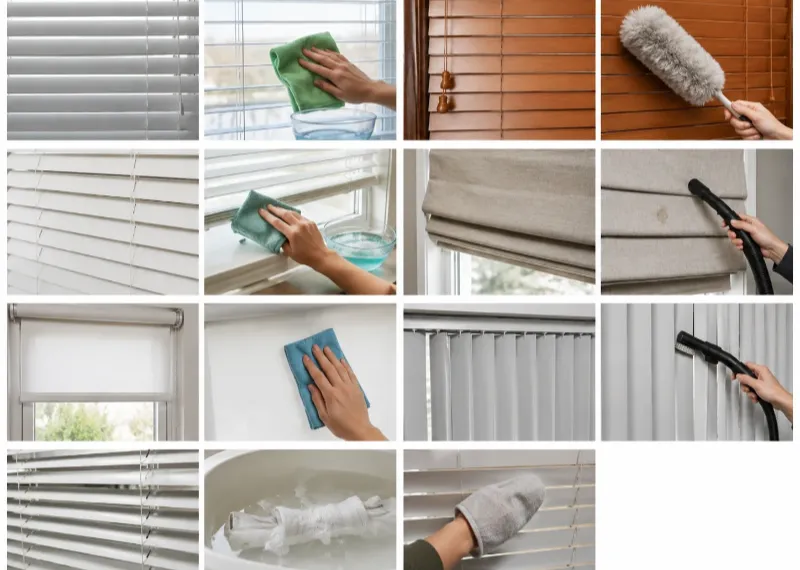
| Blind Type | Best Cleaning Method |
| Venetian / Aluminum | Microfiber wipe + vinegar solution, or bathtub soak |
| Wooden Blinds | Dry dusting only, never use water or soak |
| Faux Wood Blinds | Damp cloth with mild soapy water |
| Fabric / Roman Blinds | Vacuum + spot clean; soak if heavily soiled |
| Roller Blinds | Damp cloth wipe; spot clean stains |
| Vertical Blinds | Vacuum top-to-bottom; damp wipe per slat |
| Mini Blinds (PVC) | Bathtub soak or sock method |
Why Regular Blind Cleaning Matters
Blinds collect more than just dust. Pollen, pet dander, mold spores, and cooking grease all settle on blind slats over time. This affects indoor air quality and can trigger allergies, especially for children and sensitive individuals.
Regular cleaning also extends the life of your blinds. Dirt and grime can cause discoloration, make slats harder to operate, and lead to early wear. A simple weekly dust can prevent the need for costly replacements.
Pro Tip
Clean your blinds while vacuuming your floors. It takes just a few extra minutes and prevents heavy build-up over time.
How Often Should You Clean Your Blinds?
| Cleaning Frequency | When to Do It |
| Weekly Dusting | All rooms prevent heavy build-up |
| Monthly Wipe-Down | Living rooms, bedrooms |
| Every 2 Months | Deeper wipe with a mild soapy solution |
| Twice Yearly Deep Clean | Full soak or thorough slat cleaning |
| More Frequently | Kitchens, homes with pets, and high-dust areas |
Tools and Supplies You Need
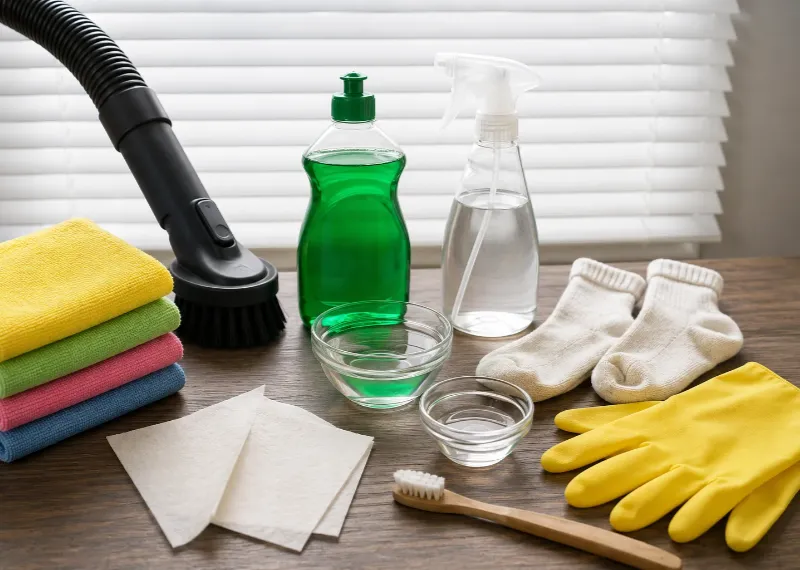
You do not need expensive equipment to keep your blinds clean. Most of these items are already in your home.
Basic Cleaning Kit
- Microfiber cloths
- Vacuum cleaner with soft brush attachment
- Mild dish soap
- White vinegar
- Warm water
- Spray bottle
- Old clean socks
- Soft-bristle toothbrush
- Dryer sheets
- Rubber gloves
Important Note
Never use harsh chemical cleaners or sponges on blinds. They can strip finishes, cause discoloration, and damage delicate slats.
How to Clean Venetian Blinds
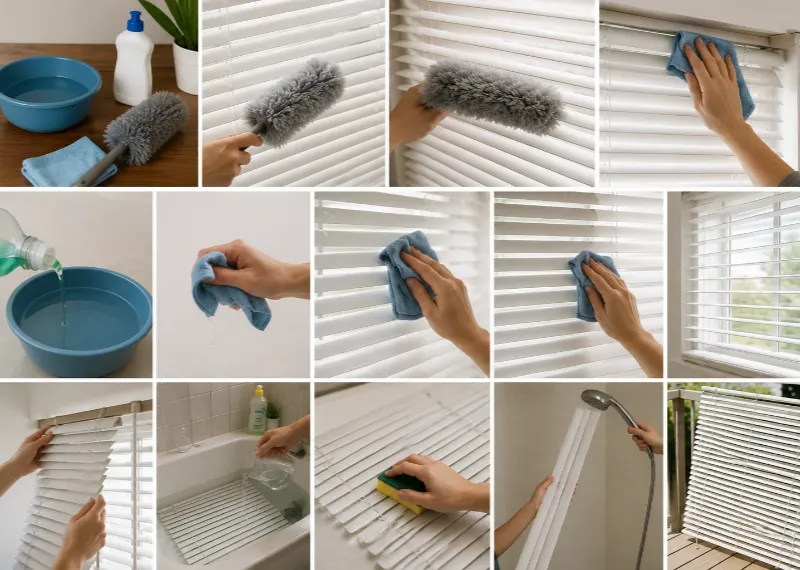
Venetian blinds are the most common window covering in homes and offices. Their horizontal slats collect dust quickly, but they are also among the easiest blinds to clean.
Method 1: Quick Dusting (Weekly)
- Close the blinds so the slats lie flat and level.
- Use a microfiber cloth or feather duster to wipe from top to bottom.
- Tilt the slats the other direction and repeat on the reverse side.
- Run the duster along the top rail and around the window casing.
Method 2: Damp Wipe (Monthly)
- Mix a few drops of dish soap with warm water in a bowl.
- Dip a microfiber cloth into the solution and wring it until barely damp.
- Wipe each slat individually, working from top to bottom.
- Follow immediately with a dry cloth to prevent water spots.
- Open the blinds and allow them to air dry fully.
Method 3: Bathtub Deep Clean (Seasonal)
This method works best for heavily soiled aluminum or plastic Venetian blinds.
- Remove the blinds from the window by opening the mounting brackets.
- Fill your bathtub with warm water, a few drops of dish soap, and a cup of white vinegar.
- Submerge the blinds and let them soak for 10-15 minutes.
- Gently scrub each slat with a soft sponge or old toothbrush.
- Drain the tub and rinse thoroughly with clean water.
- Hang the blinds outside or over the shower to dry completely before re-hanging.
Pro Tip
While your blinds are soaking, it is the perfect time to clean your windows too. Two tasks done at once!
How to Clean Wooden Blinds
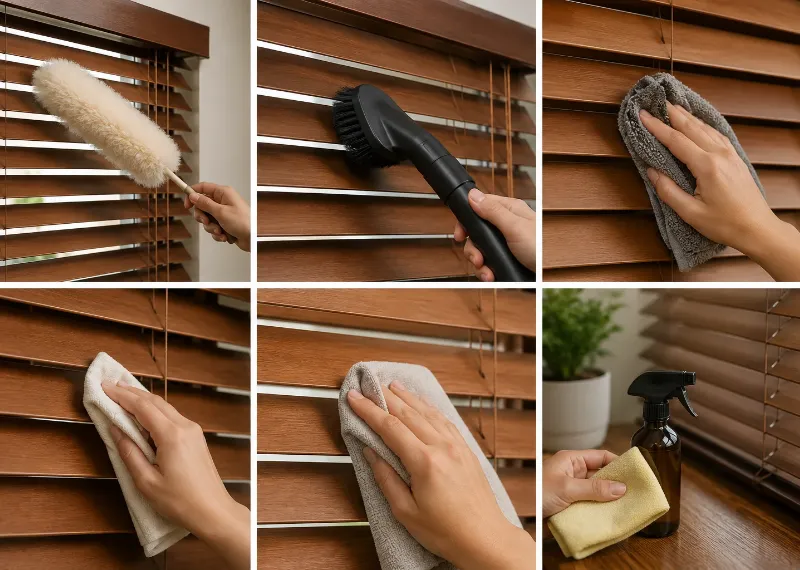
Wooden blinds add warmth and a natural look to any room. However, they need special care. Wood is sensitive to moisture, so the rules here are different from other blind types.
Important Thing To Know
Never soak wooden blinds or use excess water. Moisture causes wood to warp, crack, and discolor permanently.
Step-by-Step: Cleaning Wooden Blinds
- Dust regularly using a dry microfiber cloth or lamb’s wool duster. Work from top to bottom.
- Vacuum with a soft brush attachment for a more thorough weekly clean.
- Spot clean stains using a barely damp cloth — wring it out very well before use.
- Dry immediately with a clean, dry cloth after any damp contact.
- Polish every 1-2 months with a wood-safe furniture polish or lemon oil. Apply a cloth first, not directly to the skin.
Pro Tip
Use dryer sheets to wipe wooden slats. They reduce static, repel future dust, and leave a light protective coating.
How to Clean Faux Wood Blinds
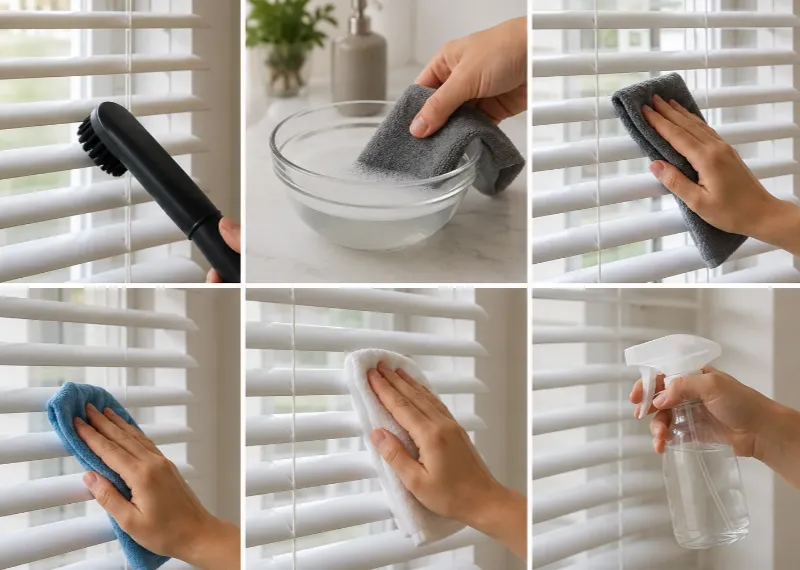
Faux wood blinds look like real wood but are far more durable and moisture-resistant. They are a popular choice for kitchens and bathrooms.
Cleaning Steps for Faux Wood Blinds
- Dust weekly with a microfiber cloth or vacuum brush attachment
- For a deeper clean, mix warm water with a small amount of mild dish soap
- Wipe each slat with a damp (not wet) cloth
- Rinse with a clean, damp cloth to remove any soap residue
- Dry with a towel or allow to air dry
- For stubborn grease, use a 50/50 vinegar and water solution
Pro Tip
Faux wood blinds can handle more moisture than real wood, but avoid soaking them. Excessive water can still loosen the slats from their ladder tapes.
How to Clean Roman Blinds
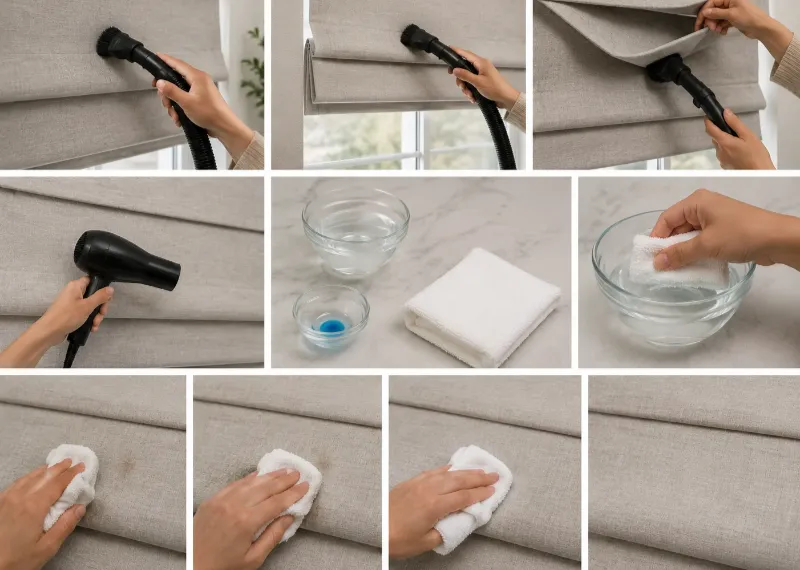
Fabric blinds and Roman shades add an elegant, soft look to windows. They require more care than hard blinds, as the fabric can stain, shrink, or lose its shape if cleaned incorrectly.
Routine Fabric Blind Cleaning
- Use a vacuum cleaner with an upholstery or brush attachment
- Vacuum in long, gentle strokes from top to bottom
- For Roman shades with pleats or folds, gently open the fabric to vacuum inside the folds.
- Use a handheld hair dryer on a cool setting to blow dust from cellular or honeycomb shades.
Spot Cleaning Fabric Blinds
- Mix warm water with a tiny drop of mild detergent.
- Dampen a clean white microfiber cloth with the solution.
- Blot, do not rub, the stained area gently.
- Use a second clean, damp cloth to rinse away soap.
- Allow the blind to dry fully before raising it. Raising a damp blind can cause creases.
Important
Never rub or scrub a stain on fabric blinds. Rubbing spreads the stain and can damage the weave. Always blot from the outside of the stain inward.
Deep Cleaning Fabric Blinds
For heavily soiled fabric blinds that need a full clean:
- Remove the blinds from their mounting brackets
- Fill the bathtub with warm water and a small amount of mild dish soap
- Submerge and soak for 30-60 minutes
- Gently agitate the water; do not wring or scrub
- Drain, rinse thoroughly, and hang to dry flat or on a drying rack
- Re-hang only when completely dry
Pro Tip
Always check the manufacturer’s label first. Some fabric blinds are machine washable on a gentle cycle. Others may be dry-clean only.
How to Clean Roller Blinds
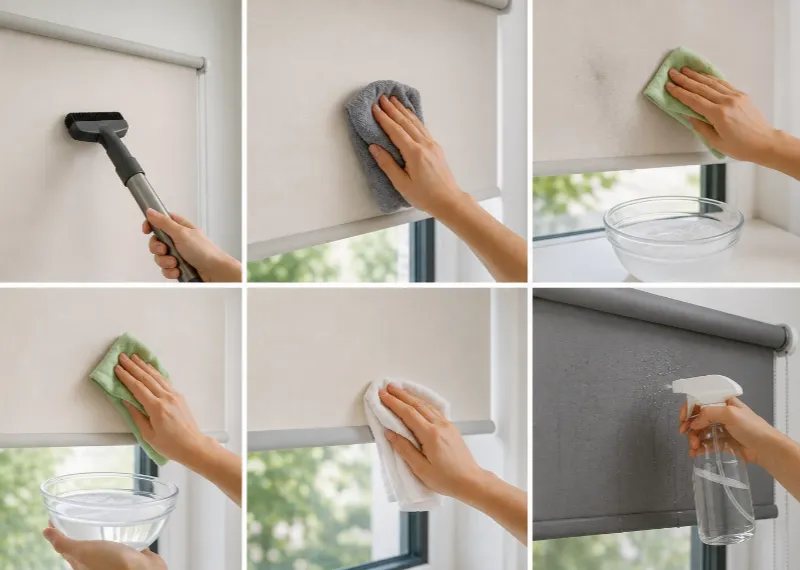
Roller blinds are simple and stylish. Because they are made from a single sheet of fabric or vinyl, they are generally easier to clean than slatted blinds.
For Light Dust and Debris
- Roll the blind down to its full length
- Use a vacuum with a brush attachment to remove loose dust
- Wipe gently with a dry microfiber cloth from top to bottom
For Marks and Stains
- Mix a small amount of dish soap with warm water
- Dampen a clean cloth and wipe the affected area gently
- Do not soak the fabric; a little moisture goes a long way
- Wipe with a clean, damp cloth to remove soap, then dry
For Vinyl Roller Blinds
- Vinyl handles more moisture than fabric
- Use a 50/50 vinegar-water solution for grease or stubborn stains
- Wipe and rinse, then allow to air dry fully before rolling up
Important
Never roll up a roller blind while it is still damp. Moisture trapped inside causes mold, mildew, and unpleasant odors.
How to Clean Vertical Blinds
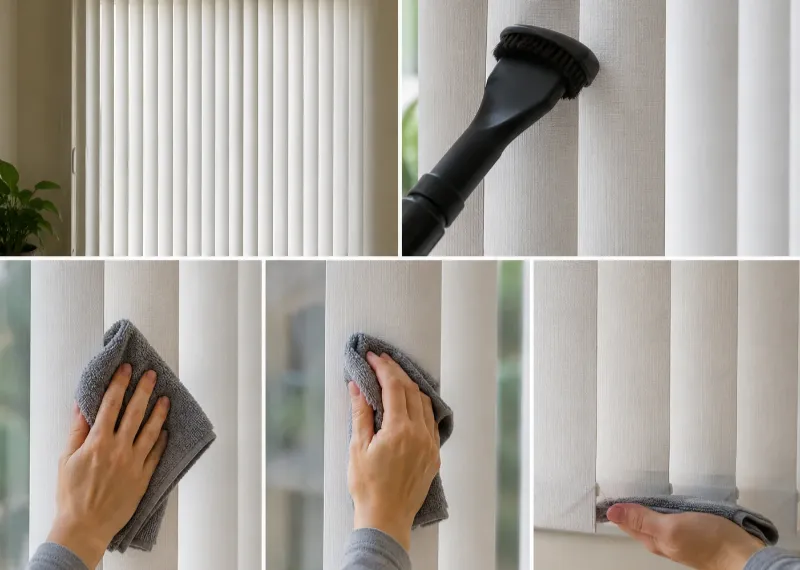
Vertical blinds are common on large windows and sliding glass doors. Their long, hanging slats tend to collect dust along the edges and can get tangled if not handled carefully.
Step-by-Step Cleaning for Vertical Blinds
- Close the slats so they are flat and facing the same direction.
- Use a vacuum brush attachment to clean each slat from top to bottom. Never rush upward; this can dislodge the slats.
- For a deeper clean, wipe each slat with a lightly damp microfiber cloth.
- Dry each slate as you go to prevent drips and water marks.
- For fabric vertical slats that are removable, follow the fabric cleaning method above.
Pro Tip
Hold each vertical slat at the bottom while you wipe it. This keeps it steady and prevents it from swinging or unclipping from the carrier.
How to Clean Mini Blinds
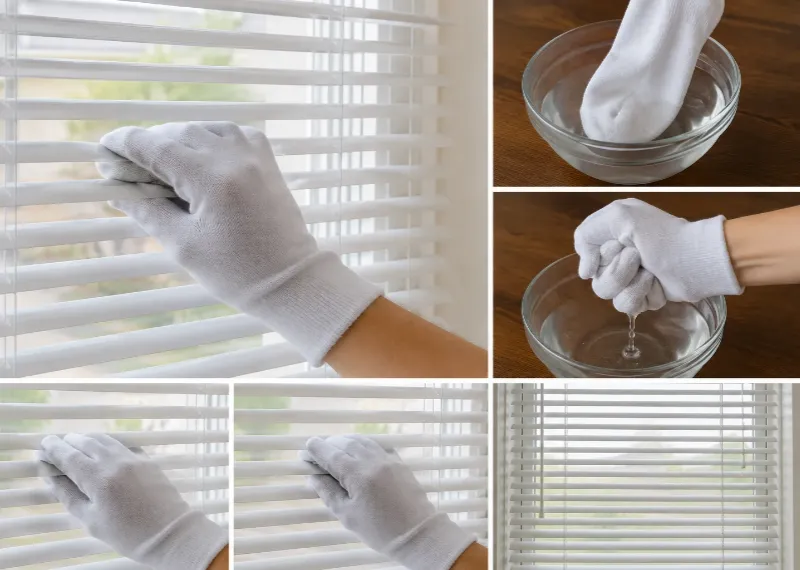
Mini blinds, narrow aluminum or PVC horizontal slats, are affordable and popular, but they are also notorious for collecting dust in tight spaces between slats. The sock method is a game-changer for these.
The Sock Method
- Pull a clean, old cotton sock over your hand
- Mix equal parts white vinegar and water in a bowl
- Dip the sock-covered hand into the solution and wring out the excess
- Run your fingers tightly over each slat, gripping both sides at once
- Rinse the sock as needed and continue until all slats are done
- Leave the blinds open to dry
Pro Tip
The sock method cleans both sides of each slat in one motion. It is much faster than wiping one side at a time.
How to Fix Common Blind Cleaning Problems
-
Yellow or Discolored Blinds
Blinds, especially white PVC or aluminum ones, can yellow over time due to UV exposure, cigarette smoke, or age. Here is how to brighten them up:
- Mix warm water, laundry detergent, and a small amount of oxygen-based bleach (safe for non-wood blinds)
- Soak the blinds in the bathtub for 30 minutes
- Rinse and dry thoroughly
- For light yellowing, a vinegar and baking soda paste left for 15 minutes can also help.
-
Greasy Kitchen Blinds
Kitchen blinds attract cooking grease mixed with dust, one of the hardest combinations to remove. Use a degreasing dish soap solution or a vinegar-water spray. Let it sit for a few minutes before wiping.
-
Mouldy Blinds
If you spot mold on your blinds, act quickly. Mix one part white vinegar with two parts water and wipe the affected area. For severe mold, a diluted bleach solution can be used on plastic or aluminum blinds only.
Important
Never use bleach on fabric, wood, or faux wood blinds. It will cause permanent discoloration and damage.
Blind Maintenance Tips to Keep Them Cleaner for Longer
Good cleaning habits go a long way, but prevention is even better. These simple tips help your blinds stay fresh between deep cleans.
- Dust your blinds every time you vacuum your floors it takes less than two minutes.
- Wipe down kitchen blinds more frequently due to grease and steam
- After cleaning, rub slats with a dryer sheet to reduce static and repel future dust
- Keep windows closed on high-pollen or dust-storm days
- Avoid spraying any cleaning product directly onto blind slats. Always apply to a cloth first
- For wood blinds, use a wood conditioner every few months to protect the finish
- Check the mounting brackets and cords when cleaning. Early repairs save costly replacements
Conclusion
Clean blinds not only enhance the window’s look, but also give a healthier indoor environment. In the kitchen, dust, grime, and oil stain build-up on blinds, making them look ugly. Whether you have wood, vinyl, or aluminum blinds, using the right cleaning methods can extend their lifespan. To prevent costly replacements, use gentle, safe blind-cleaning techniques. With consistent effort and simple techniques, you can achieve hygienic blinds without hiring a professional cleaner.
Frequently Asked Questions
- What is the easiest way to clean blinds without taking them down?
The easiest method is to close the blinds and wipe each slat with a dry microfiber cloth, working from top to bottom. For a deeper clean without removing them, use a vinegar-water solution on a damp cloth and wipe each slat individually. The sock method is also highly effective and fast.
- Can I use dish soap to clean my blinds?
Yes. A few drops of mild dish soap mixed with warm water is a safe and effective cleaner for aluminum, PVC, faux wood, and fabric blinds. It cuts through grease and grime without damaging most blind materials. Avoid using it on real wood blinds.
- How do you clean blinds without streaks?
The key is to use a barely damp cloth, not a wet one. After wiping with a damp cloth, immediately follow with a dry cloth to remove any moisture. Always wipe in one direction, rather than scrubbing back and forth, for a streak-free finish.
- Can I put my blinds in the washing machine?
Only if the manufacturer’s label says they are machine washable. Some lightweight fabric blinds can be washed on a gentle cold-water cycle in a mesh laundry bag. Most other blind types, including aluminum, PVC, wood, and faux wood, should never go in a washing machine.
- How do you clean blinds that have not been cleaned in years?
Start with a dry dust using a vacuum or microfiber cloth to remove loose debris. Then use the bathtub soak method with warm water, dish soap, and white vinegar. For stubborn stains, let the solution soak longer and use a soft brush to scrub gently. Heavily discoloured blinds may need an oxygen-bleach soak.
- How often should you replace blinds?
With proper cleaning and care, good-quality blinds can last 7-10 years or longer. Signs it is time to replace them include: warping that cannot be fixed, persistent discoloration, broken slats that cannot be replaced, cords that no longer function, or mold that has soaked into the material.